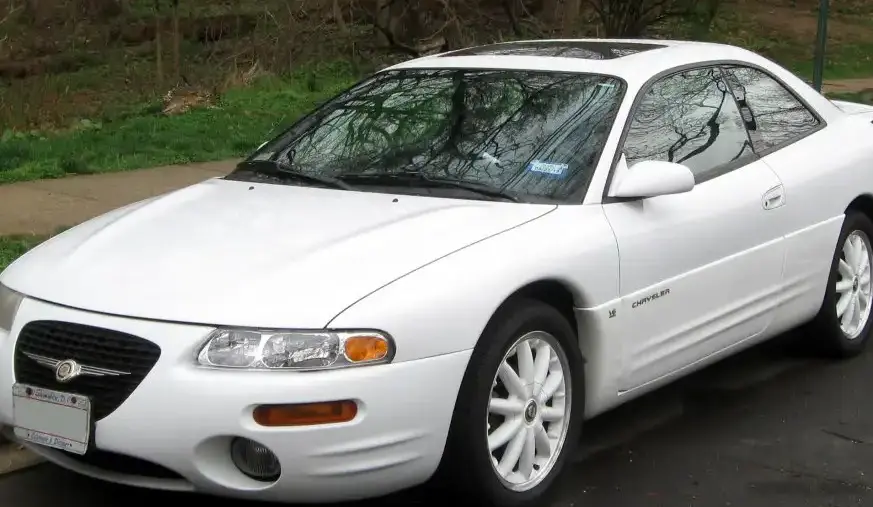
The Chrysler Sebring Coupe (FJ), produced between 1996 and 2000, represented a distinct offering within the broader Sebring model range. Positioned as the sportier, two-door counterpart to the four-door sedan, the FJ coupe aimed to attract buyers seeking a more dynamic and stylish vehicle. The 2.5 V6 variant, generating 166 horsepower, occupied a mid-range position in the coupe lineup, offering a balance between performance and affordability. It served as a step up from the base 2.0L four-cylinder engine, while remaining more accessible than the higher-performance trims. The Sebring Coupe was Chrysler’s attempt to capture a segment of the market increasingly interested in coupe styling, competing with models like the Ford Probe and Honda Prelude.
Technical Specifications
| Brand | Chrysler |
| Model | Sebring |
| Generation | Sebring Coupe (FJ) |
| Type (Engine) | 2.5 V6 (166 Hp) |
| Start of production | 1996 |
| End of production | 2000 |
| Powertrain Architecture | Internal Combustion engine |
| Body type | Coupe |
| Seats | 5 |
| Doors | 2 |
| Fuel consumption (urban) | 14 l/100 km (16.8 US mpg, 20.2 UK mpg, 7.1 km/l) |
| Fuel consumption (extra urban) | 9 l/100 km (26.1 US mpg, 31.4 UK mpg, 11.1 km/l) |
| Fuel Type | Petrol (Gasoline) |
| Acceleration 0 – 100 km/h | 10.5 sec |
| Acceleration 0 – 62 mph | 10.5 sec |
| Acceleration 0 – 60 mph | 10 sec |
| Maximum speed | 210 km/h (130.49 mph) |
| Weight-to-power ratio | 8.7 kg/Hp, 114.5 Hp/tonne |
| Weight-to-torque ratio | 6.3 kg/Nm, 158.6 Nm/tonne |
| Power | 166 Hp @ 5500 rpm |
| Power per litre | 66.5 Hp/l |
| Torque | 230 Nm @ 4400 rpm (169.64 lb.-ft. @ 4400 rpm) |
| Engine layout | Front, Transverse |
| Engine Model/Code | 6G73 |
| Engine displacement | 2497 cm3 (152.38 cu. in.) |
| Number of cylinders | 6 |
| Engine configuration | V-engine |
| Cylinder Bore | 83.5 mm (3.29 in.) |
| Piston Stroke | 76 mm (2.99 in.) |
| Compression ratio | 9.4:1 |
| Number of valves per cylinder | 4 |
| Fuel injection system | Multi-port manifold injection |
| Engine aspiration | Naturally aspirated engine |
| Valvetrain | OHC |
| Engine oil capacity | 4.25 l (4.49 US qt | 3.74 UK qt) |
| Coolant | 9.9 l (10.46 US qt | 8.71 UK qt) |
| Kerb Weight | 1450 kg (3196.7 lbs.) |
| Trunk (boot) space – minimum | 371 l (13.1 cu. ft.) |
| Fuel tank capacity | 60 l (15.85 US gal | 13.2 UK gal) |
| Length | 4760 mm (187.4 in.) |
| Width | 1770 mm (69.69 in.) |
| Height | 1296 mm (51.02 in.) |
| Wheelbase | 2635 mm (103.74 in.) |
| Front track | 1510 mm (59.45 in.) |
| Rear (Back) track | 1505 mm (59.25 in.) |
| Drivetrain Architecture | The Internal combustion engine (ICE) drives the front wheels of the vehicle. |
| Drive wheel | Front wheel drive |
| Number of gears and type of gearbox | 4 gears, automatic transmission |
| Front suspension | Double wishbone |
| Rear suspension | Double wishbone |
| Front brakes | Ventilated discs |
| Rear brakes | Drum |
| Assisting systems | ABS (Anti-lock braking system) |
| Steering type | Steering rack and pinion |
| Power steering | Hydraulic Steering |
| Tires size | 195/70 R14 |
Powertrain & Engine Architecture
The heart of the 1996-2000 Chrysler Sebring Coupe 2.5 V6 was the 6G73 engine, a 2.5-liter, naturally aspirated V6. This engine, part of Chrysler’s robust V6 family, featured a 90-degree V-angle and a cast iron block with an aluminum cylinder head. It utilized a multi-port fuel injection system, delivering fuel directly to each intake port for improved efficiency and responsiveness. The engine employed an overhead camshaft (OHC) valvetrain with four valves per cylinder, contributing to its respectable power output. The 4-speed automatic transmission, a Chrysler-built unit, was the sole transmission option for this variant. This transmission was designed for smooth operation and ease of use, prioritizing comfort over outright performance. The automatic transmission featured typical torque converter lock-up for improved fuel economy at highway speeds.
Driving Characteristics
The 2.5 V6 engine, paired with the 4-speed automatic, provided adequate, though not exhilarating, performance. Acceleration from 0 to 60 mph took approximately 10 seconds, making it competitive with other coupes in its class. The automatic transmission’s gear ratios were tuned for everyday drivability, prioritizing smooth shifts and comfortable cruising. While the transmission didn’t offer manual shift control, it generally responded well to throttle inputs. Compared to the base 2.0L engine, the 2.5 V6 offered a noticeable improvement in power and torque, making merging onto highways and passing other vehicles easier. However, it lacked the sporty feel of a manual transmission or the higher output of potential upgrades. The Sebring Coupe’s front-wheel-drive configuration provided predictable handling, but it wasn’t particularly engaging for driving enthusiasts.
Equipment & Trim Levels
The 2.5 V6 Sebring Coupe typically came standard with features such as air conditioning, power windows and locks, an AM/FM stereo, and cloth upholstery. Optional extras included a power sunroof, upgraded sound system, leather upholstery, and alloy wheels. The interior design was functional and relatively straightforward, with a focus on comfort and convenience. The dashboard layout was typical for the mid-1990s, featuring analog gauges and a simple center console. The Sebring Coupe aimed to provide a comfortable and well-equipped driving experience without the premium price tag of luxury coupes.
Chassis & Braking
The Sebring Coupe utilized a front-wheel-drive chassis with independent double wishbone suspension at both the front and rear. This suspension setup provided a reasonably comfortable ride, absorbing bumps and imperfections in the road. The front brakes were ventilated discs, offering good stopping power, while the rear brakes were drums. An anti-lock braking system (ABS) was standard, enhancing safety and control during emergency braking situations. The steering was rack-and-pinion with hydraulic power assist, providing light and easy steering feel. The tires were typically 195/70 R14, offering a balance between ride comfort and handling.
Market Reception & Comparison
The Chrysler Sebring Coupe 2.5 V6 received mixed reviews from automotive critics. While praised for its stylish design and comfortable interior, it was often criticized for its lack of sporty handling and somewhat uninspired driving experience. Fuel economy was considered average for its class, with combined mileage around 20-22 mpg. Compared to the base 2.0L engine, the 2.5 V6 offered a significant performance upgrade, but it came at a higher price. Reliability was generally considered acceptable, although some owners reported minor issues with the automatic transmission and electrical components. The Sebring Coupe faced competition from models like the Ford Probe, Honda Prelude, and Mitsubishi Eclipse, each offering a different blend of performance, features, and price.
Legacy
The Chrysler Sebring Coupe 2.5 V6, while not a standout performer, remains a relatively affordable and accessible classic car in the used market. The 6G73 V6 engine is known for its durability and reliability, provided it has been properly maintained. Parts availability is generally good, and the engine is relatively easy to work on. However, potential buyers should be aware of potential issues with the automatic transmission and electrical components. Today, the Sebring Coupe represents a snapshot of 1990s American automotive design, offering a comfortable and stylish ride for those seeking a nostalgic driving experience. It’s a testament to Chrysler’s attempt to cater to a broader audience with a coupe offering that balanced practicality with a touch of style.