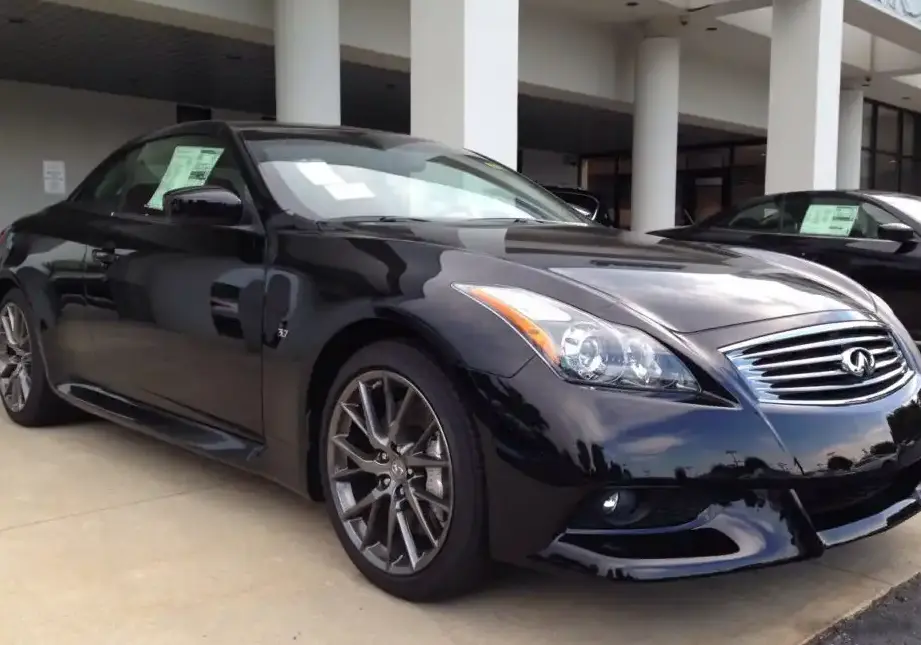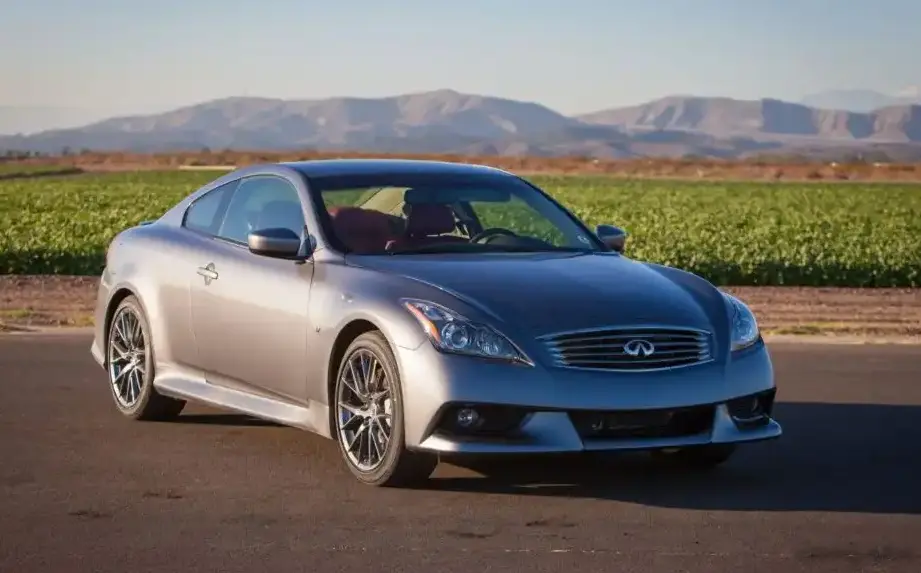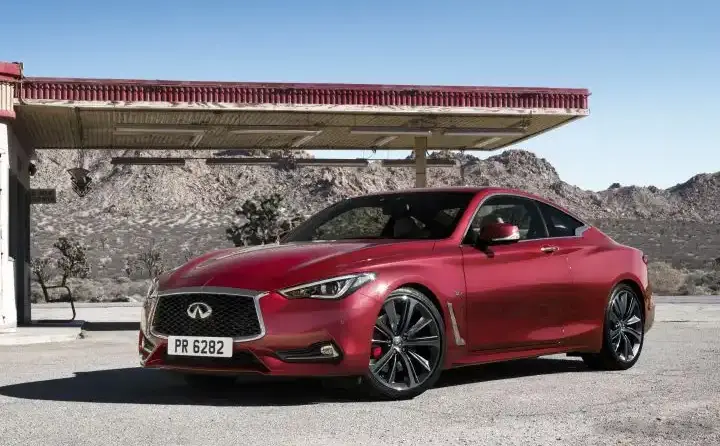
The Infiniti Q60 II Coupe RED SPORT 3.0t V6 (400 Hp) AWD Automatic, launched in 2017, represents the performance pinnacle of the second-generation Q60 lineup. Positioned as the flagship trim, it aimed to deliver a compelling blend of luxury, technology, and spirited driving dynamics within the premium sports coupe segment. The Q60 II, built on the shared FM platform with the Nissan 370Z and earlier Infiniti G37, sought to revitalize Infiniti’s image with a more aggressive design and a focus on driver engagement. This particular variant, with its twin-turbocharged V6 engine and all-wheel-drive system, was intended to compete with established players like the BMW 4 Series and Audi S5.
Technical Specifications
| Brand | Infiniti |
| Model | Q60 |
| Generation | Q60 II Coupe |
| Type (Engine) | RED SPORT 3.0t V6 (400 Hp) AWD Automatic |
| Start of production | 2017 |
| Powertrain Architecture | Internal Combustion engine |
| Body type | Coupe |
| Seats | 4 |
| Doors | 2 |
| Fuel consumption (urban) | 11.8 l/100 km (19.9 US mpg) |
| Fuel consumption (extra urban) | 8.7 l/100 km (27 US mpg) |
| Fuel consumption (combined) | 10.7 l/100 km (22 US mpg) |
| Fuel Type | Petrol (Gasoline) |
| Weight-to-power ratio | 4.6 kg/Hp, 217.9 Hp/tonne |
| Weight-to-torque ratio | 3.9 kg/Nm, 258.7 Nm/tonne |
| Power | 400 Hp @ 6400 rpm |
| Power per litre | 133.5 Hp/l |
| Torque | 475 Nm @ 1600-5200 rpm (350.34 lb.-ft. @ 1600-5200 rpm) |
| Maximum engine speed | 6800 rpm |
| Engine layout | Front, Longitudinal |
| Engine Model/Code | VR30DDTT |
| Engine displacement | 2997 cm3 (182.89 cu. in.) |
| Number of cylinders | 6 |
| Engine configuration | V-engine |
| Cylinder Bore | 86 mm (3.39 in.) |
| Piston Stroke | 86 mm (3.39 in.) |
| Compression ratio | 10.3:1 |
| Number of valves per cylinder | 4 |
| Fuel injection system | Direct injection |
| Engine aspiration | Twin-Turbo, Intercooler |
| Valvetrain | DOHC, VVT |
| Engine oil capacity | 7 l (7.4 US qt | 6.16 UK qt) |
| Coolant | 9 l (9.51 US qt | 7.92 UK qt) |
| Kerb Weight | 1836 kg (4047.69 lbs.) |
| Max. weight | 2305 kg (5081.66 lbs.) |
| Max load | 469 kg (1033.97 lbs.) |
| Trunk (boot) space – minimum | 246 l (8.69 cu. ft.) |
| Fuel tank capacity | 76 l (20.08 US gal | 16.72 UK gal) |
| Length | 4684 mm (184.41 in.) |
| Width | 1849 mm (72.8 in.) |
| Height | 1394 mm (54.88 in.) |
| Wheelbase | 2850 mm (112.2 in.) |
| Front track | 1560 mm (61.42 in.) |
| Rear (Back) track | 1585 mm (62.4 in.) |
| Drag coefficient (Cd) | 0.29 |
| Minimum turning circle (turning diameter) | 11.6 m (38.06 ft.) |
| Drive wheel | All wheel drive (4×4) |
| Number of gears and type of gearbox | 7 gears, automatic transmission |
| Front suspension | Double wishbone |
| Rear suspension | Independent multi-link suspension |
| Front brakes | Ventilated discs, 356 mm |
| Rear brakes | Ventilated discs, 351 mm |
| Assisting systems | ABS (Anti-lock braking system) |
| Steering type | Steering rack and pinion |
| Power steering | Electric Steering |
| Tires size | Front wheel tires: 9J x 20, Rear wheel tires: 255/35 R20 |
Powertrain & Engine Architecture
The heart of the Q60 RED SPORT 3.0t is the VR30DDTT 3.0-liter V6 engine. This engine represents a significant departure from the naturally aspirated VQ37VHR found in earlier Q60/G37 models. The VR30DDTT utilizes direct injection and twin-turbocharging to produce 400 horsepower and 350 lb-ft of torque. The “VR” designation signifies Nissan/Infiniti’s compact V6 architecture, designed to minimize engine length. The engine employs continuously variable valve timing (VVT) on both intake and exhaust valves to optimize performance and efficiency across the rev range. The engine is longitudinally mounted, driving all four wheels through a seven-speed automatic transmission. This transmission, while generally smooth, isn’t known for particularly rapid shifts compared to some dual-clutch transmissions found in competing vehicles.
Driving Characteristics
The Q60 RED SPORT 3.0t delivers a noticeably more potent driving experience than lower-trim Q60 models. The twin-turbo V6 provides strong acceleration, with peak torque available from a relatively low 1600 rpm. The all-wheel-drive system provides excellent traction, particularly in inclement weather. However, the Q60’s weight (over 4,000 lbs) is felt during spirited driving, and it doesn’t possess the same level of agility as some lighter sports coupes. The steering, while precise, can feel somewhat artificial due to the electric power steering system. The seven-speed automatic transmission is well-suited for everyday driving, but can sometimes hunt for the right gear during aggressive driving scenarios. Compared to the manual transmission options available on earlier G37 models, the automatic prioritizes comfort and ease of use over outright performance.
Equipment & Trim Levels
The RED SPORT 3.0t trim came standard with a comprehensive list of features, including leather upholstery, heated and ventilated front seats, a Bose premium audio system, a dual-screen infotainment system, and a suite of advanced driver-assistance systems (ADAS) such as adaptive cruise control, lane departure warning, and blind-spot monitoring. Optional extras included carbon fiber trim, a power-adjustable steering column, and upgraded interior color schemes. The interior design, while luxurious, was criticized by some for its somewhat dated infotainment system and reliance on physical buttons alongside the touchscreen interface.
Chassis & Braking
The Q60 II utilizes a double wishbone front suspension and an independent multi-link rear suspension. The RED SPORT trim featured slightly stiffer spring rates and dampers compared to lower trims, contributing to improved handling. Braking duties are handled by ventilated discs at all four corners, with larger rotors (356mm front, 351mm rear) on the RED SPORT model. The ABS system is standard, providing effective stopping power and stability. The Q60’s chassis, while robust, is based on a platform that dates back to the 2003 G35, and doesn’t offer the same level of rigidity as more modern sports coupe platforms.
Market Reception & Comparison
Critics generally praised the Q60 RED SPORT 3.0t for its powerful engine and luxurious interior. However, it was often criticized for its weight, somewhat dated infotainment system, and less engaging driving dynamics compared to some European rivals. Fuel economy, at 22 mpg combined, was considered average for the segment. Compared to the Q60 3.0t (300 hp), the RED SPORT offered a significant performance upgrade, but at a higher price point. The RED SPORT also offered a more compelling alternative to the base Q60 2.0t, which was often criticized for its underpowered engine.
Legacy
The VR30DDTT engine has proven to be relatively reliable, although preventative maintenance, particularly oil changes, is crucial. The seven-speed automatic transmission has also demonstrated reasonable durability. On the used car market, the Q60 RED SPORT 3.0t holds its value relatively well, appealing to buyers seeking a stylish and powerful coupe with a comfortable ride. While not a track-focused sports car, it remains a capable and enjoyable grand tourer, offering a compelling blend of performance, luxury, and technology.