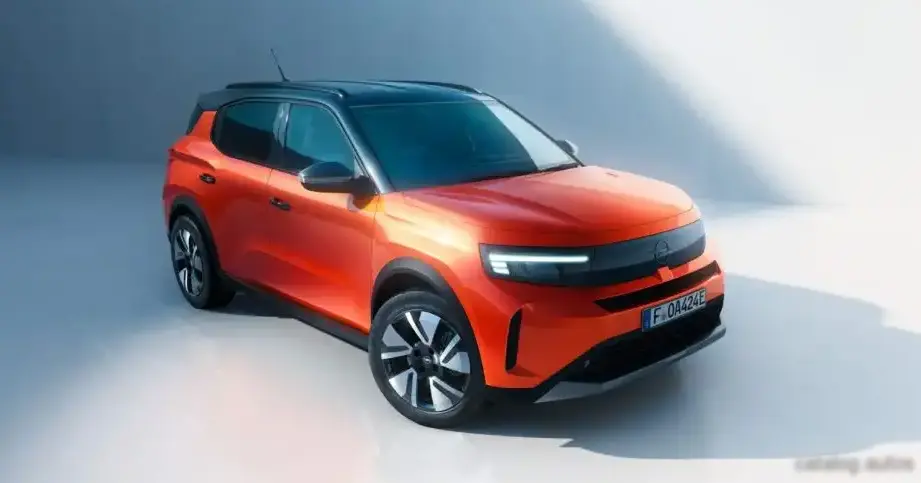
The Opel Frontera A 2.4i, produced from February 1992 to February 1995, represented a significant entry for Opel into the burgeoning mid-size SUV market. Part of the broader Frontera A range (internally designated as the 60/64 series), the 2.4i model occupied a middle ground in the lineup, offering a balance between affordability and capability. It was positioned above the base 2.0i models and below the more powerful 2.5 TDI diesel and later 3.2i V6 variants. The Frontera A aimed to provide a rugged, practical vehicle for families and those seeking a vehicle capable of both on-road comfort and moderate off-road excursions, primarily targeting the European market.
Technical Specifications
| Brand | Opel |
| Model | Frontera |
| Generation | Frontera A |
| Type (Engine) | 2.4i (125 Hp) |
| Start of production | February, 1992 |
| End of production | February, 1995 |
| Powertrain Architecture | Internal Combustion engine |
| Body type | SUV |
| Seats | 5 |
| Doors | 5 |
| Fuel consumption (combined) | 13.3 l/100 km (17.7 US mpg, 21.2 UK mpg, 7.5 km/l) |
| CO2 emissions | 269 g/km |
| Fuel Type | Petrol (Gasoline) |
| Acceleration 0 – 100 km/h | 18.6 sec |
| Acceleration 0 – 62 mph | 18.6 sec |
| Acceleration 0 – 60 mph | 17.7 sec |
| Maximum speed | 153 km/h (95.07 mph) |
| Emission standard | Euro 1 |
| Power | 125 Hp @ 4800 rpm |
| Power per litre | 51.9 Hp/l |
| Torque | 195 Nm @ 2400 rpm (143.82 lb.-ft. @ 2400 rpm) |
| Engine layout | Front, Longitudinal |
| Engine Model/Code | C24NE |
| Engine displacement | 2410 cm3 (147.07 cu. in.) |
| Number of cylinders | 4 |
| Engine configuration | Inline |
| Cylinder Bore | 95 mm (3.74 in.) |
| Piston Stroke | 85 mm (3.35 in.) |
| Compression ratio | 9.2:1 |
| Number of valves per cylinder | 2 |
| Fuel injection system | Multi-port manifold injection |
| Engine aspiration | Naturally aspirated engine |
| Engine oil capacity | 5.5 l (5.81 US qt | 4.84 UK qt) |
| Coolant | 7.8 l (8.24 US qt | 6.86 UK qt) |
| Max. weight | 2400 kg (5291.09 lbs.) |
| Trunk (boot) space – minimum | 430 l (15.19 cu. ft.) |
| Trunk (boot) space – maximum | 1570 l (55.44 cu. ft.) |
| Fuel tank capacity | 80 l (21.13 US gal | 17.6 UK gal) |
| Length | 4692 mm (184.72 in.) |
| Width | 1764 mm (69.45 in.) |
| Height | 1753 mm (69.02 in.) |
| Wheelbase | 2760 mm (108.66 in.) |
| Front track | 1455 mm (57.28 in.) |
| Rear (Back) track | 1460 mm (57.48 in.) |
| Ride height (ground clearance) | 230 mm (9.06 in.) |
| Drivetrain Architecture | The Internal combustion engine (ICE) drives the rear wheels of the vehicle. |
| Drive wheel | Rear wheel drive |
| Number of gears and type of gearbox | 5 gears, manual transmission |
| Front suspension | Torsion |
| Rear suspension | Rigid axle suspension |
| Front brakes | Ventilated discs |
| Rear brakes | Drum |
| Assisting systems | ABS (Anti-lock braking system) |
| Steering type | Worm-reduction unit |
| Tires size | 235/70 R16 |
| Wheel rims size | 7J x 16 |
Powertrain & Engine Architecture
The heart of the Frontera A 2.4i is the Opel C24NE engine, a 2.4-liter inline-four cylinder gasoline engine. This engine, part of Opel’s ‘Family II’ series, featured a cast iron block and an aluminum cylinder head. It employed a multi-port fuel injection system, delivering fuel to each cylinder individually for improved efficiency and responsiveness compared to earlier carbureted designs. The engine utilized a single overhead camshaft (SOHC) valvetrain with two valves per cylinder. The C24NE produced 125 horsepower at 4800 rpm and 195 Nm (144 lb-ft) of torque at 2400 rpm. The engine was mounted longitudinally in the chassis, driving the rear wheels. The standard transmission for this variant was a five-speed manual gearbox, although a four-speed automatic transmission was also available as an option. The automatic transmission, while offering convenience, did impact acceleration and fuel economy.
Driving Characteristics
The Frontera A 2.4i with the manual transmission offered adequate, though not exhilarating, performance. Acceleration from 0-60 mph took around 17.7 seconds, and top speed was limited to approximately 95 mph. The engine’s torque delivery was relatively flat, providing reasonable pulling power for everyday driving and moderate towing. The automatic transmission version noticeably dulled performance, increasing the 0-60 mph time to around 18.6 seconds. The gear ratios in the automatic were spaced to prioritize fuel economy over outright acceleration. The rear-wheel-drive configuration provided a more traditional driving experience, but lacked the all-weather capability of four-wheel-drive models. The suspension, tuned for a balance between comfort and off-road ability, resulted in a somewhat bouncy ride on paved roads.
Equipment & Trim Levels
The 2.4i Frontera A typically came equipped with basic amenities such as power steering, central locking, and a basic stereo system. Interior upholstery was typically cloth, with a durable plastic dashboard and trim. Optional extras included air conditioning, electric windows, and upgraded audio systems. Higher trim levels, often denoted by specific packages, could add features like alloy wheels, fog lights, and a sunroof. The interior was functional and utilitarian, prioritizing practicality over luxury. The Frontera A was designed to be a workhorse, and its interior reflected that ethos.
Chassis & Braking
The Frontera A utilized a body-on-frame construction, providing a robust and durable chassis. Front suspension consisted of torsion bars, while the rear employed a rigid axle suspension with leaf springs. This setup provided good off-road capability but resulted in a less refined on-road ride. Braking duties were handled by ventilated discs at the front and drum brakes at the rear. An Anti-lock Braking System (ABS) was available as an option, enhancing safety during emergency braking. The relatively simple suspension and braking systems were chosen for their durability and ease of maintenance.
Market Reception & Comparison
The Frontera A 2.4i was generally well-received as a capable and affordable SUV. Critics praised its ruggedness and practicality, but noted its relatively unrefined driving experience compared to more modern SUVs. Compared to the 2.0i models, the 2.4i offered a noticeable performance improvement. However, the 2.5 TDI diesel provided significantly better fuel economy and low-end torque, making it a popular choice for those who frequently towed or drove long distances. The later 3.2i V6 offered substantially more power, but at a higher price point. Fuel economy for the 2.4i was relatively poor, averaging around 17.7 US mpg, reflecting the engine’s age and technology.
Legacy
The Opel Frontera A, including the 2.4i variant, has developed a cult following among enthusiasts who appreciate its rugged simplicity and affordability. The C24NE engine is known for its reliability, although regular maintenance is essential to prevent issues such as oil leaks and timing chain wear. Today, well-maintained Frontera A 2.4i models are becoming increasingly sought after by collectors and off-road enthusiasts. Parts availability is generally good, although some specific trim pieces may be difficult to find. The Frontera A represents a significant chapter in Opel’s history, marking its entry into the competitive SUV market and establishing a reputation for building durable and capable vehicles.