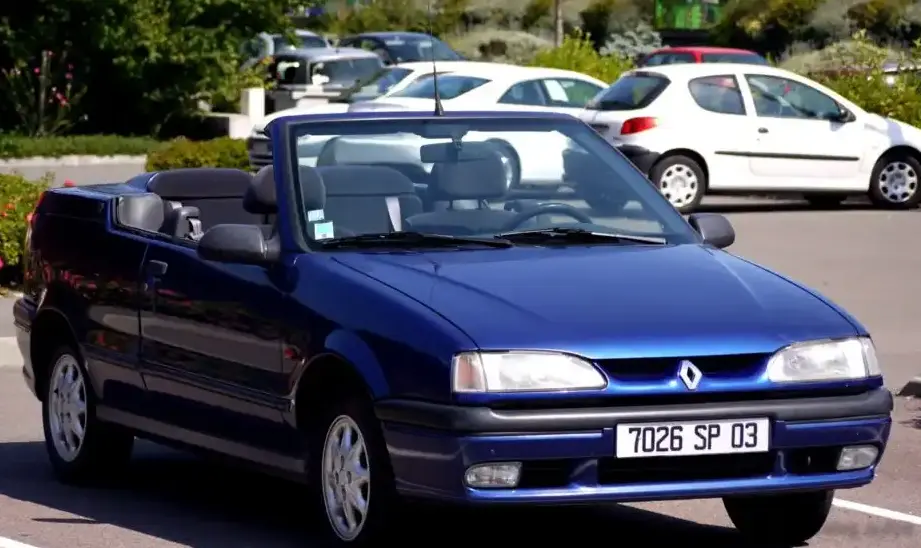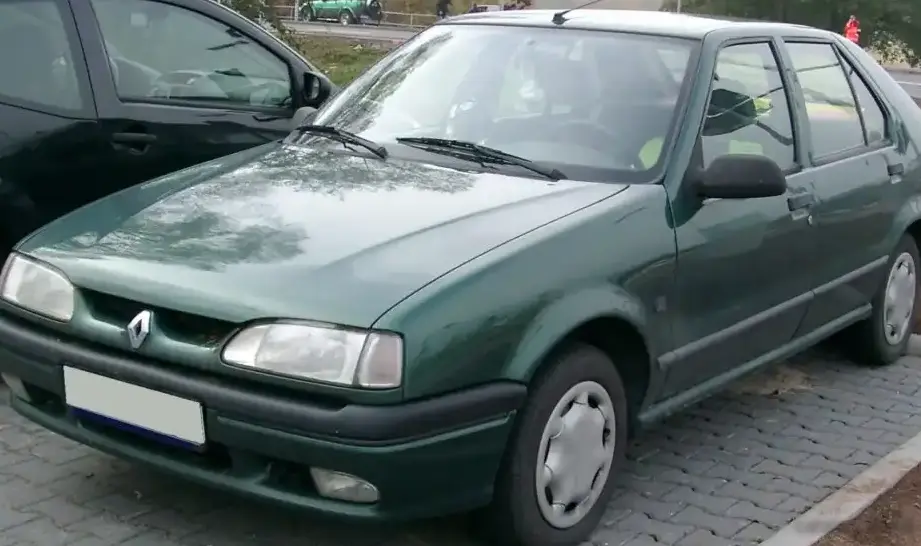
The Renault 19 1.9D, produced from 1992 to 1995, represented an economical and practical offering within the broader Renault 19 (B/C53) range. This facelifted version of the popular compact hatchback aimed to provide fuel-efficient transportation for the European market, particularly appealing to buyers prioritizing low running costs over outright performance. Positioned as a base-level diesel variant, it served as an alternative to the gasoline-powered models and the more potent 1.8-liter gasoline engines. The 1.9D was available in both 3-door and 5-door body styles, catering to different lifestyle needs.
Technical Specifications
| Brand | Renault |
| Model | 19 |
| Generation | 19 (B/C53) (facelift 1992) |
| Type (Engine) | 1.9 D (64 Hp) |
| Start of production | 1992 |
| End of production | 1995 |
| Powertrain Architecture | Internal Combustion engine |
| Body type | Hatchback |
| Seats | 5 |
| Doors | 3-5 |
| Fuel consumption (combined) | 6 l/100 km (39.2 US mpg, 47.1 UK mpg, 16.7 km/l) |
| Fuel Type | Diesel |
| Acceleration 0 – 100 km/h | 15.7 sec |
| Acceleration 0 – 62 mph | 15.7 sec |
| Acceleration 0 – 60 mph | 14.9 sec |
| Maximum speed | 161 km/h (100.04 mph) |
| Weight-to-power ratio | 16.1 kg/Hp, 62.1 Hp/tonne |
| Weight-to-torque ratio | 8.7 kg/Nm, 114.6 Nm/tonne |
| Power | 64 Hp @ 4500 rpm |
| Power per litre | 34.2 Hp/l |
| Torque | 118 Nm @ 2250 rpm (87.03 lb.-ft. @ 2250 rpm) |
| Engine layout | Front, Transverse |
| Engine Model/Code | F8Q |
| Engine displacement | 1870 cm3 (114.11 cu. in.) |
| Number of cylinders | 4 |
| Engine configuration | Inline |
| Cylinder Bore | 80 mm (3.15 in.) |
| Piston Stroke | 93 mm (3.66 in.) |
| Compression ratio | 21.5:1 |
| Number of valves per cylinder | 2 |
| Fuel injection system | Precombustion chamber injection |
| Engine aspiration | Naturally aspirated engine |
| Valvetrain | OHC |
| Engine oil capacity | 5.5 l (5.81 US qt | 4.84 UK qt) |
| Coolant | 6.8 l (7.19 US qt | 5.98 UK qt) |
| Kerb Weight | 1030 kg (2270.76 lbs.) |
| Max. weight | 1525 kg (3362.05 lbs.) |
| Max load | 495 kg (1091.29 lbs.) |
| Trunk (boot) space – minimum | 386 l (13.63 cu. ft.) |
| Trunk (boot) space – maximum | 865 l (30.55 cu. ft.) |
| Fuel tank capacity | 55 l (14.53 US gal | 12.1 UK gal) |
| Length | 4162 mm (163.86 in.) |
| Width | 1696 mm (66.77 in.) |
| Height | 1417 mm (55.79 in.) |
| Wheelbase | 2544 mm (100.16 in.) |
| Front track | 1426 mm (56.14 in.) |
| Rear (Back) track | 1417 mm (55.79 in.) |
| Drivetrain Architecture | The Internal combustion engine (ICE) drives the front wheels of the vehicle. |
| Drive wheel | Front wheel drive |
| Number of gears and type of gearbox | 5 gears, manual transmission |
| Front suspension | Wishbone |
| Rear suspension | Torsion |
| Front brakes | Disc |
| Rear brakes | Drum |
| Assisting systems | ABS (Anti-lock braking system) |
| Steering type | Steering rack and pinion |
| Power steering | Hydraulic Steering |
| Tires size | 175/70 R13 S |
| Wheel rims size | 13 |
Powertrain & Engine Architecture
The Renault 19 1.9D was powered by the F8Q engine, a 1.87-liter inline-four cylinder diesel engine. This engine was a mainstay in many Renault and Peugeot vehicles of the era. The F8Q utilized a precombustion chamber injection system, a common diesel technology of the time, which involved injecting fuel into a small pre-chamber within the cylinder head before the main combustion chamber. This aided in better fuel mixing and more complete combustion, especially during cold starts. The engine featured a single overhead camshaft (OHC) operating two valves per cylinder. The 5-speed manual transmission was the standard offering, designed to maximize fuel efficiency and provide adequate gearing for the engine’s torque characteristics. The engine’s relatively low compression ratio of 21.5:1 was typical for indirect injection diesel engines of the period.
Driving Characteristics
The 1.9D variant of the Renault 19 offered modest performance. With 64 horsepower and 118 Nm (87 lb-ft) of torque, acceleration was leisurely, taking approximately 15.7 seconds to reach 100 km/h (62 mph). The engine’s strength lay in its fuel economy and low-end torque, making it suitable for urban driving and longer journeys where outright speed wasn’t a priority. Compared to the 1.4 and 1.8 gasoline versions, the 1.9D lacked the responsiveness and higher top speed, but it significantly surpassed them in fuel efficiency. The manual transmission’s gear ratios were optimized for maximizing fuel economy, resulting in a somewhat ‘stretched’ feel during acceleration. The relatively long gearing meant that the engine needed to be revved to extract its full potential.
Equipment & Trim Levels
The 1.9D typically came with a basic level of equipment, reflecting its position as an entry-level diesel model. Standard features generally included power steering, central locking, and a basic stereo system. Interior upholstery was typically cloth, with a functional, rather than luxurious, design. Optional extras included electric windows, a sunroof, and upgraded audio systems. Trim levels were relatively simple, with the 1.9D often being offered in a single, well-equipped base specification. The dashboard layout was typical of early 1990s Renaults, with a straightforward instrument cluster and logically arranged controls.
Chassis & Braking
The Renault 19 1.9D utilized a front-wheel-drive chassis with a wishbone front suspension and a torsion beam rear suspension. This setup provided a reasonable balance between ride comfort and handling. The front brakes were discs, offering adequate stopping power, while the rear brakes were drums, a cost-saving measure common in this segment. ABS (Anti-lock Braking System) was often included as standard equipment, enhancing safety. The steering was a rack and pinion system with hydraulic assistance, providing light and precise steering feel. The relatively lightweight construction of the vehicle (around 1030 kg or 2270 lbs) helped to offset the engine’s modest power output.
Market Reception & Comparison
The Renault 19 1.9D was well-received in the European market as a practical and economical choice. Critics praised its fuel efficiency and low running costs, but noted its lack of performance compared to the gasoline-powered models. Compared to competitors like the Peugeot 205 and Citroën AX, the Renault 19 offered a spacious interior and a comfortable ride. The 1.9D’s reliability was generally considered good, although the diesel injection system required regular maintenance. Fuel economy was a key selling point, consistently achieving around 6 l/100 km (39.2 US mpg) in real-world driving conditions.
Legacy
The Renault 19 1.9D, while not a performance icon, remains a fondly remembered vehicle for its practicality and affordability. The F8Q engine proved to be a durable and reliable unit, and many examples are still on the road today. In the used car market, these models are often sought after by those looking for a simple, economical, and easy-to-maintain vehicle. While parts availability may be becoming more challenging, the F8Q engine’s widespread use in other Renault and Peugeot models ensures that components are still relatively accessible. The Renault 19 1.9D represents a significant chapter in the history of affordable European motoring, offering a blend of practicality, economy, and reliability that appealed to a wide range of buyers.