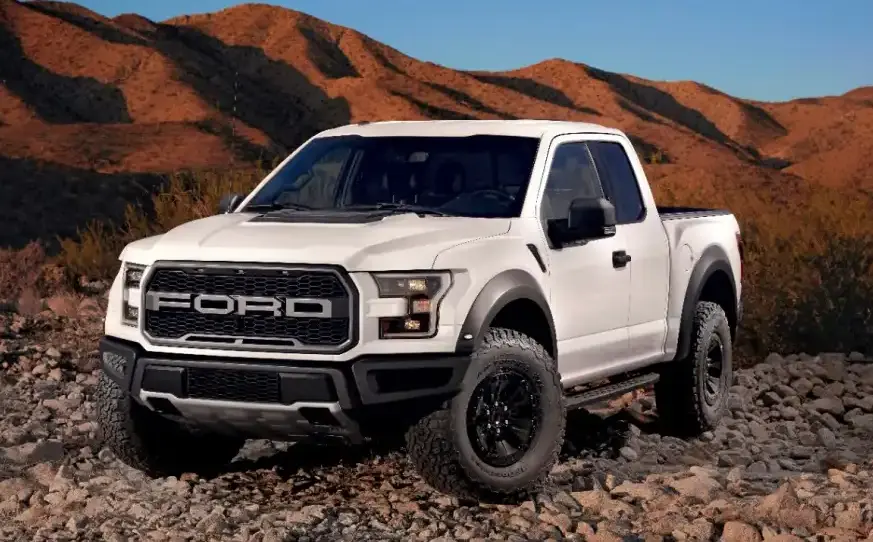
The Ford F-150, consistently the best-selling full-size pickup truck in the United States, entered its thirteenth generation with the 2015 model year. This generation marked a significant shift in construction, utilizing a high-strength, military-grade aluminum alloy body on a fully-boxed steel frame – a first for a mass-produced pickup. The 2015-2017 F-150 SuperCab configuration with the 3.5-liter V6 engine producing 375 horsepower and paired with a ten-speed automatic transmission represented a compelling blend of capability, technology, and efficiency within the F-150 lineup. It aimed to appeal to buyers needing substantial towing and hauling capacity, but also desiring a more refined driving experience and improved fuel economy compared to traditional V8 options.
Technical Specifications
| Brand | Ford |
| Model | F-Series F-100/F-150 |
| Generation | F-Series F-150 XIII SuperCab |
| Type (Engine) | 3.5 V6 (375 Hp) 4×4 Automatic |
| Start of production | 2015 year |
| End of production | 2017 year |
| Powertrain Architecture | Internal Combustion engine |
| Body type | Pick-up |
| Seats | 5-6 |
| Doors | 2 |
| Fuel consumption (economy) – urban (NEDC) | 13.8 l/100 km (17 US mpg, 20.5 UK mpg, 7.2 km/l) |
| Fuel consumption (economy) – extra urban (NEDC) | 11.2 l/100 km (21 US mpg, 25.2 UK mpg, 8.9 km/l) |
| Fuel consumption (economy) – combined (NEDC) | 12.4 l/100 km (19 US mpg, 22.8 UK mpg, 8.1 km/l) |
| Fuel Type | Petrol (Gasoline) |
| Weight-to-power ratio | 5.9 kg/Hp, 170.7 Hp/tonne |
| Weight-to-torque ratio | 3.4 kg/Nm, 289.9 Nm/tonne |
| Power | 375 Hp @ 5000 rpm |
| Power per litre | 106.7 Hp/l |
| Torque | 637 Nm @ 3500 rpm (469.83 lb.-ft. @ 3500 rpm) |
| Engine layout | Front, Longitudinal |
| Engine displacement | 3514 cm3 (214.44 cu. in.) |
| Number of cylinders | 6 |
| Engine configuration | V-engine |
| Cylinder Bore | 92.4 mm (3.64 in.) |
| Piston Stroke | 87.6 mm (3.45 in.) |
| Compression ratio | 10.5:1 |
| Number of valves per cylinder | 4 |
| Fuel injection system | Direct injection |
| Engine aspiration | BiTurbo, Intercooler |
| Engine oil capacity | 5.7 l (6.02 US qt | 5.02 UK qt) |
| Coolant | 14.75 l (15.59 US qt | 12.98 UK qt) |
| Kerb Weight | 2197-2272 kg (4843.56 – 5008.9 lbs.) |
| Trunk (boot) space – minimum | 1495 l (52.8 cu. ft.) |
| Trunk (boot) space – maximum | 2200 l (77.69 cu. ft.) |
| Fuel tank capacity | 87 l (22.98 US gal | 19.14 UK gal) |
| Length | 5890-6363 mm (231.89 – 250.51 in.) |
| Width | 2029 mm (79.88 in.) |
| Width with mirrors folded | 2121 mm (83.5 in.) |
| Width including mirrors | 2459 mm (96.81 in.) |
| Height | 1956-1961 mm (77.01 – 77.2 in.) |
| Wheelbase | 3683-4158 mm (145 – 163.7 in.) |
| Front track | 1717 mm (67.6 in.) |
| Rear (Back) track | 1717 mm (67.6 in.) |
| Front overhang | 960 mm (37.8 in.) |
| Rear overhang | 1247 mm (49.09 in.) |
| Ride height (ground clearance) | 236-239 mm (9.29 – 9.41 in.) |
| Approach angle | 25.8-26.1° |
| Departure angle | 26.0-26.1° |
| Ramp-over (brakeover) angle | 19.0-21.1° |
| Drive wheel | All wheel drive (4×4) |
| Number of gears and type of gearbox | 10 gears, automatic transmission |
| Front suspension | Double wishbone |
| Rear suspension | Leaf spring |
| Front brakes | Ventilated discs |
| Rear brakes | Ventilated discs |
| Assisting systems | ABS (Anti-lock braking system) |
| Steering type | Steering rack and pinion |
| Power steering | Electric Steering |
| Tires size | 265/70 R17 |
| Wheel rims size | 17 |
Powertrain & Engine Architecture
The heart of this F-150 variant is the 3.5-liter EcoBoost V6 engine, internally designated as the third generation of the engine. This engine utilizes a twin-turbocharged configuration, employing two Mitsubishi TD03L turbochargers to deliver increased power and torque. Direct fuel injection is used to precisely meter fuel into the combustion chambers, enhancing efficiency and reducing emissions. The engine features independent variable camshaft timing (IVCT) on both intake and exhaust valves, optimizing performance across the rev range. The 10-speed automatic transmission, co-developed with General Motors, was a revolutionary feature for a pickup truck at the time. Its closely spaced gear ratios allowed the engine to operate in its optimal power band more frequently, improving both acceleration and fuel economy. This transmission replaced the previous six-speed unit, offering smoother shifts and enhanced responsiveness.
Driving Characteristics
The 375-horsepower, 470 lb-ft of torque output of the 3.5L EcoBoost V6 provided ample power for everyday driving and demanding tasks. Compared to the base 3.5L naturally aspirated V6, the EcoBoost offered significantly improved acceleration and towing capacity. While not as raw and visceral as the 5.0L V8, the EcoBoost delivered a more refined and tractable power delivery. The ten-speed automatic transmission played a crucial role in maximizing the engine’s potential, providing quick and seamless gear changes. The SuperCab configuration, with its extended rear doors, offered improved access to the rear seats compared to the standard cab models. However, the added weight of the 4×4 system and the aluminum body, while contributing to strength, did impact overall fuel economy, though it remained competitive within the full-size truck segment.
Equipment & Trim Levels
The 3.5L EcoBoost engine was typically offered on higher trim levels of the F-150, such as the XLT, Lariat, and King Ranch. Standard features on these trims included air conditioning, power windows and locks, a rearview camera, and a basic infotainment system. Lariat trims added leather upholstery, heated and ventilated front seats, a premium sound system, and advanced safety features like blind-spot monitoring and rear cross-traffic alert. The King Ranch trim further enhanced the luxury with unique exterior styling, upgraded leather interiors, and additional convenience features. Optional extras included a panoramic sunroof, a navigation system, and a trailer tow package.
Chassis & Braking
The F-150’s chassis featured a fully-boxed steel frame, designed for strength and durability. The front suspension utilized an independent double-wishbone design, providing a comfortable ride and improved handling. The rear suspension employed a leaf spring setup, optimized for load-carrying capacity. Braking duties were handled by ventilated discs on all four wheels, providing ample stopping power. The 4×4 system offered various drive modes, including 2H (two-wheel drive high), 4H (four-wheel drive high), and 4L (four-wheel drive low), allowing drivers to adapt to different terrain and driving conditions.
Market Reception & Comparison
The 2015-2017 F-150 with the 3.5L EcoBoost engine received generally positive reviews from automotive critics. The engine was praised for its strong performance, smooth power delivery, and improved fuel economy compared to traditional V8 engines. The ten-speed automatic transmission was also lauded for its responsiveness and seamless shifting. Compared to the 5.0L V8, the EcoBoost offered comparable power but with better fuel efficiency. The EcoBoost was also seen as a more technologically advanced option, appealing to buyers seeking a modern and refined pickup truck experience. However, some critics noted that the EcoBoost engine could be more complex and potentially more expensive to repair than the V8.
Legacy
The 3.5L EcoBoost V6 engine quickly became a popular choice among F-150 buyers, and it continues to be a mainstay of the F-150 lineup today, albeit in updated and more powerful iterations. The ten-speed automatic transmission has also become increasingly common in other pickup trucks and SUVs. The 2015-2017 F-150 SuperCab 3.5L EcoBoost 4×4 Automatic remains a capable and reliable truck in the used car market. While early models may have experienced some minor issues with the turbochargers or fuel system, these have generally been addressed through recalls and updates. Its blend of power, efficiency, and technology makes it a compelling option for buyers seeking a well-rounded full-size pickup truck.