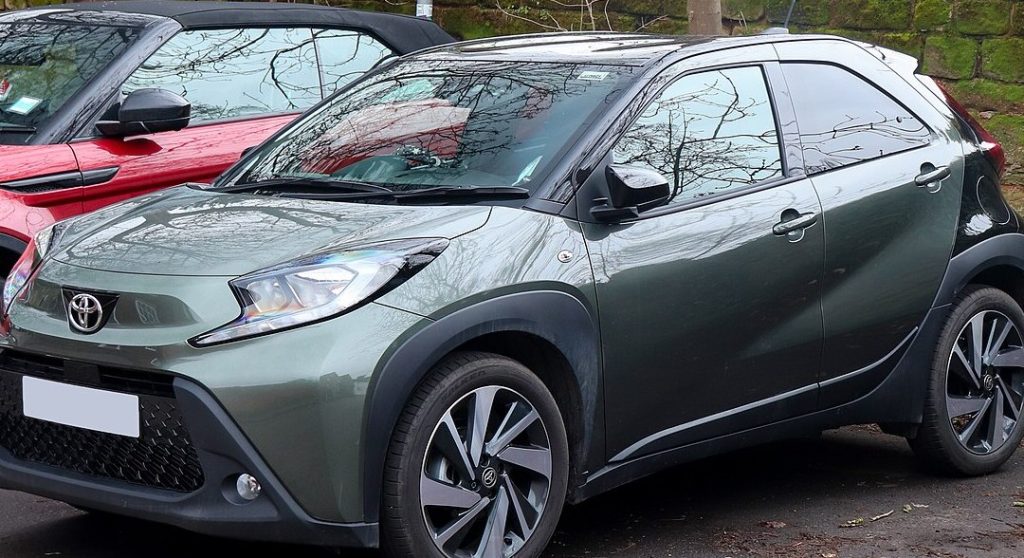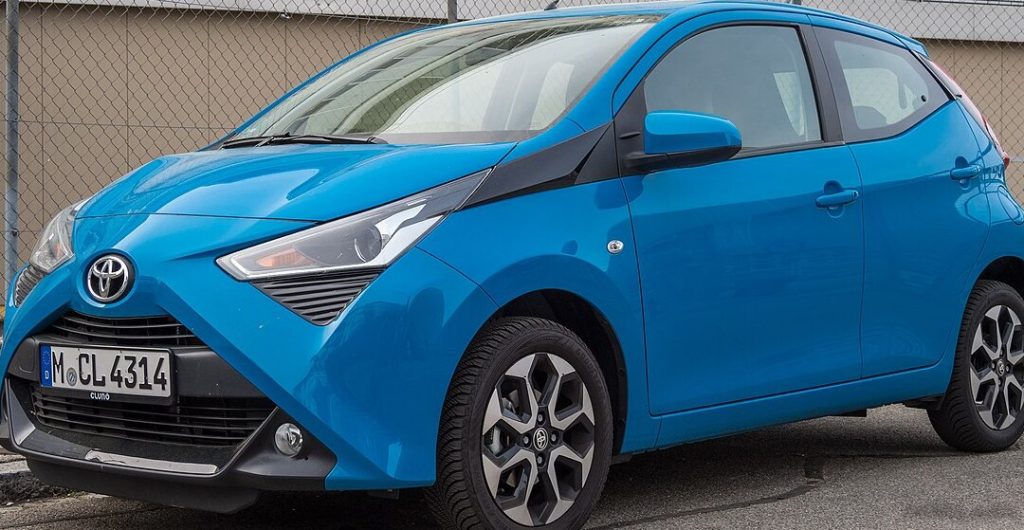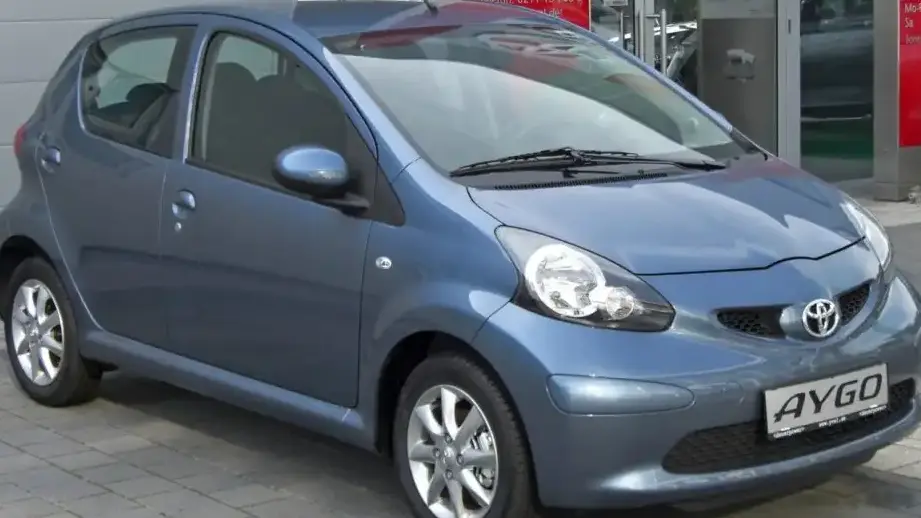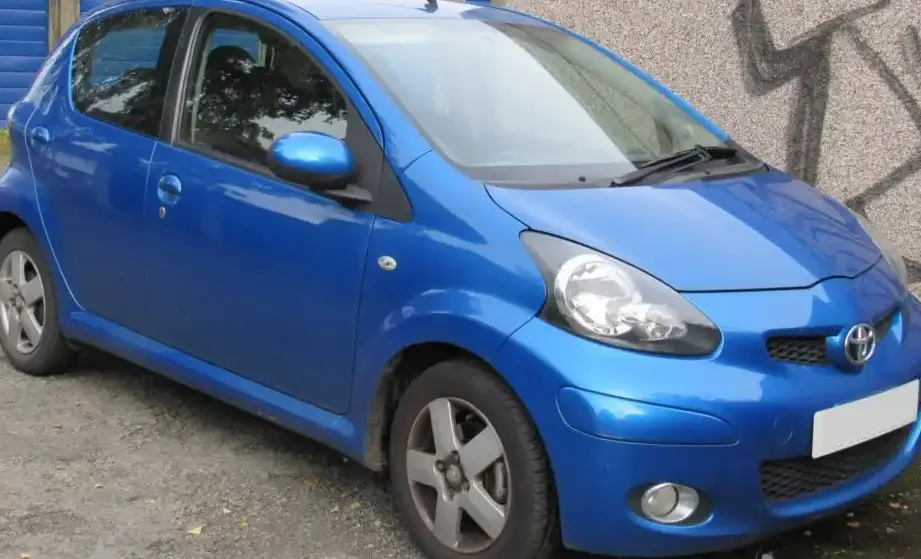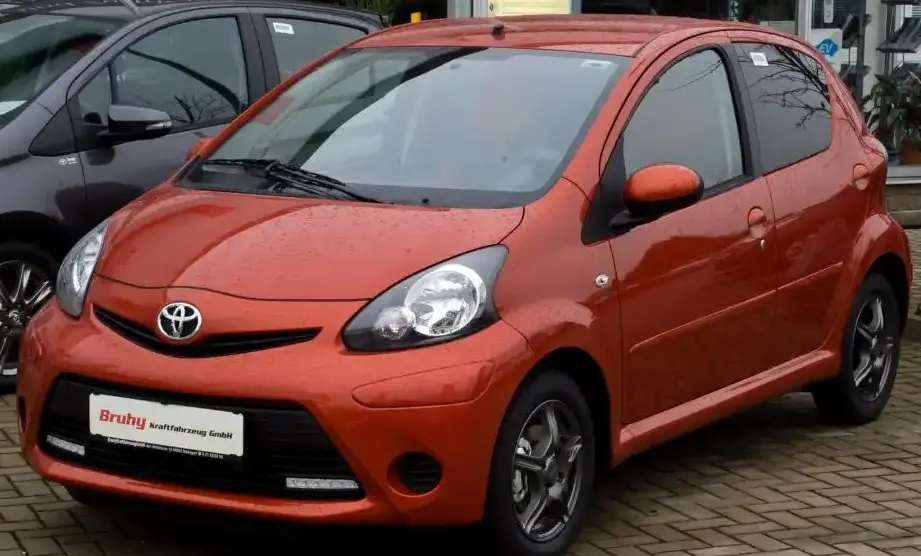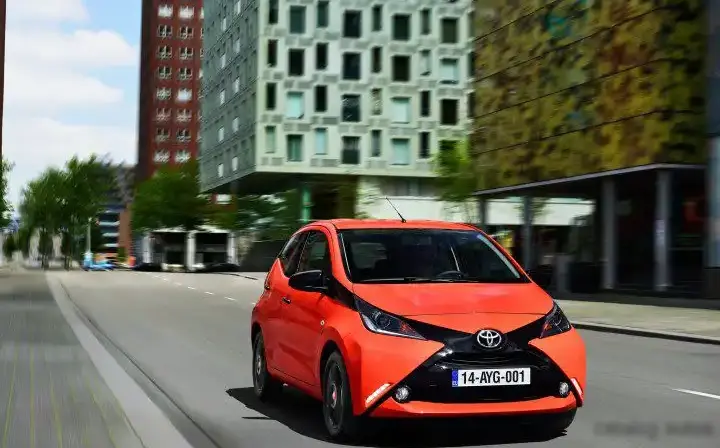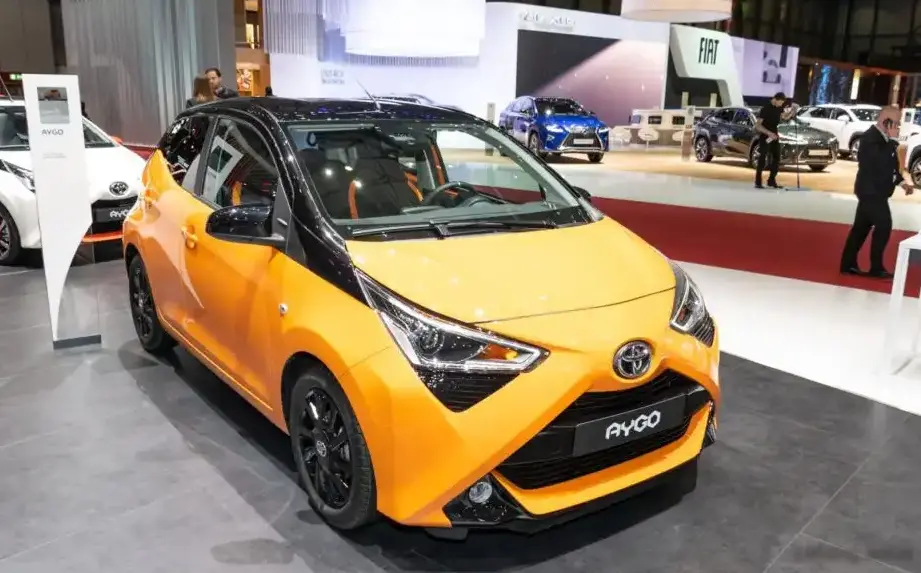
The Toyota Aygo II, specifically the facelifted version introduced in June 2018 with the 1.0-liter VVT-i engine producing 72 horsepower, represents an entry-level offering within the broader Aygo range. Produced through November 2021, this variant was primarily aimed at the European market, where small, fuel-efficient city cars are highly sought after. The Aygo II (facelift) built upon the success of the original Aygo, sharing its platform – the 1HX0/A3 – with the Peugeot 108 and Citroën C1, a result of a joint venture between Toyota and PSA Group (now Stellantis). This particular 72 hp version served as the base model, offering affordability and practicality for urban commuters.
Technical Specifications
| Brand | Toyota |
| Model | Aygo |
| Generation | Aygo II (facelift 2018) |
| Type (Engine) | 1.0 VVT-i (72 Hp) |
| Start of production | June, 2018 |
| End of production | November, 2021 |
| Powertrain Architecture | Internal Combustion engine |
| Body type | Hatchback |
| Seats | 4 |
| Doors | 3-5 |
| Fuel consumption (combined) | 3.7-4.0 l/100 km (63.6 – 58.8 US mpg, 76.3 – 70.6 UK mpg, 27 – 25 km/l) |
| CO2 emissions | 86-93 g/km |
| Fuel Type | Petrol (Gasoline) |
| Acceleration 0 – 100 km/h | 13.8 sec |
| Acceleration 0 – 62 mph | 13.8 sec |
| Acceleration 0 – 60 mph | 13.1 sec |
| Maximum speed | 160 km/h (99.42 mph) |
| Weight-to-power ratio | 11.9 kg/Hp, 83.7 Hp/tonne |
| Weight-to-torque ratio | 9.2 kg/Nm, 108.1 Nm/tonne |
| Power | 72 Hp @ 6000 rpm |
| Power per litre | 72.1 Hp/l |
| Torque | 93 Nm @ 4400 rpm (68.59 lb.-ft. @ 4400 rpm) |
| Engine layout | Front, Transverse |
| Engine Model/Code | 1KR-FE |
| Engine displacement | 998 cm3 (60.9 cu. in.) |
| Number of cylinders | 3 |
| Engine configuration | Inline |
| Number of valves per cylinder | 4 |
| Fuel injection system | Multi-port manifold injection |
| Engine aspiration | Naturally aspirated engine |
| Valvetrain | DOHC, VVT-i |
| Engine oil capacity | 2.8 l (2.96 US qt | 2.46 UK qt) |
| Coolant | 3.6 l (3.8 US qt | 3.17 UK qt) |
| Kerb Weight | 860 kg (1895.98 lbs.) |
| Trunk (boot) space – minimum | 168 l (5.93 cu. ft.) |
| Fuel tank capacity | 35 l (9.25 US gal | 7.7 UK gal) |
| Length | 3465 mm (136.42 in.) |
| Width | 1615 mm (63.58 in.) |
| Height | 1460 mm (57.48 in.) |
| Wheelbase | 2340 mm (92.13 in.) |
| Drag coefficient (Cd) | 0.28 |
| Minimum turning circle | 9.6 m (31.5 ft.) |
| Drivetrain Architecture | Front wheel drive |
| Number of gears and type of gearbox | 5 gears, manual transmission |
| Front suspension | Independent type McPherson |
| Rear suspension | Torsion |
| Front brakes | Ventilated discs |
| Rear brakes | Drum |
| Assisting systems | ABS (Anti-lock braking system) |
| Steering type | Steering rack and pinion |
| Power steering | Electric Steering |
| Wheel rims size | 14; 15 |
Powertrain & Engine Architecture
The heart of this Aygo variant is the 1KR-FE engine, a 998cc three-cylinder petrol engine. This engine is known for its simplicity and efficiency, utilizing a multi-point fuel injection system and a double overhead camshaft (DOHC) with Variable Valve Timing-intelligent (VVT-i) technology. The VVT-i system optimizes valve timing based on engine speed and load, improving both performance and fuel economy. The 1KR-FE is a naturally aspirated engine, meaning it doesn’t employ a turbocharger or supercharger. This contributes to its smooth, linear power delivery, albeit at the expense of outright performance. The engine is transversely mounted at the front of the vehicle. Paired with the engine is a five-speed manual transmission, chosen for its affordability and simplicity. While an automated manual transmission (M-MT) was available on some Aygo models, the base 72 hp version was predominantly offered with the standard manual.
Driving Characteristics
The 72 hp Aygo is not designed for spirited driving. Acceleration is modest, taking approximately 13.8 seconds to reach 62 mph (100 km/h). However, within the confines of city driving, the engine provides adequate power for navigating traffic and merging onto highways. The five-speed manual transmission allows drivers to keep the engine in its optimal power band, maximizing efficiency. The gear ratios are relatively tall, prioritizing fuel economy over rapid acceleration. Compared to higher-spec Aygo models with more powerful engines, this variant feels noticeably slower, particularly when fully loaded or climbing hills. The lightweight nature of the Aygo helps to mitigate the lack of power, making it feel nimble and responsive in urban environments.
Equipment & Trim Levels
The 1.0 VVT-i 72 hp Aygo typically came with a basic level of equipment, reflecting its position as the entry-level model. Standard features generally included power steering, central locking, electric front windows, and an audio system with USB connectivity. Safety features such as ABS and airbags were also standard. Interior upholstery was typically cloth, with a functional, rather than luxurious, design. Optional extras included air conditioning, alloy wheels, and a touchscreen infotainment system. Trim levels varied slightly depending on the market, but the core focus remained on providing an affordable and practical city car.
Chassis & Braking
The Aygo II utilizes a McPherson strut independent suspension at the front and a torsion beam suspension at the rear. This setup provides a comfortable ride quality, particularly on smooth roads. The front brakes are ventilated discs, offering adequate stopping power, while the rear brakes are drums, a cost-saving measure common in this segment. The steering is electrically assisted, providing light and easy maneuverability. The relatively lightweight construction of the Aygo contributes to its agile handling characteristics. Stabilizer bars were typically fitted to improve body roll control, although their thickness varied depending on the specific trim level.
Market Reception & Comparison
The 72 hp Aygo was generally well-received as an affordable and economical city car. Critics praised its fuel efficiency, low running costs, and nimble handling. However, the lack of power was a common criticism, particularly for drivers who frequently travel on highways or carry passengers. Compared to other trims in the Aygo lineup, such as the 1.0 VVT-i 69 hp with the M-MT transmission, the 72 hp manual offered a slightly more engaging driving experience. Against competitors like the Fiat 500 and Volkswagen up!, the Aygo stood out for its value for money and spacious interior.
Legacy
The 1.0 VVT-i 72 hp Aygo II (facelift) has proven to be a reliable and durable vehicle. The 1KR-FE engine is known for its longevity, and the simple mechanical design minimizes the risk of major failures. In the used car market, these Aygo models remain popular due to their affordability and low running costs. While not a performance car, the 72 hp variant provides a practical and economical solution for urban transportation, and continues to be a viable option for budget-conscious buyers.