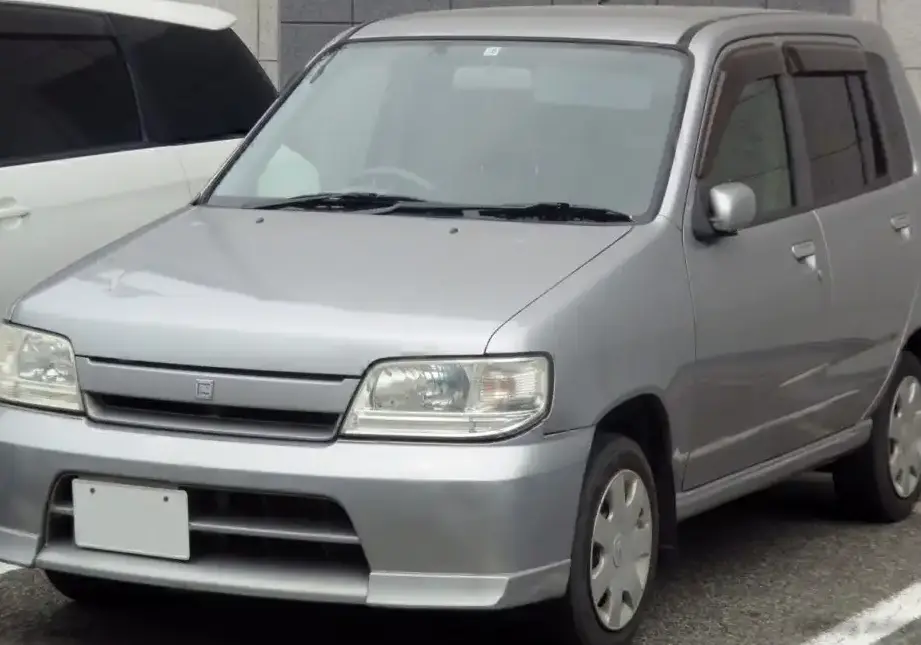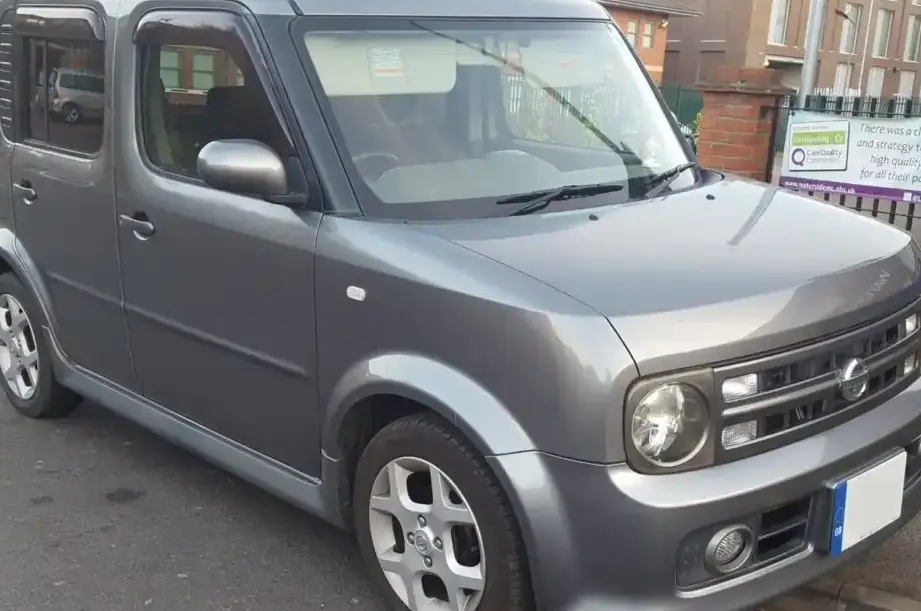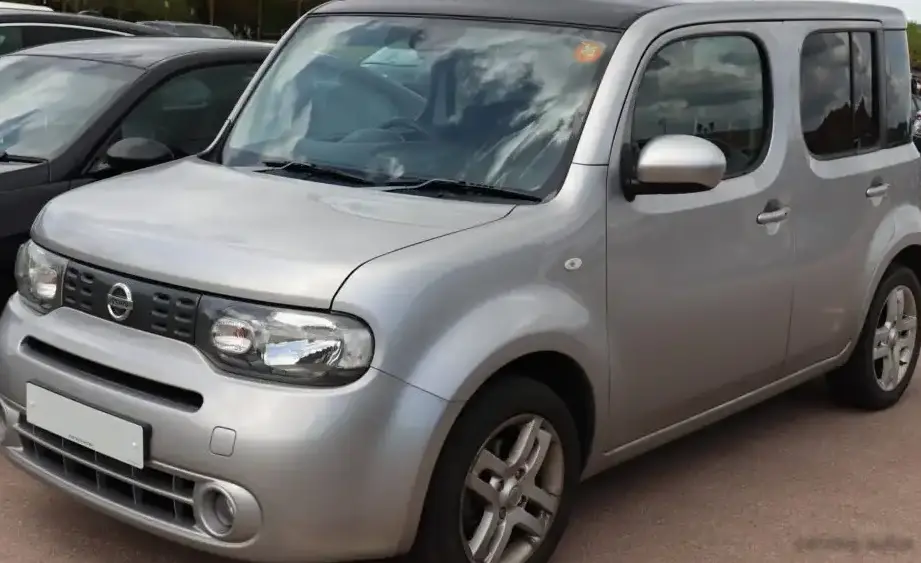
The Nissan Cube (Z12) 1.5, producing 109 horsepower, was a key variant of the second-generation Cube, manufactured from 2008 to 2019. Positioned as an entry-level offering within the Z12 lineup, it aimed to provide affordable and practical transportation with Nissan’s signature quirky styling. The Cube, in general, was primarily marketed in Japan and North America, offering a unique alternative to conventional subcompact hatchbacks. This 1.5L engine and automatic transmission combination represented a significant portion of sales, appealing to buyers prioritizing fuel efficiency and ease of use over outright performance.
Technical Specifications
| Brand | Nissan |
| Model | Cube |
| Generation | Cube (Z12) |
| Type (Engine) | 1.5 (109 Hp) |
| Start of production | 2008 year |
| End of production | 2019 year |
| Powertrain Architecture | Internal Combustion engine |
| Body type | Station wagon (estate) |
| Seats | 5 |
| Doors | 5 |
| Fuel Type | Petrol (Gasoline) |
| Weight-to-power ratio | 10.7 kg/Hp, 93.2 Hp/tonne |
| Weight-to-torque ratio | 7.9 kg/Nm, 126.5 Nm/tonne |
| Power | 109 Hp @ 6000 rpm |
| Power per litre | 72.8 Hp/l |
| Torque | 148 Nm @ 4400 rpm, 109.16 lb.-ft. @ 4400 rpm |
| Engine layout | Front, Transverse |
| Engine Model/Code | HR15DE |
| Engine displacement | 1498 cm3, 91.41 cu. in. |
| Number of cylinders | 4 |
| Engine configuration | Inline |
| Cylinder Bore | 73.6 mm, 2.9 in. |
| Piston Stroke | 88 mm, 3.46 in. |
| Compression ratio | 9.9:1 |
| Number of valves per cylinder | 4 |
| Fuel injection system | Multi-port manifold injection |
| Engine aspiration | Naturally aspirated engine |
| Valvetrain | DOHC |
| Engine oil capacity | 3 l, 3.17 US qt | 2.64 UK qt |
| Coolant | 6.6 l, 6.97 US qt | 5.81 UK qt |
| Kerb Weight | 1170 kg, 2579.41 lbs |
| Fuel tank capacity | 45 l, 11.89 US gal | 9.9 UK gal |
| Length | 3890 mm, 153.15 in |
| Width | 1695 mm, 66.73 in |
| Height | 1650 mm, 64.96 in |
| Wheelbase | 2530 mm, 99.61 in |
| Front track | 1480 mm, 58.27 in |
| Rear (Back) track | 1485 mm, 58.46 in |
| Drivetrain Architecture | The Internal combustion engine (ICE) drives the front wheels of the vehicle. |
| Drive wheel | Front wheel drive |
| Front brakes | Ventilated discs |
| Rear brakes | Drum |
| Tires size | 175/65 R15 |
Powertrain & Engine Architecture
The heart of the Z12 Cube 1.5 is the HR15DE engine, a 1.5-liter inline-four cylinder gasoline engine. This engine is part of Nissan’s HR engine family, known for its relatively simple design and focus on fuel efficiency. The HR15DE utilizes a dual overhead camshaft (DOHC) valvetrain with four valves per cylinder, and a multi-point fuel injection system. The engine’s 9.9:1 compression ratio is a compromise between performance and fuel economy. The engine’s output of 109 hp at 6000 rpm and 148 Nm (109 lb-ft) of torque at 4400 rpm is modest, but sufficient for urban driving and highway cruising. The engine is transversely mounted in the front of the vehicle. Paired with the HR15DE is a continuously variable transmission (CVT), which was standard equipment on this variant. Nissan’s CVT aimed to maximize fuel efficiency by keeping the engine operating within its optimal power band. The CVT lacks fixed gear ratios, instead utilizing a belt and pulley system to provide a seamless and continuously changing drive ratio.
Driving Characteristics
The 1.5L Cube with the CVT delivers a smooth, if not particularly exciting, driving experience. Acceleration is adequate for everyday driving, but the CVT’s lack of distinct gear changes can feel somewhat disconnected. The CVT is programmed to prioritize fuel economy, which means it often holds lower engine speeds, resulting in a noticeable delay when requesting sudden bursts of power. This is often referred to as “rubber banding” and is a common characteristic of CVTs. Compared to the 1.8L engine option available in some markets, the 1.5L Cube feels noticeably slower, especially when fully loaded or climbing hills. The CVT’s gear ratios are optimized for fuel efficiency rather than performance, resulting in a more relaxed driving style. Steering is light and easy, making it well-suited for navigating city streets. The suspension is tuned for comfort, absorbing bumps and imperfections in the road reasonably well, though it can feel somewhat soft during more spirited driving.
Equipment & Trim Levels
The 1.5 Cube typically came with a base level of equipment, focusing on practicality and affordability. Standard features generally included air conditioning, power windows and locks, and a basic audio system with a CD player and auxiliary input. Safety features such as front airbags, anti-lock brakes (ABS), and electronic brake-force distribution (EBD) were also standard. Higher trim levels, available as optional packages, added features like alloy wheels, a more advanced audio system with Bluetooth connectivity, keyless entry, and a rearview camera. Interior upholstery was typically cloth, with a simple and functional dashboard layout. The Cube’s interior was known for its spaciousness, despite its compact exterior dimensions, largely due to its tall roofline and clever packaging. The asymmetrical rear window design, while visually distinctive, also contributed to the interior’s airy feel.
Chassis & Braking
The Z12 Cube utilizes a front-wheel-drive platform with a MacPherson strut suspension in the front and a torsion beam suspension in the rear. This suspension setup is typical for vehicles in this class, prioritizing ride comfort and cost-effectiveness. The front brakes are ventilated discs, providing adequate stopping power, while the rear brakes are drums, a cost-saving measure. The 1.5L Cube’s relatively light weight (1170 kg / 2579 lbs) helps to compensate for the less powerful engine and drum brakes. Stabilizer bars are present on both the front and rear axles to reduce body roll during cornering. The steering system is a rack-and-pinion setup with power assistance, providing light and easy steering feel.
Market Reception & Comparison
The Nissan Cube 1.5 was generally well-received as an affordable and practical subcompact vehicle. Critics praised its unique styling, spacious interior, and fuel efficiency. However, the 1.5L engine and CVT combination were often criticized for their lack of performance. Some reviewers found the CVT’s operation to be unrefined and unresponsive. Compared to other subcompacts available in the North American market, such as the Honda Fit or Toyota Yaris, the Cube offered a more distinctive design but less engaging driving experience. The Fit, for example, offered a more versatile interior and a more responsive manual transmission option. Fuel economy figures for the 1.5L Cube typically ranged from 27-31 mpg in the city and 31-35 mpg on the highway, depending on driving conditions and trim level. Reliability was generally good, with few major issues reported, though some owners experienced minor issues with the CVT over time.
Legacy
The Nissan Cube Z12, particularly the 1.5L variant, has established a modest following in the used car market. Its quirky styling and practical interior continue to appeal to buyers looking for a unique and affordable vehicle. The HR15DE engine and CVT transmission are generally considered reliable, although regular maintenance is essential to ensure longevity. CVT fluid changes, in particular, are crucial for preventing premature wear. While not a performance icon, the Cube 1.5 remains a viable option for those seeking a fuel-efficient and distinctive subcompact car. Its unique design and spacious interior have ensured its place as a memorable vehicle in Nissan’s history, representing a bold attempt to break away from conventional automotive design. The Cube’s polarizing styling has also contributed to its cult following, with owners often customizing their vehicles to further express their individuality.