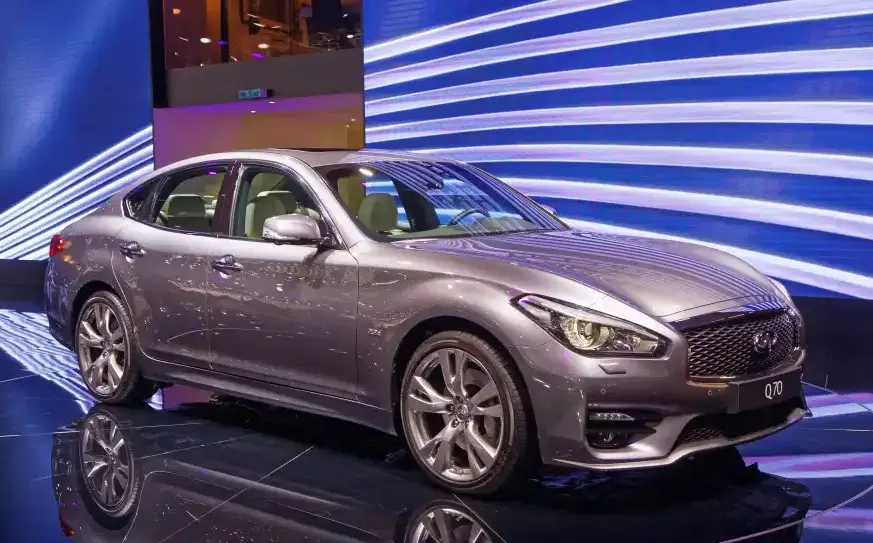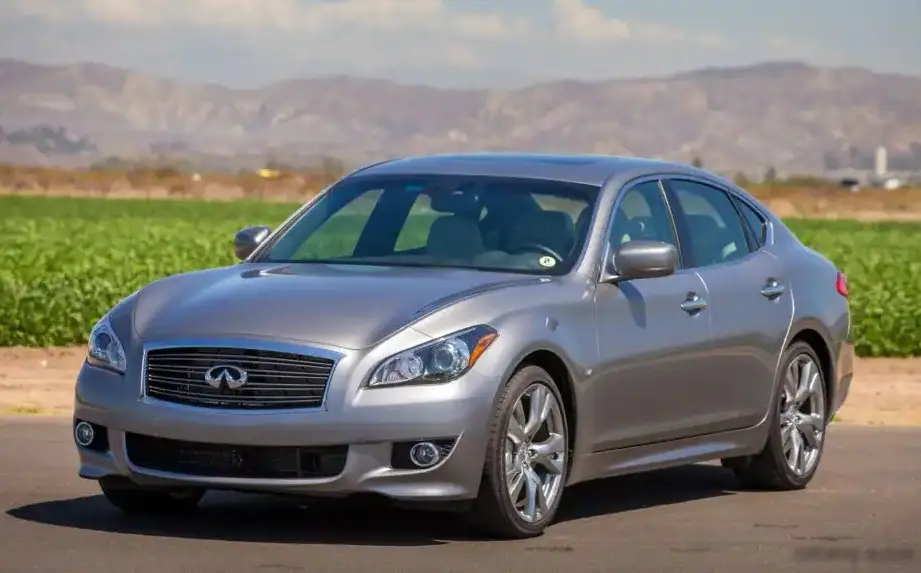
The Infiniti Q70 3.0D V6 Automatic, produced for a limited time in 2014, represented Infiniti’s entry into the premium diesel sedan market, primarily aimed at European and Asian consumers. Positioned as a more efficient alternative to the gasoline-powered Q70 models, the 3.0D utilized a V6 turbodiesel engine paired with a seven-speed automatic transmission. This variant occupied a middle ground in the Q70 lineup, offering a balance between performance, fuel economy, and luxury features. The Q70 itself was a rebadged version of the Nissan Fuga, and the 3.0D variant was a relatively late addition to the model range, reflecting a growing demand for diesel engines in the luxury segment outside of North America.
Technical Specifications
| Brand | Infiniti |
| Model | Q70 |
| Generation | Q70 |
| Type (Engine) | 3.0D V6 (238 Hp) Automatic |
| Start of production | 2014 |
| End of production | 2014 |
| Powertrain Architecture | Internal Combustion engine |
| Body type | Sedan |
| Seats | 5 |
| Doors | 4 |
| Fuel consumption (economy) – urban (NEDC) | 10.3 l/100 km (22.8 US mpg, 27.4 UK mpg, 9.7 km/l) |
| Fuel consumption (economy) – extra urban (NEDC) | 5.9 l/100 km (39.9 US mpg, 47.9 UK mpg, 16.9 km/l) |
| Fuel consumption (economy) – combined (NEDC) | 7.5 l/100 km (31.4 US mpg, 37.7 UK mpg, 13.3 km/l) |
| CO2 emissions (NEDC) | 199 g/km |
| Fuel Type | Diesel |
| Acceleration 0 – 100 km/h | 6.9 sec |
| Acceleration 0 – 62 mph | 6.9 sec |
| Acceleration 0 – 60 mph | 6.6 sec |
| Maximum speed | 250 km/h (155.34 mph), Electronically limited |
| Emission standard | Euro 5 |
| Weight-to-power ratio | 7.8 kg/Hp, 129 Hp/tonne |
| Weight-to-torque ratio | 3.4 kg/Nm, 298.1 Nm/tonne |
| Power | 238 Hp @ 3750 rpm |
| Power per litre | 79.5 Hp/l |
| Torque | 550 Nm @ 1750 rpm (405.66 lb.-ft. @ 1750 rpm) |
| Engine layout | Front, Longitudinal |
| Engine Model/Code | V9X |
| Engine displacement | 2993 cm3 (182.64 cu. in.) |
| Number of cylinders | 6 |
| Engine configuration | V-engine |
| Compression ratio | 16:1 |
| Number of valves per cylinder | 4 |
| Fuel injection system | Diesel Commonrail |
| Engine aspiration | Turbocharger, Intercooler |
| Valvetrain | DOHC |
| Engine oil capacity | 5.3 l (5.6 US qt | 4.66 UK qt) |
| Kerb Weight | 1845 kg (4067.53 lbs.) |
| Max. weight | 2395 kg (5280.07 lbs.) |
| Max load | 550 kg (1212.54 lbs.) |
| Trunk (boot) space – minimum | 450 l (15.89 cu. ft.) |
| Fuel tank capacity | 80 l (21.13 US gal | 17.6 UK gal) |
| Permitted trailer load with brakes (12%) | 2000 kg (4409.25 lbs.) |
| Permitted trailer load without brakes | 750 kg (1653.47 lbs.) |
| Length | 4945 mm (194.69 in.) |
| Width | 1845 mm (72.64 in.) |
| Width including mirrors | 2061 mm (81.14 in.) |
| Height | 1500 mm (59.06 in.) |
| Wheelbase | 2900 mm (114.17 in.) |
| Front track | 1575 mm (62.01 in.) |
| Rear (Back) track | 1570 mm (61.81 in.) |
| Ride height (ground clearance) | 152 mm (5.98 in.) |
| Drag coefficient (Cd) | 0.27-0.28 |
| Minimum turning circle (turning diameter) | 11.2 m (36.75 ft.) |
| Drivetrain Architecture | The Internal combustion engine (ICE) drives the rear wheels of the vehicle. |
| Drive wheel | Rear wheel drive |
| Number of gears and type of gearbox | 7 gears, automatic transmission |
| Front suspension | Double wishbone, Independent coil spring, Transverse stabilizer |
| Rear suspension | Independent multi-link spring suspension with stabilizer |
| Front brakes | Ventilated discs, 320×28 mm |
| Rear brakes | Ventilated discs, 308×15 mm |
| Assisting systems | ABS (Anti-lock braking system) |
| Steering type | Steering rack and pinion |
| Power steering | Electric Steering |
| Tires size | 245/45 R18; 245/40 R20 |
| Wheel rims size | 8J x 18; 9J x 20 |
Powertrain & Engine Architecture
The heart of the Q70 3.0D was the V9X engine, a 2.993-liter V6 turbodiesel. This engine utilized a common rail direct injection system, delivering fuel at extremely high pressure for optimized combustion. The engine featured a single variable geometry turbocharger (VGT) and an intercooler to enhance power and efficiency. The V9X engine produced 238 horsepower at 3750 rpm and a substantial 550 Nm (405.66 lb-ft) of torque at just 1750 rpm. This torque output was a key characteristic, providing strong low-end and mid-range acceleration. The engine also incorporated a diesel particulate filter (DPF) to meet stringent Euro 5 emission standards. The engine was longitudinally mounted, driving the rear wheels. The transmission was a seven-speed automatic, offering smooth shifts and contributing to the car’s refined driving experience. This transmission was chosen for its balance of efficiency and responsiveness, although it wasn’t as sporty as some dual-clutch transmissions available at the time.
Driving Characteristics
The Q70 3.0D Automatic offered a comfortable and refined driving experience. The high torque output of the diesel engine meant strong acceleration from a standstill and effortless overtaking. While not a sports sedan, the Q70 3.0D could accelerate from 0 to 60 mph in approximately 6.6 seconds. The seven-speed automatic transmission was well-matched to the engine, providing smooth and timely gear changes. Compared to the gasoline-powered Q70 models, the 3.0D offered significantly better fuel economy. However, it lacked the higher-revving character and more aggressive power delivery of the V6 gasoline engines. Compared to other diesel-powered luxury sedans, the Q70 3.0D offered a competitive blend of performance and refinement, but didn’t quite match the dynamic handling of some European rivals.
Equipment & Trim Levels
The Q70 3.0D Automatic typically came well-equipped with standard features including leather upholstery, power-adjustable front seats, a premium audio system, dual-zone automatic climate control, and a navigation system. Safety features included ABS, traction control, stability control, and multiple airbags. Optional extras included a rear-view camera, adaptive cruise control, and a more advanced infotainment system. Trim levels were relatively limited for the 3.0D variant, with most cars featuring a consistent level of luxury appointments. The interior design was characterized by high-quality materials and a focus on comfort.
Chassis & Braking
The Q70 3.0D featured a double wishbone front suspension and an independent multi-link rear suspension, providing a comfortable ride and good handling characteristics. Stabilizer bars were fitted to both axles to reduce body roll. The braking system consisted of ventilated discs on all four wheels, providing ample stopping power. ABS (Anti-lock Braking System) was standard. The suspension was tuned for comfort rather than outright sportiness, prioritizing a smooth ride over aggressive cornering. The Q70’s weight, around 1845 kg (4067.53 lbs), contributed to its stable feel on the road.
Market Reception & Comparison
The Infiniti Q70 3.0D was generally well-received by automotive critics, who praised its fuel efficiency, comfortable ride, and refined interior. However, some reviewers noted that the diesel engine was somewhat noisy compared to its gasoline counterparts. Compared to other diesel-powered luxury sedans, the Q70 3.0D offered a competitive price point and a generous level of standard equipment. Its fuel economy of 7.5 l/100 km (31.4 US mpg) was a significant advantage over the gasoline models. Reliability reports have been generally positive, with few major issues reported with the V9X engine or the seven-speed automatic transmission.
Legacy
The Infiniti Q70 3.0D, despite its short production run, represents an interesting chapter in Infiniti’s history. It demonstrated the brand’s willingness to experiment with diesel technology to cater to specific market demands. In the used car market, the Q70 3.0D remains a relatively rare and sought-after vehicle, particularly among those looking for a comfortable and fuel-efficient luxury sedan. The V9X engine has proven to be a durable and reliable unit, and well-maintained examples continue to provide years of service. While Infiniti has largely moved away from diesel engines in its lineup, the Q70 3.0D remains a testament to the brand’s engineering capabilities and its commitment to offering a diverse range of vehicles.