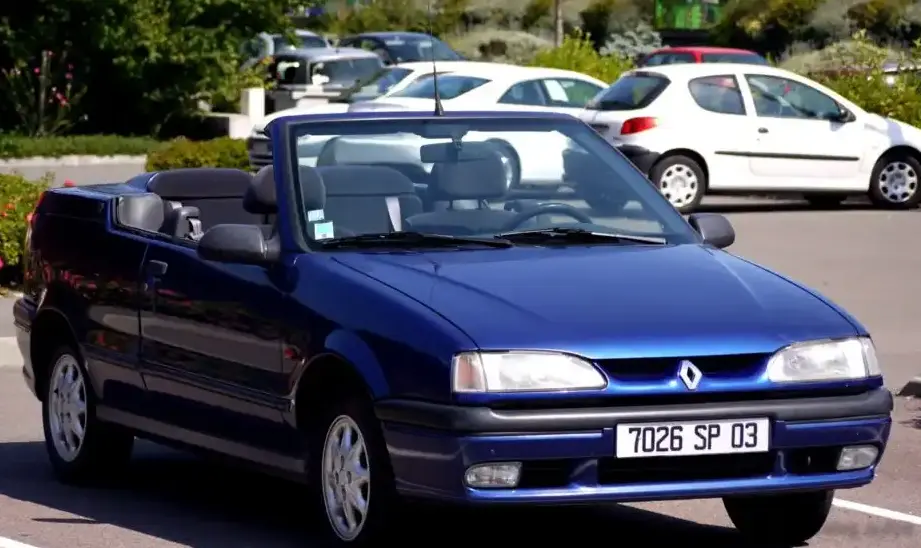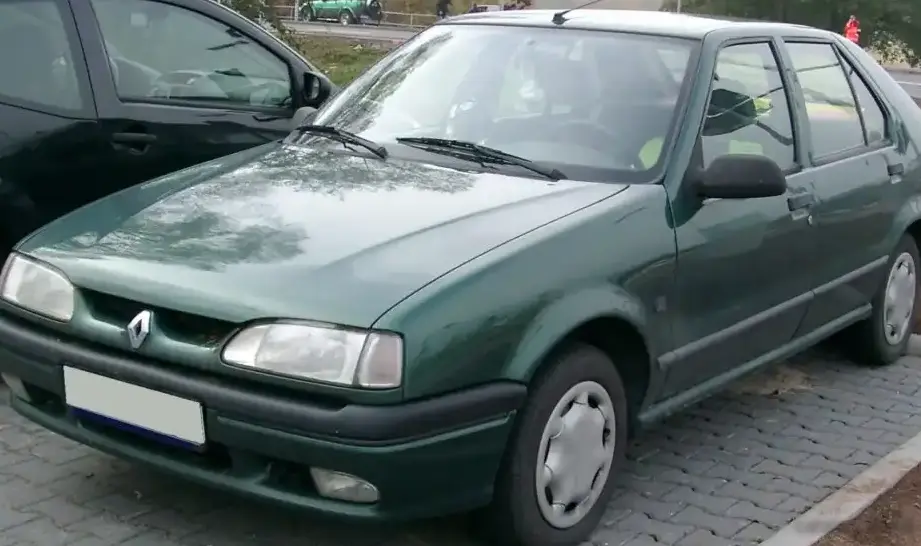
The Renault 19 1.9 TD (90 hp) was a diesel-powered variant of the popular Renault 19 compact hatchback, produced from 1992 to 1995. This model, part of the B/C53 series following the 1992 facelift, represented a practical and fuel-efficient option within the broader Renault 19 range, primarily aimed at European markets where diesel engines were favored for their economy. It occupied a mid-range position in the lineup, offering a balance between performance and running costs, slotting below the more powerful gasoline engines and above the base-level diesel models.
Technical Specifications
| Brand | Renault |
| Model | 19 |
| Generation | 19 (B/C53) (facelift 1992) |
| Type (Engine) | 1.9 TD (90 Hp) |
| Start of production | 1992 |
| End of production | 1995 |
| Powertrain Architecture | Internal Combustion engine |
| Body type | Hatchback |
| Seats | 5 |
| Doors | 3-5 |
| Fuel consumption (combined) | 5.9 l/100 km (39.9 US mpg, 47.9 UK mpg, 16.9 km/l) |
| Fuel Type | Diesel |
| Acceleration 0 – 100 km/h | 11.4 sec |
| Acceleration 0 – 62 mph | 11.4 sec |
| Acceleration 0 – 60 mph | 10.8 sec |
| Maximum speed | 183 km/h (113.71 mph) |
| Weight-to-power ratio | 11.8 kg/Hp, 84.5 Hp/tonne |
| Weight-to-torque ratio | 6.1 kg/Nm, 164.3 Nm/tonne |
| Power | 90 Hp @ 4250 rpm |
| Power per litre | 48.1 Hp/l |
| Torque | 175 Nm @ 2250 rpm (129.07 lb.-ft. @ 2250 rpm) |
| Engine layout | Front, Transverse |
| Engine Model/Code | F8Q |
| Engine displacement | 1870 cm3 (114.11 cu. in.) |
| Number of cylinders | 4 |
| Engine configuration | Inline |
| Cylinder Bore | 80 mm (3.15 in.) |
| Piston Stroke | 93 mm (3.66 in.) |
| Compression ratio | 20.5:1 |
| Number of valves per cylinder | 2 |
| Fuel injection system | Precombustion chamber injection |
| Engine aspiration | Turbocharger |
| Valvetrain | OHC |
| Engine oil capacity | 5.5 l (5.81 US qt | 4.84 UK qt) |
| Coolant | 7.1 l (7.5 US qt | 6.25 UK qt) |
| Kerb Weight | 1065 kg (2347.92 lbs.) |
| Max. weight | 1540 kg (3395.12 lbs.) |
| Max load | 475 kg (1047.2 lbs.) |
| Trunk (boot) space – minimum | 386 l (13.63 cu. ft.) |
| Trunk (boot) space – maximum | 865 l (30.55 cu. ft.) |
| Fuel tank capacity | 55 l (14.53 US gal | 12.1 UK gal) |
| Length | 4162 mm (163.86 in.) |
| Width | 1696 mm (66.77 in.) |
| Height | 1412 mm (55.59 in.) |
| Wheelbase | 2544 mm (100.16 in.) |
| Front track | 1426 mm (56.14 in.) |
| Rear (Back) track | 1417 mm (55.79 in.) |
| Drivetrain Architecture | The Internal combustion engine (ICE) drives the front wheels of the vehicle. |
| Drive wheel | Front wheel drive |
| Number of gears and type of gearbox | 5 gears, manual transmission |
| Front suspension | Wishbone |
| Rear suspension | Torsion |
| Front brakes | Disc |
| Rear brakes | Drum |
| Assisting systems | ABS (Anti-lock braking system) |
| Steering type | Steering rack and pinion |
| Power steering | Hydraulic Steering |
| Tires size | 175/70 R13 H |
| Wheel rims size | 13 |
INTRODUCTION
The Renault 19 1.9 TD, introduced after the 1992 facelift, was a key variant in the second generation of the Renault 19 (B/C53). The second-generation Renault 19, launched in 1988, was a significant step forward for Renault, offering improved styling, comfort, and technology compared to its predecessor. The 1.9 TD model specifically targeted buyers seeking a fuel-efficient and reliable hatchback for daily commuting and longer journeys. It was positioned as a practical alternative to gasoline-powered versions, particularly in countries with higher diesel fuel taxes or incentives. Available in both 3-door and 5-door body styles, the 1.9 TD aimed to broaden the appeal of the Renault 19 to a wider customer base.
Powertrain & Engine Architecture
The heart of the Renault 19 1.9 TD was the F8Q engine, a 1.9-liter inline-four cylinder diesel engine. This engine utilized precombustion chamber injection, a common diesel technology of the era. This system involved injecting fuel into a precombustion chamber connected to the main cylinder, promoting more complete combustion and reducing noise. The F8Q engine was turbocharged, which significantly boosted power output compared to naturally aspirated diesel engines. The turbocharger provided 90 horsepower at 4250 rpm and 175 Nm (129 lb-ft) of torque at 2250 rpm. The engine featured an overhead camshaft (OHC) valvetrain with two valves per cylinder. The 1.9 TD was typically paired with a five-speed manual transmission, although an automatic transmission was available in some markets, albeit less common. The automatic transmission was a four-speed unit, designed to provide smooth and convenient shifting, but at the expense of some performance and fuel economy.
Driving Characteristics
The Renault 19 1.9 TD offered a distinctly different driving experience compared to the gasoline-powered versions. While not particularly quick, with a 0-60 mph time of around 10.8 seconds, it provided ample torque for everyday driving. The turbocharger provided a noticeable boost in power, making overtaking at highway speeds manageable. The five-speed manual transmission allowed drivers to keep the engine in its optimal power band, while the optional automatic transmission prioritized ease of use. The gear ratios were tuned for fuel efficiency, resulting in a relaxed cruising experience. Compared to the higher-output 1.8-liter and 2.0-liter gasoline engines, the 1.9 TD lacked outright acceleration, but it excelled in fuel economy and low-end torque. The manual transmission versions generally felt more responsive and engaging to drive.
Equipment & Trim Levels
The Renault 19 1.9 TD was typically offered in a few different trim levels, with the base models featuring basic amenities such as cloth upholstery, central locking, and power steering. Higher trim levels added features like electric windows, a sunroof, alloy wheels, and upgraded audio systems. Interior appointments were generally functional and durable, reflecting the car’s practical focus. Optional extras included air conditioning, a trip computer, and upgraded seat fabrics. The dashboard layout was typical of early 1990s Renaults, with a clear and straightforward design. Safety features were relatively basic by modern standards, typically including a driver’s airbag and ABS anti-lock brakes on higher trim levels.
Chassis & Braking
The Renault 19 1.9 TD utilized a front-wheel-drive layout with a relatively simple suspension setup. The front suspension featured independent wishbones, providing a comfortable ride and decent handling. The rear suspension employed a torsion beam, which was cost-effective and space-efficient. Braking duties were handled by disc brakes at the front and drum brakes at the rear. ABS anti-lock brakes were available as an option, enhancing braking performance and safety. The steering was rack and pinion, providing precise and responsive steering feel. The 1.9 TD’s suspension was tuned for comfort, prioritizing a smooth ride over sporty handling. Stabilizer bars were fitted to reduce body roll during cornering.
Market Reception & Comparison
The Renault 19 1.9 TD was generally well-received by automotive critics for its fuel efficiency, reliability, and practicality. It was often praised as a sensible and economical choice for drivers covering long distances or those seeking a low-cost-to-operate vehicle. Compared to the gasoline-powered Renault 19 models, the 1.9 TD offered significantly better fuel economy, but at the expense of performance. The 1.9 TD was also often compared to other diesel hatchbacks of the era, such as the Peugeot 305 and Citroën BX. The Renault 19 1.9 TD typically offered a more refined driving experience and a more modern interior compared to some of its competitors. However, some critics noted that the engine could be somewhat noisy and that the automatic transmission could feel sluggish.
Legacy
The Renault 19 1.9 TD has proven to be a relatively reliable and durable vehicle, with many examples still on the road today. The F8Q engine is known for its robustness and longevity, although it can be prone to wear and tear over time. The availability of spare parts is generally good, making maintenance and repairs relatively straightforward. In the used car market, the Renault 19 1.9 TD is often sought after by those looking for a classic, fuel-efficient, and affordable hatchback. Its simple mechanical design and relatively low running costs make it an attractive option for enthusiasts and budget-conscious buyers alike. While not a performance icon, the 1.9 TD represents a practical and enduring chapter in Renault’s history.