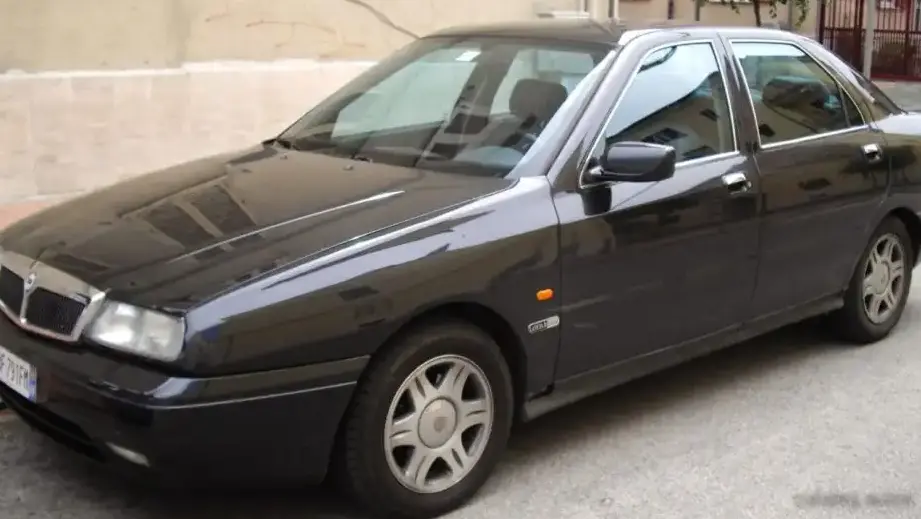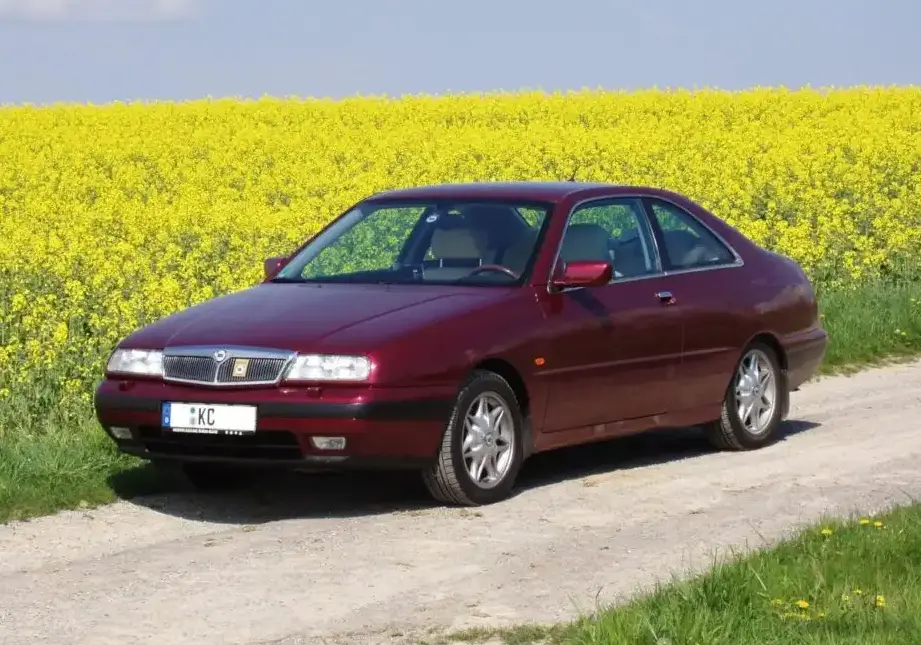
The Lancia Kappa Coupe (Type 838) 2.0 16V Turbo, produced between 1998 and 2000, represented a bold and stylish offering from the Italian automaker. Positioned as the performance-oriented variant within the Kappa Coupe range, it aimed to blend Italian design flair with respectable turbocharged power. The Kappa Coupe itself was a 2+2 coupe based on the Lancia Kappa sedan, sharing its underpinnings but boasting a more sporting aesthetic and a focus on driver engagement. This 2.0L Turbo model sat near the top of the Kappa Coupe lineup, offering a significant performance upgrade over the naturally aspirated engines while remaining more accessible than potential future high-performance versions that never materialized.
Technical Specifications
| Brand | Lancia |
| Model | Kappa |
| Generation | Kappa Coupe (838) |
| Type (Engine) | 2.0 16V Turbo (205 Hp) |
| Start of production | 1998 |
| End of production | 2000 |
| Powertrain Architecture | Internal Combustion engine |
| Body type | Coupe |
| Seats | 5 |
| Doors | 2 |
| Fuel consumption (urban) | 14.4 l/100 km (16.3 US mpg, 19.6 UK mpg) |
| Fuel consumption (extra urban) | 7.9 l/100 km (29.8 US mpg, 35.8 UK mpg) |
| Fuel Type | Petrol (Gasoline) |
| Acceleration 0 – 100 km/h | 7.3 sec |
| Acceleration 0 – 62 mph | 7.3 sec |
| Acceleration 0 – 60 mph | 6.9 sec |
| Maximum speed | 235 km/h (146.02 mph) |
| Weight-to-power ratio | 7.1 kg/Hp, 140.9 Hp/tonne |
| Weight-to-torque ratio | 4.9 kg/Nm, 204.8 Nm/tonne |
| Power | 205 Hp @ 5600 rpm |
| Power per litre | 102.8 Hp/l |
| Torque | 298 Nm @ 2750 rpm (219.79 lb.-ft. @ 2750 rpm) |
| Engine layout | Front, Transverse |
| Engine Model/Code | 838 A4.000 |
| Engine displacement | 1995 cm3 (121.74 cu. in.) |
| Number of cylinders | 4 |
| Engine configuration | Inline |
| Cylinder Bore | 84 mm (3.31 in.) |
| Piston Stroke | 90 mm (3.54 in.) |
| Compression ratio | 8:1 |
| Number of valves per cylinder | 4 |
| Fuel injection system | Multi-port manifold injection |
| Engine aspiration | Turbocharger |
| Valvetrain | DOHC |
| Engine oil capacity | 5.5 l (5.81 US qt | 4.84 UK qt) |
| Coolant | 8.3 l (8.77 US qt | 7.3 UK qt) |
| Kerb Weight | 1455 kg (3207.73 lbs.) |
| Max. weight | 1955 kg (4310.04 lbs.) |
| Max load | 500 kg (1102.31 lbs.) |
| Trunk (boot) space – minimum | 505 l (17.83 cu. ft.) |
| Fuel tank capacity | 70 l (18.49 US gal | 15.4 UK gal) |
| Length | 4665 mm (183.66 in.) |
| Width | 1825 mm (71.85 in.) |
| Height | 1430 mm (56.3 in.) |
| Wheelbase | 2580 mm (101.57 in.) |
| Front track | 1545 mm (60.83 in.) |
| Rear (Back) track | 1535 mm (60.43 in.) |
| Drivetrain Architecture | The Internal combustion engine (ICE) drives the front wheels of the vehicle. |
| Drive wheel | Front wheel drive |
| Number of gears and type of gearbox | 5 gears, manual transmission |
| Front suspension | Wishbone |
| Rear suspension | Spring Strut |
| Front brakes | Ventilated discs |
| Rear brakes | Disc |
| Assisting systems | ABS (Anti-lock braking system) |
| Steering type | Steering rack and pinion |
| Power steering | Hydraulic Steering |
| Tires size | 215/65 R16 |
Powertrain & Engine Architecture
The heart of the Kappa Coupe 2.0 16V Turbo is the 838 A4.000 engine, a 1995cc inline-four cylinder powerplant. This engine utilizes a single overhead camshaft (SOHC) design with four valves per cylinder (16V), and is augmented by a turbocharger and intercooler to boost power output. Fuel delivery is managed by a multi-port fuel injection system, providing precise fuel metering for optimal combustion. The engine’s 8:1 compression ratio is a compromise between performance and reliability, suitable for use with readily available gasoline. The five-speed manual transmission was the only gearbox option for this variant, providing drivers with full control over the engine’s power. The transmission’s gear ratios were tuned to balance acceleration and fuel efficiency, with a relatively short final drive to enhance responsiveness.
Driving Characteristics
The 205 horsepower and 298 Nm (219.79 lb-ft) of torque delivered by the 2.0L Turbo engine provided a noticeable performance uplift compared to the naturally aspirated Kappa Coupe models. Acceleration to 60 mph was achieved in around 6.9 seconds, and the car could reach a top speed of 146 mph. While not a true sports car, the turbocharged engine offered strong mid-range punch, making overtaking maneuvers effortless. The front-wheel-drive configuration, while common for its class, could exhibit some torque steer under hard acceleration. The suspension, tuned for a balance between comfort and handling, provided a reasonably composed ride, although it wasn’t as sharp or engaging as some of its rear-wheel-drive competitors.
Equipment & Trim Levels
The 2.0 16V Turbo typically came well-equipped, reflecting its position as a premium variant. Standard features included power windows, central locking, air conditioning, and an upgraded audio system. Interior upholstery was typically cloth or a combination of cloth and leather. Optional extras included a sunroof, leather seats, and upgraded alloy wheels. The dashboard layout was modern for its time, with a clear instrument cluster and logically arranged controls. The Kappa Coupe’s interior was generally considered spacious and comfortable, offering ample room for both front and rear passengers.
Chassis & Braking
The Kappa Coupe utilized a front-wheel-drive chassis with independent wishbone suspension at the front and a spring strut rear suspension. This setup provided a good balance of ride comfort and handling. The braking system consisted of ventilated discs at the front and solid discs at the rear, with ABS (Anti-lock Braking System) as standard. The steering was rack and pinion with hydraulic power assistance, offering precise and responsive steering feel. The tires were typically 215/65 R16, providing adequate grip for both dry and wet conditions.
Market Reception & Comparison
The Lancia Kappa Coupe 2.0 16V Turbo was generally well-received by automotive critics, who praised its stylish design, comfortable interior, and strong performance. However, some critics noted the front-wheel-drive configuration and occasional torque steer as drawbacks. Compared to other coupes in its class, such as the Alfa Romeo GTV and the BMW 3 Series Coupe, the Kappa Coupe offered a unique blend of Italian flair and practicality. Fuel economy was reasonable for a turbocharged engine, averaging around 29.8 US mpg on the highway. Reliability was generally considered average, with some reports of minor electrical issues.
Legacy
The Lancia Kappa Coupe 2.0 16V Turbo remains a relatively rare and sought-after vehicle among Lancia enthusiasts. The 838 A4.000 engine, while not without its quirks, is generally considered a robust and reliable unit when properly maintained. Today, these cars can be found in the used car market at relatively affordable prices, making them an attractive option for those seeking a stylish and distinctive coupe. However, potential buyers should be aware of the potential for age-related issues, such as corrosion and worn suspension components. The Kappa Coupe 2.0 16V Turbo represents a unique chapter in Lancia’s history, showcasing the brand’s commitment to design and engineering innovation.