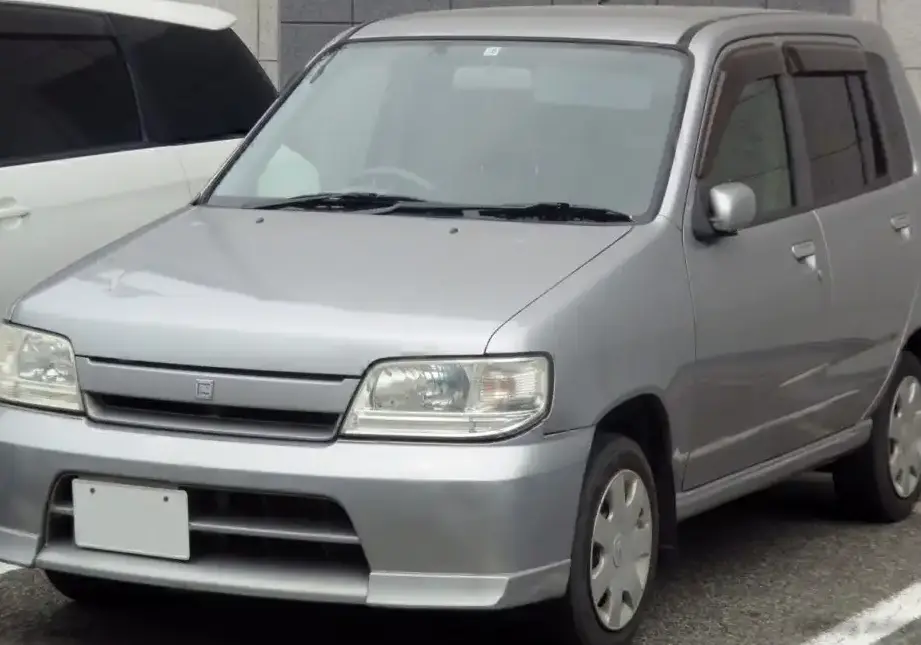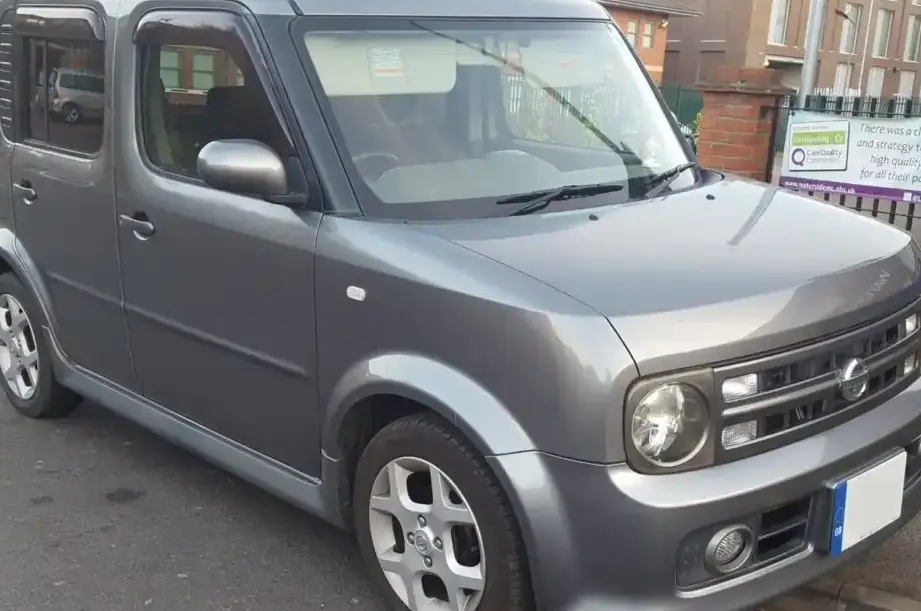
The Nissan Cube (Z12) 1.5 dCi, producing 110 horsepower, was a diesel-powered variant of Nissan’s distinctive subcompact MPV, sold primarily in the European market between January 2010 and March 2011. Positioned as a fuel-efficient and practical option within the Z12 Cube range, it aimed to appeal to buyers seeking a unique and versatile vehicle. The Z12 Cube, known for its asymmetrical rear window design and spacious interior, represented Nissan’s attempt to capture a segment of the market desiring something different from conventional hatchbacks. This particular diesel variant offered a balance between economy and performance, making it a popular choice for urban commuters and small families.
Technical Specifications
| Brand | Nissan |
| Model | Cube |
| Generation | Cube (Z12) |
| Type (Engine) | 1.5 dCi (110 Hp) DPF |
| Start of production | January, 2010 |
| End of production | March, 2011 |
| Powertrain Architecture | Internal Combustion engine |
| Body type | Station wagon (estate) |
| Seats | 5 |
| Doors | 5 |
| Fuel consumption (urban) | 6 l/100 km (39.2 US mpg, 47.1 UK mpg, 16.7 km/l) |
| Fuel consumption (extra urban) | 4.7 l/100 km (50 US mpg, 60.1 UK mpg, 21.3 km/l) |
| Fuel consumption (combined) | 5.2 l/100 km (45.2 US mpg, 54.3 UK mpg, 19.2 km/l) |
| CO2 emissions | 135 g/km |
| Fuel Type | Diesel |
| Acceleration 0 – 100 km/h | 11.9 sec |
| Acceleration 0 – 62 mph | 11.9 sec |
| Acceleration 0 – 60 mph | 11.3 sec |
| Maximum speed | 175 km/h (108.74 mph) |
| Emission standard | Euro 4 |
| Weight-to-power ratio | 12.5 kg/Hp, 80 Hp/tonne |
| Weight-to-torque ratio | 5.7 kg/Nm, 174.5 Nm/tonne |
| Power | 110 Hp @ 4000 rpm |
| Power per litre | 75.3 Hp/l |
| Torque | 240 Nm @ 1750 rpm (177.01 lb.-ft. @ 1750 rpm) |
| Engine layout | Front, Transverse |
| Engine Model/Code | K9K |
| Engine displacement | 1461 cm3 (89.16 cu. in.) |
| Number of cylinders | 4 |
| Engine configuration | Inline |
| Cylinder Bore | 76 mm (2.99 in.) |
| Piston Stroke | 80.5 mm (3.17 in.) |
| Compression ratio | 15.2:1 |
| Number of valves per cylinder | 2 |
| Fuel injection system | Diesel Commonrail |
| Engine aspiration | Turbocharger, Intercooler |
| Valvetrain | SOHC |
| Engine oil capacity | 4.55 l (4.81 US qt | 4 UK qt) |
| Coolant | 7.5 l (7.93 US qt | 6.6 UK qt) |
| Kerb Weight | 1375-1418 kg (3031.36 – 3126.15 lbs.) |
| Max. weight | 1820 kg (4012.41 lbs.) |
| Max load | 402-445 kg (886.26 – 981.06 lbs.) |
| Trunk (boot) space – minimum | 260 l (9.18 cu. ft.) |
| Trunk (boot) space – maximum | 1563 l (55.2 cu. ft.) |
| Fuel tank capacity | 52 l (13.74 US gal | 11.44 UK gal) |
| Max. roof load | 40 kg (88.18 lbs.) |
| Permitted trailer load with brakes (12%) | 900 kg (1984.16 lbs.) |
| Permitted trailer load without brakes | 510 kg (1124.36 lbs.) |
| Permitted towbar download | 36 kg (79.37 lbs.) |
| Length | 3980 mm (156.69 in.) |
| Width | 1695 mm (66.73 in.) |
| Height | 1670 mm (65.75 in.) |
| Wheelbase | 2530 mm (99.61 in.) |
| Front track | 1475 mm (58.07 in.) |
| Rear (Back) track | 1480 mm (58.27 in.) |
| Front overhang | 790 mm (31.1 in.) |
| Rear overhang | 660 mm (25.98 in.) |
| Minimum turning circle (turning diameter) | 10.2 m (33.46 ft.) |
| Drivetrain Architecture | The Internal combustion engine (ICE) drives the front wheels of the vehicle. |
| Drive wheel | Front wheel drive |
| Number of gears and type of gearbox | 5 gears, manual transmission |
| Front suspension | Independent, type McPherson with coil spring and anti-roll bar |
| Rear suspension | Transverse stabilizer, Torsion |
| Front brakes | Ventilated discs |
| Rear brakes | Disc |
| Assisting systems | ABS (Anti-lock braking system) |
| Steering type | Steering rack and pinion |
| Power steering | Hydraulic Steering |
| Tires size | 195/60 R15; 195/60 R16 |
| Wheel rims size | 6J x 15; 6J x 16 |
Powertrain & Engine Architecture
The heart of the Cube 1.5 dCi was the K9K engine, a 1.5-liter inline-four cylinder diesel engine. This engine was a common sight in Renault-Nissan vehicles of the period, known for its relatively compact size and fuel efficiency. The K9K featured a turbocharger with an intercooler to boost power output, and a diesel common rail fuel injection system for precise fuel delivery. The engine produced 110 horsepower at 4000 rpm and 240 Nm (177 lb-ft) of torque at 1750 rpm. The engine utilized a Single Overhead Camshaft (SOHC) valvetrain with two valves per cylinder. The engine was paired with a five-speed manual transmission, delivering power to the front wheels. A Diesel Particulate Filter (DPF) was included to meet Euro 4 emission standards.
Driving Characteristics
The 1.5 dCi engine provided adequate, though not exhilarating, performance for the Cube. Acceleration from 0 to 62 mph (0-100 km/h) took around 11.9 seconds, and the top speed was 175 km/h (108.74 mph). The engine’s torque peak at 1750 rpm meant that it offered reasonable pulling power for everyday driving situations, such as overtaking or climbing hills. Compared to the petrol-powered versions of the Cube, the diesel offered significantly better fuel economy, but lacked the responsiveness of the gasoline engines. The five-speed manual transmission was well-matched to the engine’s characteristics, providing smooth gear changes. The Cube’s relatively lightweight construction helped to mitigate the engine’s modest power output.
Equipment & Trim Levels
The 1.5 dCi variant of the Cube typically came with a reasonable level of standard equipment. This included air conditioning, power windows, central locking, and an audio system with CD player. Safety features such as ABS brakes and front airbags were also standard. Higher trim levels offered additional features such as alloy wheels, a trip computer, and upgraded interior trim. The Cube was known for its quirky interior design, with a spacious cabin and a high seating position. The asymmetrical rear window and unique dashboard layout contributed to its distinctive character.
Chassis & Braking
The Cube 1.5 dCi utilized a McPherson strut front suspension and a torsion beam rear suspension. This setup provided a comfortable ride quality, although it wasn’t particularly sporty. The front brakes were ventilated discs, while the rear brakes were solid discs. The steering was a hydraulic rack and pinion system, offering reasonable precision and feedback. The Cube’s relatively narrow tires (typically 195/60 R15 or 195/60 R16) contributed to its fuel efficiency but limited its grip in cornering.
Market Reception & Comparison
The Nissan Cube 1.5 dCi was generally well-received by critics for its fuel efficiency, practicality, and unique styling. However, some reviewers criticized its modest performance and somewhat unconventional interior design. Compared to other subcompact MPVs of the time, such as the Renault Modus or the Fiat Idea, the Cube offered a more distinctive and youthful image. The diesel engine provided a significant advantage in terms of fuel economy, making it an attractive option for drivers covering long distances. However, the petrol-powered versions of the Cube were often preferred by those prioritizing performance and refinement.
Legacy
The K9K diesel engine proved to be a reliable and durable unit, and many examples are still on the road today. The Cube 1.5 dCi, while not a high-performance vehicle, offered a practical and economical transportation solution. In the used car market, these models are often sought after by buyers looking for a fuel-efficient and distinctive vehicle. Maintenance costs are generally reasonable, although diesel particulate filter issues can occasionally arise. The Cube’s unique styling and spacious interior continue to appeal to a niche market of buyers who appreciate its individuality.