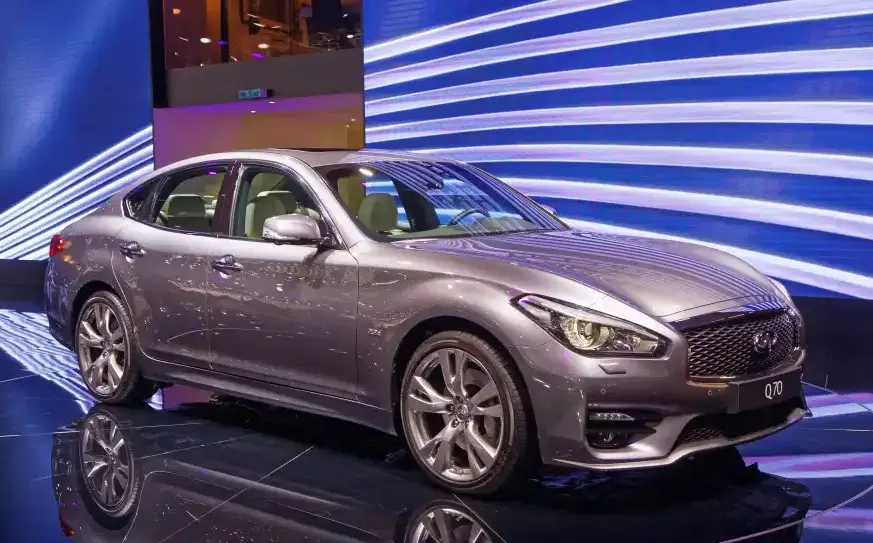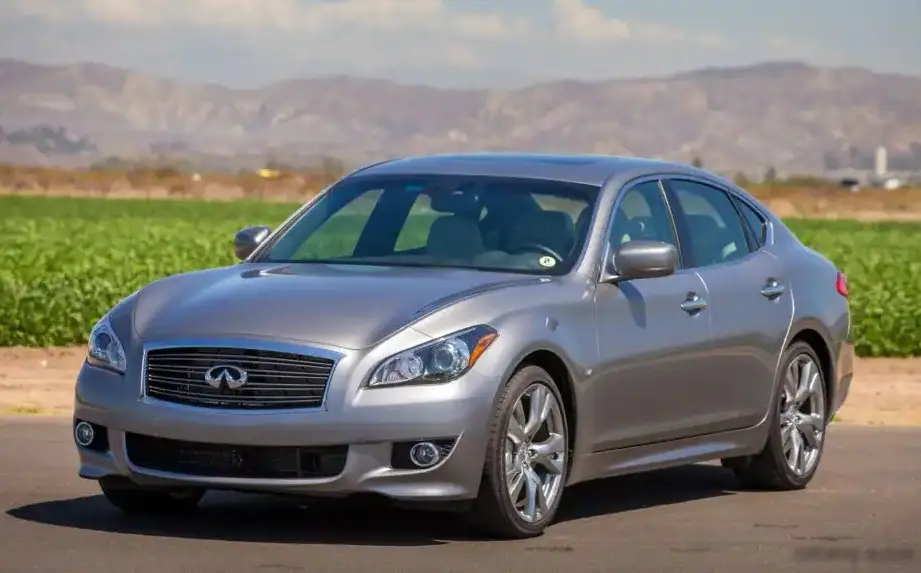
The Infiniti Q70 3.7, specifically the variant equipped with the 3.7-liter V6 engine producing 330 horsepower and paired with a 7-speed automatic transmission, represented a key offering in Infiniti’s mid-size luxury sedan lineup from 2013 to 2014. Positioned as a step up from the base 3.5-liter models, the 3.7 aimed to deliver a more engaging driving experience while maintaining the Q70’s reputation for comfort and refinement. This generation, internally designated as the V37, built upon the foundation of the previous M-series, offering a blend of performance, technology, and luxury features intended to compete with established European rivals like the BMW 5 Series and Audi A6.
Technical Specifications
| Brand | Infiniti |
| Model | Q70 |
| Generation | Q70 |
| Type (Engine) | 3.7 V6 (330 Hp) Automatic |
| Start of production | 2013 |
| End of production | 2014 |
| Powertrain Architecture | Internal Combustion engine |
| Body type | Sedan |
| Seats | 5 |
| Doors | 4 |
| Fuel consumption (economy) – urban (EPA) | 13.1 l/100 km (18 US mpg, 21.6 UK mpg, 7.6 km/l) |
| Fuel consumption (economy) – extra urban (EPA) | 9 l/100 km (26.1 US mpg, 31.4 UK mpg, 11.1 km/l) |
| Fuel consumption (economy) – combined (EPA) | 11.2 l/100 km (21 US mpg, 25.2 UK mpg, 8.9 km/l) |
| Fuel Type | Petrol (Gasoline) |
| Weight-to-power ratio | 5.3 kg/Hp, 189.9 Hp/tonne |
| Weight-to-torque ratio | 4.7 kg/Nm, 210.6 Nm/tonne |
| Power | 330 Hp @ 7000 rpm |
| Power per litre | 89.3 Hp/l |
| Torque | 366 Nm @ 5200 rpm (269.95 lb.-ft. @ 5200 rpm) |
| Maximum engine speed | 7500 rpm |
| Engine layout | Front, Longitudinal |
| Engine Model/Code | VQ37VHR |
| Engine displacement | 3696 cm3 (225.54 cu. in.) |
| Number of cylinders | 6 |
| Engine configuration | V-engine |
| Cylinder Bore | 95.5 mm (3.76 in.) |
| Piston Stroke | 86 mm (3.39 in.) |
| Compression ratio | 11:1 |
| Number of valves per cylinder | 4 |
| Fuel injection system | Multi-port manifold injection |
| Engine aspiration | Naturally aspirated engine |
| Valvetrain | DOHC, VVEL, CVTCS |
| Engine oil capacity | 4.9 l (5.18 US qt | 4.31 UK qt) |
| Coolant | 8.4 l (8.88 US qt | 7.39 UK qt) |
| Kerb Weight | 1738 kg (3831.63 lbs.) |
| Max. weight | 2271 kg (5006.7 lbs.) |
| Max load | 533 kg (1175.06 lbs.) |
| Trunk (boot) space – minimum | 422 l (14.9 cu. ft.) |
| Fuel tank capacity | 76 l (20.08 US gal | 16.72 UK gal) |
| Length | 4945 mm (194.69 in.) |
| Width | 1845 mm (72.64 in.) |
| Height | 1500 mm (59.06 in.) |
| Wheelbase | 2900 mm (114.17 in.) |
| Front track | 1575 mm (62.01 in.) |
| Rear (Back) track | 1570 mm (61.81 in.) |
| Ride height (ground clearance) | 150-152 mm (5.91 – 5.98 in.) |
| Drag coefficient (Cd) | 0.27 |
| Minimum turning circle (turning diameter) | 11.2 m (36.75 ft.) |
| Drivetrain Architecture | The Internal combustion engine (ICE) drives the rear wheels of the vehicle. |
| Drive wheel | Rear wheel drive |
| Number of gears and type of gearbox | 7 gears, automatic transmission |
| Front suspension | Double wishbone, Independent coil spring, Transverse stabilizer |
| Rear suspension | Independent multi-link spring suspension with stabilizer |
| Front brakes | Ventilated discs, 320×28 mm |
| Rear brakes | Ventilated discs, 308×15 mm |
| Assisting systems | ABS (Anti-lock braking system) |
| Steering type | Steering rack and pinion |
| Power steering | Electric Steering |
| Tires size | 245/50 R18; 245/40 R20 |
| Wheel rims size | 8J x 18; 9J x 20 |
Powertrain & Engine Architecture
At the heart of the Q70 3.7 lay the VQ37VHR 3.7-liter V6 engine. This engine, a member of Nissan’s highly regarded VQ family, was known for its smooth power delivery and robust construction. The “VHR” designation signified “Variable Valve Event and Lift,” indicating the engine’s advanced valvetrain technology. This system, incorporating Continuously Variable Valve Timing Control System (CVTCS) and Variable Valve Event and Lift (VVEL), allowed for precise control over valve timing and lift, optimizing performance and fuel efficiency across the engine’s operating range. Fuel delivery was handled by a multi-port fuel injection system. The engine produced 330 horsepower at 7,000 rpm and 270 lb-ft of torque at 5,200 rpm. The engine’s longitudinal mounting and rear-wheel-drive configuration contributed to a balanced chassis feel. The 7-speed automatic transmission, while providing smooth shifts, wasn’t known for being particularly sporty; it prioritized comfort and refinement over aggressive gear changes.
Driving Characteristics
The Q70 3.7 Automatic offered a comfortable and composed driving experience. While not a sports sedan in the truest sense, the 3.7-liter V6 provided ample power for confident acceleration and highway cruising. The automatic transmission, with its seven gears, helped to keep the engine in its optimal power band, but it lacked the responsiveness of some competitors’ transmissions. Compared to the base 3.5-liter Q70, the 3.7 offered noticeably quicker acceleration and a more engaging driving feel. However, it didn’t quite match the performance of sportier rivals. The gear ratios were tuned for a balance of fuel economy and usability, rather than outright performance. The rear-wheel-drive layout contributed to a balanced feel, but the car’s weight (around 3,832 lbs) was noticeable during spirited driving.
Equipment & Trim Levels
The Q70 3.7 typically came well-equipped with standard features including leather upholstery, a power-adjustable driver’s seat, dual-zone automatic climate control, a Bose audio system, and a navigation system. Optional extras included a premium package with features like semi-aniline leather, heated and cooled front seats, and a rear-seat entertainment system. The Q70 also offered advanced safety features such as lane departure warning, blind-spot monitoring, and adaptive cruise control. Interior trim options were generally conservative, focusing on wood accents and metallic finishes to create a luxurious ambiance.
Chassis & Braking
The Q70 3.7 featured a double wishbone front suspension and an independent multi-link rear suspension, designed to provide a comfortable ride and stable handling. Stabilizer bars were fitted to both axles to reduce body roll during cornering. Braking duties were handled by ventilated discs on all four wheels, with ABS standard. The braking system was adequate for the car’s weight and performance, but it wasn’t particularly noteworthy compared to some competitors. The steering was power-assisted and provided a reasonable level of feedback, although it lacked the precision of some sportier sedans.
Market Reception & Comparison
Critics generally praised the Q70 3.7 for its comfortable ride, spacious interior, and refined engine. However, some reviewers noted that the car’s styling was somewhat conservative and that the automatic transmission wasn’t as responsive as some competitors. Fuel economy was average for the segment, with combined EPA estimates around 21 mpg. Compared to the base 3.5-liter Q70, the 3.7 offered a significant performance upgrade, but it came at a higher price. The Q70 3.7’s reliability was generally considered good, although some owners reported minor issues with the infotainment system.
Legacy
The Infiniti Q70 3.7, while not a sales leader in its segment, established itself as a comfortable and reliable luxury sedan. The VQ37VHR engine proved to be durable and relatively easy to maintain. On the used car market, the Q70 3.7 represents a good value for buyers seeking a well-equipped and refined mid-size luxury sedan. The powertrain, while not cutting-edge, remains capable and dependable. However, potential buyers should be aware of the age of the vehicle and the potential for maintenance issues associated with older luxury cars, such as worn suspension components and aging electronics.