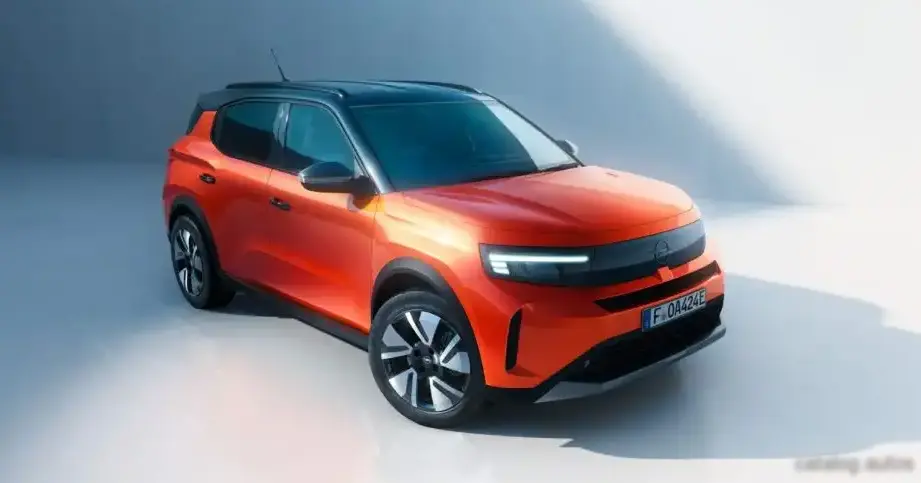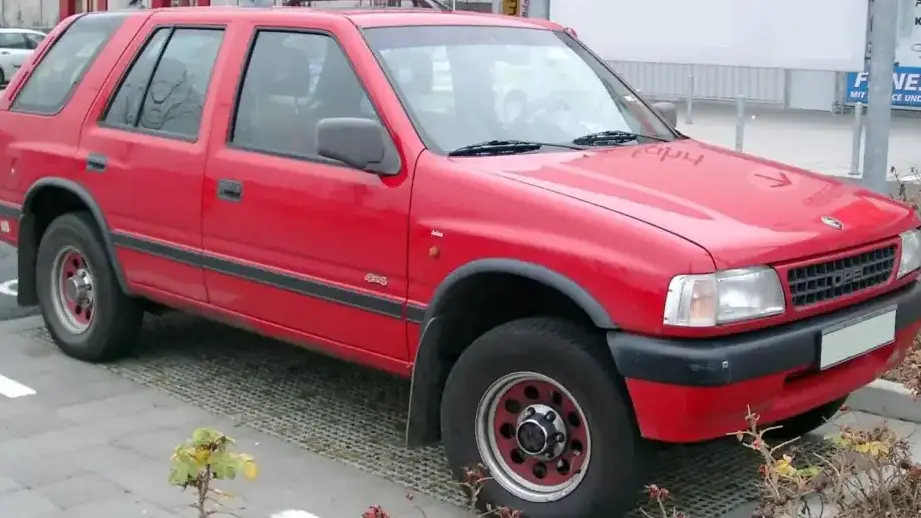
The Opel Frontera A Sport 2.5 TDS 4×4, produced between May 1996 and June 1998, represented a compelling blend of off-road capability and on-road practicality within the first generation Frontera (1991-1998) range. Positioned as a more performance-oriented variant, the Sport model aimed to appeal to drivers seeking a robust SUV with enhanced driving dynamics. It was a key offering in the European market, where the Frontera competed with vehicles like the Nissan Patrol, Mitsubishi Pajero, and Land Rover Discovery. This particular configuration, featuring the 2.5-liter turbodiesel engine and a five-speed manual transmission, occupied a middle ground in the Frontera lineup, offering a balance between fuel efficiency, torque, and price.
Technical Specifications
| Brand | Opel |
| Model | Frontera |
| Generation | Frontera A Sport |
| Type (Engine) | 2.5 TDS (115 Hp) 4×4 |
| Start of production | May, 1996 |
| End of production | June, 1998 |
| Powertrain Architecture | Internal Combustion engine |
| Body type | SUV |
| Seats | 5 |
| Doors | 3 |
| Fuel consumption (combined) | 10.4 l/100 km (22.6 US mpg, 27.2 UK mpg, 9.6 km/l) |
| Fuel Type | Diesel |
| Acceleration 0 – 100 km/h | 16 sec |
| Acceleration 0 – 62 mph | 16 sec |
| Acceleration 0 – 60 mph | 15.2 sec |
| Maximum speed | 155 km/h (96.31 mph) |
| Weight-to-power ratio | 15.9 kg/Hp, 62.9 Hp/tonne |
| Weight-to-torque ratio | 6.4 kg/Nm, 157 Nm/tonne |
| Power | 115 Hp @ 3600 rpm |
| Power per litre | 46 Hp/l |
| Torque | 287 Nm @ 1800 rpm (211.68 lb.-ft. @ 1800 rpm) |
| Engine layout | Front, Longitudinal |
| Engine Model/Code | VM41B |
| Engine displacement | 2499 cm3 (152.5 cu. in.) |
| Number of cylinders | 4 |
| Engine configuration | Inline |
| Cylinder Bore | 92 mm (3.62 in.) |
| Piston Stroke | 94 mm (3.7 in.) |
| Compression ratio | 22.5:1 |
| Number of valves per cylinder | 2 |
| Fuel injection system | Precombustion chamber injection |
| Engine aspiration | Turbocharger |
| Valvetrain | OHV |
| Engine oil capacity | 6.3 l (6.66 US qt | 5.54 UK qt) |
| Coolant | 8.8 l (9.3 US qt | 7.74 UK qt) |
| Kerb Weight | 1828 kg (4030.05 lbs.) |
| Max. weight | 2510 kg (5533.6 lbs.) |
| Max load | 682 kg (1503.55 lbs.) |
| Trunk (boot) space – minimum | 300 l (10.59 cu. ft.) |
| Trunk (boot) space – maximum | 1160 l (40.97 cu. ft.) |
| Fuel tank capacity | 80 l (21.13 US gal | 17.6 UK gal) |
| Length | 4192 mm (165.04 in.) |
| Width | 1780 mm (70.08 in.) |
| Height | 1721 mm (67.76 in.) |
| Wheelbase | 2330 mm (91.73 in.) |
| Front track | 1455 mm (57.28 in.) |
| Rear (Back) track | 1460 mm (57.48 in.) |
| Ride height (ground clearance) | 230 mm (9.06 in.) |
| Drive wheel | All wheel drive (4×4) |
| Number of gears and type of gearbox | 5 gears, manual transmission |
| Front suspension | Independent torsion bar, double wishbone |
| Rear suspension | dependent spring suspension |
| Front brakes | Ventilated discs |
| Rear brakes | Ventilated discs |
| Assisting systems | ABS (Anti-lock braking system) |
| Steering type | Worm-reduction unit |
| Power steering | Hydraulic Steering |
| Tires size | 235/70 R16 |
| Wheel rims size | 7J x 16 |
INTRODUCTION
The Opel Frontera A Sport 2.5 TDS 4×4, launched in 1996, was a significant iteration of Opel’s foray into the mid-size SUV segment. Built on the robust 1HX0 platform (shared with Isuzu Rodeo and Holden Frontera), the Frontera aimed to provide a versatile vehicle capable of both daily commuting and off-road adventures. The “Sport” designation indicated a focus on a slightly more dynamic driving experience compared to the base models. The 2.5 TDS engine, sourced from VM Motori, was a key component of this variant, offering a good balance of power and fuel economy for its time. Production continued until 1998, when it was superseded by updates to the Frontera range.
Powertrain & Engine Architecture
The heart of the Frontera A Sport 2.5 TDS is the VM41B, a 2.5-liter inline-four cylinder turbodiesel engine. This engine utilized a precombustion chamber injection system, a common technology in diesel engines of the 1990s. This system involved injecting fuel into a small pre-chamber within the cylinder head, where it partially combusted before igniting the main charge. This design aided in smoother combustion and reduced engine noise. The engine featured an overhead valve (OHV) valvetrain, a simpler and more robust design compared to overhead camshafts. The turbocharger, a Garrett unit in most cases, significantly boosted power output. The five-speed manual transmission was a robust unit, designed to handle the engine’s substantial 287 Nm (211.68 lb.-ft.) of torque. The transmission’s gear ratios were geared towards providing strong low-end pulling power, essential for off-road driving and towing.
Driving Characteristics
The Frontera A Sport 2.5 TDS 4×4 offered a driving experience characterized by its robust torque delivery. While not particularly fast – 0-60 mph took around 15.2 seconds – the engine provided ample power for overtaking and tackling challenging terrain. The manual transmission allowed for precise control, and the 4×4 system, typically selectable between 2H, 4H, and 4L, provided excellent traction in various conditions. Compared to the lower-powered 2.0-liter petrol versions, the 2.5 TDS offered significantly more pulling power, making it a more suitable choice for those who frequently towed trailers or ventured off-road. However, it lacked the responsiveness of the higher-output petrol engines. The suspension, while comfortable, could feel somewhat bouncy on paved roads, a common characteristic of body-on-frame SUVs.
Equipment & Trim Levels
The “Sport” trim level of the Frontera A 2.5 TDS typically included features such as power steering, central locking, electric windows, and an upgraded interior trim. The interior generally featured cloth upholstery, with options for more durable materials for those prioritizing practicality. Air conditioning was often an optional extra. The dashboard layout was functional and straightforward, prioritizing usability over aesthetics. Additional options included a sunroof, alloy wheels, and a more advanced audio system. The Frontera A Sport was not a luxury vehicle, but it offered a reasonable level of comfort and convenience for its price point.
Chassis & Braking
The Frontera A Sport utilized a traditional body-on-frame construction, providing a robust and durable chassis. The front suspension featured independent torsion bar springs with double wishbone geometry, while the rear suspension employed a dependent spring setup with a solid axle. This configuration prioritized off-road capability and load-carrying capacity. Braking duties were handled by ventilated discs on all four wheels, providing adequate stopping power for a vehicle of its weight. An Anti-lock Braking System (ABS) was standard, enhancing safety during emergency braking situations. The steering system employed a worm-reduction unit with hydraulic power assistance, offering a reasonable level of steering feel.
Market Reception & Comparison
The Frontera A Sport 2.5 TDS 4×4 was generally well-received by automotive critics as a capable and practical SUV. It was praised for its strong diesel engine, robust 4×4 system, and spacious interior. However, some critics noted its somewhat agricultural driving characteristics and relatively basic interior compared to more refined competitors. Compared to the petrol-powered Fronteras, the 2.5 TDS offered significantly better fuel economy – around 22.6 US mpg combined – and more torque. The 2.5 TDS was a more sensible choice for drivers prioritizing practicality and fuel efficiency over outright performance. It also offered a more affordable alternative to more premium SUVs like the Land Rover Discovery.
Legacy
The Opel Frontera A Sport 2.5 TDS 4×4 has developed a reputation as a reliable and durable SUV, particularly among those who appreciate its simplicity and off-road capability. The VM41B engine, while not known for being particularly refined, is generally considered to be robust and long-lasting if properly maintained. Today, well-maintained examples are sought after by enthusiasts and those looking for a capable and affordable 4×4 vehicle. Parts availability can be a challenge, but a dedicated community of Frontera owners and specialists exists to provide support and assistance. The Frontera A Sport 2.5 TDS represents a significant chapter in Opel’s SUV history, demonstrating the brand’s ability to produce a capable and versatile vehicle for the European market.