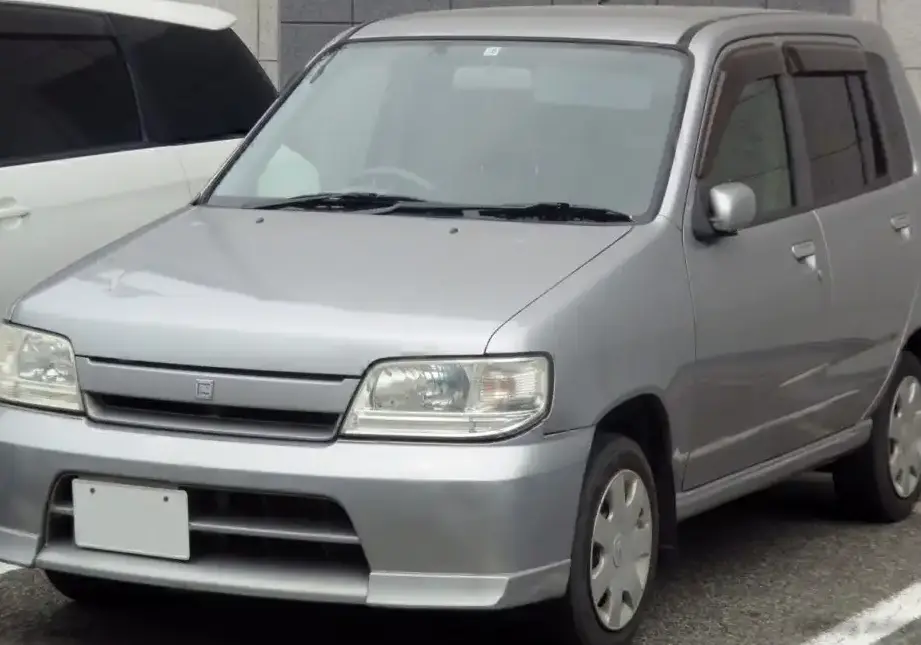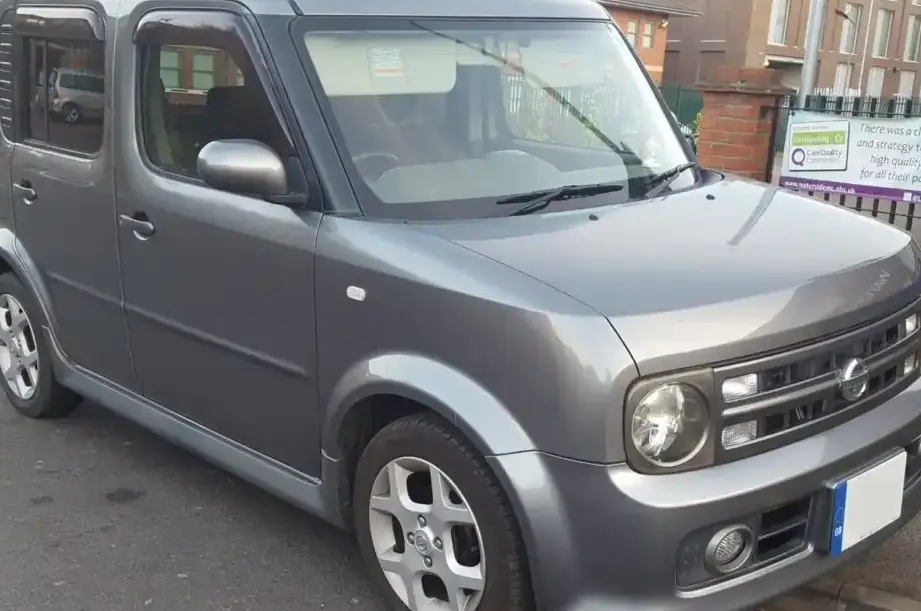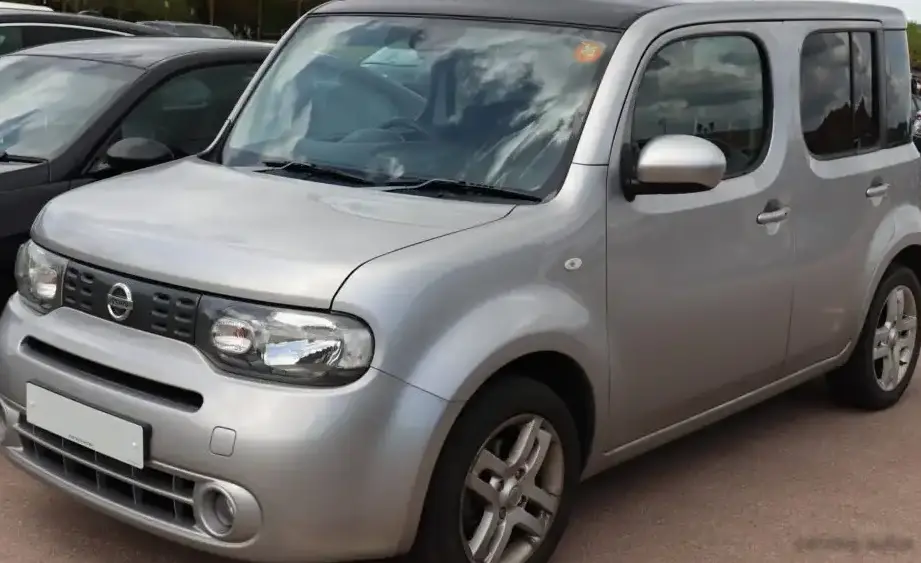
The Nissan Cube (Z12) 1.8, produced from 2009 to 2014, represents a distinctive offering within the broader Z12 Cube generation. Positioned as a mid-range trim level in many markets, particularly in Japan and North America, this variant combined a 1.8-liter gasoline engine with a continuously variable transmission (CVT). The Z12 Cube, known for its asymmetrical rear window design and spacious interior, aimed to appeal to buyers seeking a unique and practical compact vehicle. This specific 1.8L configuration was designed to balance affordability with acceptable performance and fuel efficiency, making it a popular choice for urban commuters and small families.
Technical Specifications
| Brand | Nissan |
| Model | Cube |
| Generation | Cube (Z12) |
| Type (Engine) | 1.8 (122 Hp) |
| Start of production | 2009 |
| End of production | 2014 |
| Powertrain Architecture | Internal Combustion engine |
| Body type | Station wagon (estate) |
| Seats | 5 |
| Doors | 5 |
| Fuel consumption (urban) | 9.4 l/100 km (25 US mpg) |
| Fuel consumption (extra urban) | 7.8 l/100 km (30.2 US mpg) |
| Fuel consumption (combined) | 8.7 l/100 km (27 US mpg) |
| Fuel Type | Petrol (Gasoline) |
| Emission standard | LEV2-LEV |
| Weight-to-power ratio | 10.4 kg/Hp |
| Weight-to-torque ratio | 7.4 kg/Nm |
| Power | 122 Hp @ 5200 rpm |
| Torque | 172 Nm @ 4800 rpm (126.86 lb.-ft. @ 4800 rpm) |
| Engine layout | Front, Transverse |
| Engine Model/Code | MR18DE |
| Engine displacement | 1798 cm3 (109.72 cu. in.) |
| Number of cylinders | 4 |
| Engine configuration | Inline |
| Cylinder Bore | 84 mm (3.31 in.) |
| Piston Stroke | 81.1 mm (3.19 in.) |
| Number of valves per cylinder | 4 |
| Fuel injection system | Multi-port manifold injection |
| Engine aspiration | Naturally aspirated engine |
| Valvetrain | DOHC |
| Engine oil capacity | 4.1 l (4.33 US qt | 3.61 UK qt) |
| Coolant capacity | 6.8 l (7.19 US qt | 5.98 UK qt) |
| Kerb Weight | 1269 kg (2797.67 lbs.) |
| Trunk (boot) space – minimum | 323 l (11.41 cu. ft.) |
| Trunk (boot) space – maximum | 1645 l (58.09 cu. ft.) |
| Fuel tank capacity | 50 l (13.21 US gal | 11 UK gal) |
| Length | 3980 mm (156.69 in.) |
| Width | 1694 mm (66.69 in.) |
| Height | 1651 mm (65 in.) |
| Wheelbase | 2530 mm (99.61 in.) |
| Front track | 1476 mm (58.11 in.) |
| Rear track | 1481 mm (58.31 in.) |
| Drivetrain | Front wheel drive |
| Number of gears | 6 (CVT) |
| Front suspension | Independent, McPherson with coil spring and anti-roll bar |
| Rear suspension | Torsion beam with transverse stabilizer |
| Front brakes | Ventilated discs |
| Rear brakes | Drum |
| Steering type | Steering rack and pinion |
| Power steering | Hydraulic |
| Tires size | 195/60 R15 |
| Wheel rims size | 6J x 15 |
Powertrain & Engine Architecture
The heart of the Nissan Cube 1.8 is the MR18DE engine, a 1.8-liter inline-four cylinder gasoline engine. This engine utilizes multi-point fuel injection and a double overhead camshaft (DOHC) valvetrain, contributing to its relatively efficient operation. The MR18DE is known for its durability and straightforward design, making it a relatively easy engine to maintain. Unlike some of its competitors, the MR18DE does not feature direct injection or turbocharging, relying on naturally aspirated induction. The engine is paired with a continuously variable transmission (CVT), which Nissan marketed under various names depending on the region. This CVT was chosen for its smooth operation and fuel efficiency, prioritizing comfort over outright performance. The CVT simulates gear changes, offering a seamless driving experience, but lacks the distinct shift points of a traditional automatic transmission.
Driving Characteristics
The 1.8L Cube with the CVT delivers adequate, though not exhilarating, performance. Acceleration is linear and predictable, with the CVT keeping the engine in its optimal power band. The 122 horsepower and 126.86 lb-ft of torque are sufficient for everyday driving and city commuting. Compared to the manual transmission version, the CVT offers smoother acceleration but feels less responsive. The CVT also tends to hold higher engine RPMs during acceleration, which can be noticeable and some drivers may find undesirable. The Cube’s front-wheel-drive configuration provides predictable handling, but it’s not designed for sporty driving. The suspension is tuned for comfort, absorbing bumps and imperfections in the road well. The overall driving experience is geared towards practicality and ease of use.
Equipment & Trim Levels
The 1.8L Cube typically came equipped with a reasonable level of standard features. These generally included air conditioning, power windows and locks, a basic audio system with CD player, and anti-lock brakes (ABS). Higher trim levels, often denoted by “S” or “SL” designations, added features such as alloy wheels, a more advanced audio system with Bluetooth connectivity, keyless entry, and a rearview camera. Interior upholstery was typically cloth, with optional leather available on higher trims. The Cube was also known for its customizable interior, with various color and trim options available. A signature feature was the asymmetrical dashboard design, which contributed to the vehicle’s unique aesthetic.
Chassis & Braking
The Z12 Cube utilizes a McPherson strut front suspension and a torsion beam rear suspension. This setup provides a comfortable ride and predictable handling. The front suspension incorporates a stabilizer bar to reduce body roll during cornering. Braking duties are handled by ventilated discs at the front and drum brakes at the rear. While adequate for the vehicle’s weight and performance, the rear drum brakes were a cost-saving measure and didn’t offer the same stopping power as disc brakes. The steering is rack-and-pinion with hydraulic power assistance, providing a light and easy steering feel.
Market Reception & Comparison
The Nissan Cube 1.8L CVT received mixed reviews. Critics praised its unique styling, spacious interior, and fuel efficiency. However, some found the engine underpowered and the CVT lacking in responsiveness. Compared to other compact cars in its class, such as the Honda Fit or Toyota Yaris, the Cube offered a more distinctive design and a more spacious interior, but lacked the same level of performance and refinement. Fuel economy was competitive, averaging around 27 mpg in combined driving. Reliability was generally good, with the MR18DE engine proving to be a durable and dependable unit.
Legacy
The Nissan Cube Z12, including the 1.8L variant, has developed a cult following among those who appreciate its quirky design and practicality. The MR18DE engine is known for its longevity, and well-maintained examples can still provide reliable transportation. On the used car market, the Cube 1.8L is typically affordable and represents a good value for buyers seeking a unique and spacious compact vehicle. While not a performance car, its blend of practicality, fuel efficiency, and distinctive styling has ensured its continued appeal to a niche audience.