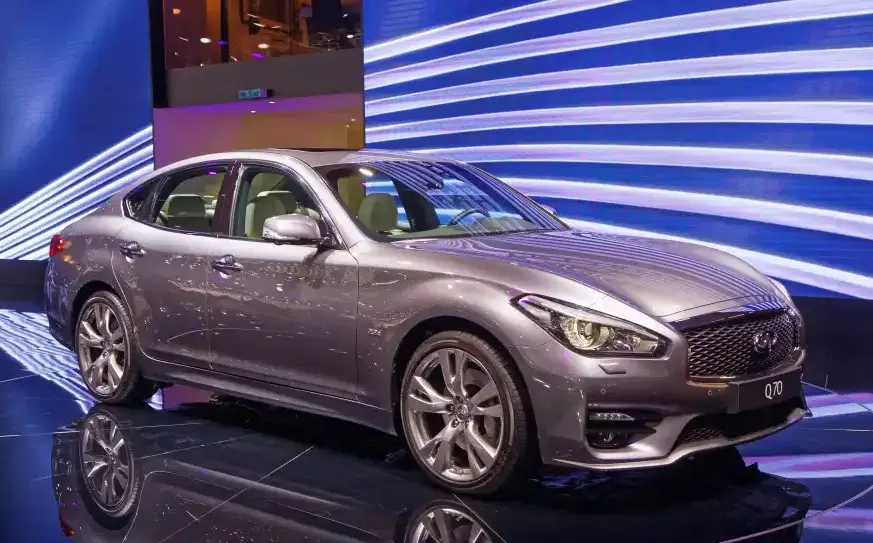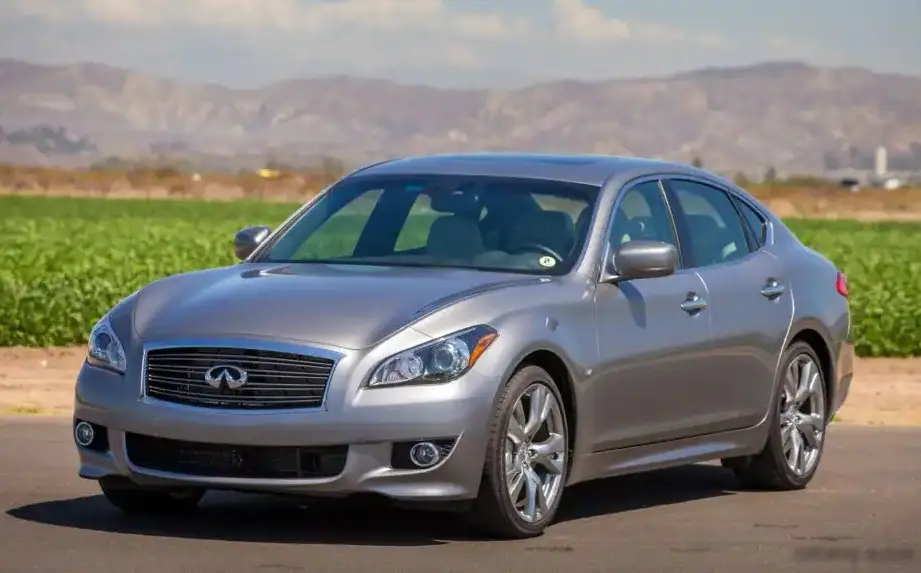
The Infiniti Q70 5.6 V8 Automatic, produced for the 2013 and 2014 model years, represented the pinnacle of performance for the Q70 (formerly known as the M series) luxury sedan. Positioned as the flagship trim, it offered a substantial upgrade over the 3.7-liter V6 models, targeting buyers seeking a powerful and refined driving experience. This variant was a key component of Infiniti’s strategy to compete with established German luxury brands in the full-size sedan segment within the North American market. The Q70, built on the Nissan FM platform, aimed to blend sporty handling with a comfortable and spacious interior.
Technical Specifications
| Brand | Infiniti |
| Model | Q70 |
| Generation | Q70 |
| Type (Engine) | 5.6 V8 (420 Hp) Automatic |
| Start of production | 2013 |
| End of production | 2014 |
| Powertrain Architecture | Internal Combustion engine |
| Body type | Sedan |
| Seats | 5 |
| Doors | 4 |
| Fuel consumption (economy) – urban (EPA) | 14.7 l/100 km (16 US mpg, 19.2 UK mpg, 6.8 km/l) |
| Fuel consumption (economy) – extra urban (EPA) | 9.8 l/100 km (24 US mpg, 28.8 UK mpg, 10.2 km/l) |
| Fuel consumption (economy) – combined (EPA) | 12.4 l/100 km (19 US mpg, 22.8 UK mpg, 8.1 km/l) |
| Fuel Type | Petrol (Gasoline) |
| Weight-to-power ratio | 4.3 kg/Hp, 231.3 Hp/tonne |
| Weight-to-torque ratio | 3.2 kg/Nm, 311.1 Nm/tonne |
| Power | 420 Hp @ 6000 rpm |
| Power per litre | 75.6 Hp/l |
| Torque | 565 Nm @ 4400 rpm (416.72 lb.-ft. @ 4400 rpm) |
| Maximum engine speed | 6700 rpm |
| Engine layout | Front, Longitudinal |
| Engine Model/Code | VK56VD |
| Engine displacement | 5552 cm3 (338.8 cu. in.) |
| Number of cylinders | 8 |
| Engine configuration | V-engine |
| Cylinder Bore | 98 mm (3.86 in.) |
| Piston Stroke | 92 mm (3.62 in.) |
| Compression ratio | 11.5:1 |
| Number of valves per cylinder | 4 |
| Fuel injection system | Direct injection |
| Engine aspiration | Naturally aspirated engine |
| Valvetrain | DOHC, VVEL, CVTCS |
| Engine oil capacity | 6 l (6.34 US qt | 5.28 UK qt) |
| Coolant | 10.9 l (11.52 US qt | 9.59 UK qt) |
| Kerb Weight | 1816 kg (4003.59 lbs.) |
| Max. weight | 2333 kg (5143.38 lbs.) |
| Max load | 517 kg (1139.79 lbs.) |
| Trunk (boot) space – minimum | 422 l (14.9 cu. ft.) |
| Fuel tank capacity | 76 l (20.08 US gal | 16.72 UK gal) |
| Length | 4945 mm (194.69 in.) |
| Width | 1845 mm (72.64 in.) |
| Height | 1500 mm (59.06 in.) |
| Wheelbase | 2900 mm (114.17 in.) |
| Front track | 1575 mm (62.01 in.) |
| Rear (Back) track | 1570 mm (61.81 in.) |
| Ride height (ground clearance) | 145 mm (5.71 in.) |
| Drag coefficient (Cd) | 0.27 |
| Minimum turning circle (turning diameter) | 11.2 m (36.75 ft.) |
| Drivetrain Architecture | The Internal combustion engine (ICE) drives the rear wheels of the vehicle. |
| Drive wheel | Rear wheel drive |
| Number of gears and type of gearbox | 7 gears, automatic transmission |
| Front suspension | Double wishbone, Independent coil spring, Transverse stabilizer |
| Rear suspension | Independent multi-link spring suspension with stabilizer |
| Front brakes | Ventilated discs, 320×28 mm |
| Rear brakes | Ventilated discs, 308×15 mm |
| Assisting systems | ABS (Anti-lock braking system) |
| Steering type | Steering rack and pinion |
| Power steering | Electric Steering |
| Tires size | 245/50 R18; 245/40 R20 |
| Wheel rims size | 8J x 18; 9J x 20 |
Powertrain & Engine Architecture
The heart of the Q70 5.6 V8 is the VK56VD engine, a 5.6-liter naturally aspirated V8. This engine is a member of Nissan’s VK engine family, known for its robust construction and smooth power delivery. The VK56VD features direct fuel injection, a double overhead camshaft (DOHC) valvetrain, and Variable Valve Event and Lift (VVEL) and Continuously Variable Valve Timing Control System (CVTCS) technologies. These systems optimize engine performance and efficiency by adjusting valve timing and lift based on driving conditions. The engine produces 420 horsepower at 6000 rpm and 417 lb-ft of torque at 4400 rpm. The engine’s longitudinal mounting and rear-wheel-drive configuration contribute to a balanced weight distribution. Paired with the engine is a seven-speed automatic transmission, providing smooth and responsive shifts. This transmission was tuned for a balance between fuel efficiency and performance, with gear ratios optimized for both highway cruising and spirited acceleration.
Driving Characteristics
The Q70 5.6 V8 Automatic delivers a distinctly different driving experience compared to the V6 models. The substantial torque output of the V8 engine provides effortless acceleration in all situations. While not a dedicated sports sedan, the Q70 offers a confident and composed ride, with the rear-wheel-drive layout contributing to balanced handling. The seven-speed automatic transmission shifts smoothly and efficiently, although it may not be as quick to downshift as some dual-clutch transmissions found in competing models. The steering is precise and well-weighted, providing good feedback to the driver. Compared to the manual transmission options available on other Q70 trims, the automatic prioritizes comfort and ease of use over outright performance.
Equipment & Trim Levels
The Q70 5.6 V8 Automatic typically came well-equipped with standard features including leather upholstery, heated and ventilated front seats, a premium audio system (often Bose), a navigation system, and a suite of safety technologies. Available options included a rear-seat entertainment system, adaptive cruise control, lane departure warning, and blind-spot monitoring. Interior trim options generally included wood or aluminum accents. The exterior featured unique badging and often came with larger alloy wheels compared to lower trims.
Chassis & Braking
The Q70 5.6 V8 utilized a double wishbone front suspension and an independent multi-link rear suspension, both incorporating coil springs and stabilizer bars. This suspension setup was tuned to provide a comfortable ride while maintaining good handling characteristics. Braking duties were handled by ventilated disc brakes on all four wheels, providing ample stopping power. The Q70 also included an Anti-lock Braking System (ABS) as standard equipment. The heavier V8 engine necessitated slightly stiffer spring rates compared to the V6 models, but the overall ride quality remained comfortable.
Market Reception & Comparison
Critics generally praised the Q70 5.6 V8 for its powerful engine, comfortable ride, and spacious interior. However, some reviewers noted that the interior design felt dated compared to newer competitors. Fuel economy was also a concern, given the engine’s large displacement. Compared to the Q70 3.7 V6, the 5.6 V8 offered significantly more performance but at the cost of increased fuel consumption and a higher price point. Against rivals like the BMW 5 Series, Mercedes-Benz E-Class, and Lexus GS, the Q70 5.6 V8 offered a compelling value proposition, providing similar levels of luxury and performance at a potentially lower price.
Legacy
The Infiniti Q70 5.6 V8 Automatic, while a relatively short-lived model, remains a desirable option in the used car market for buyers seeking a powerful and comfortable luxury sedan. The VK56VD engine is known for its reliability, although regular maintenance is crucial. Common issues include oil consumption and potential for timing chain wear at higher mileage. The Q70 5.6 V8 represents a unique blend of Japanese engineering and luxury features, offering a distinctive alternative to the more common German competitors. Its robust powertrain and comfortable ride continue to appeal to enthusiasts and discerning buyers today.