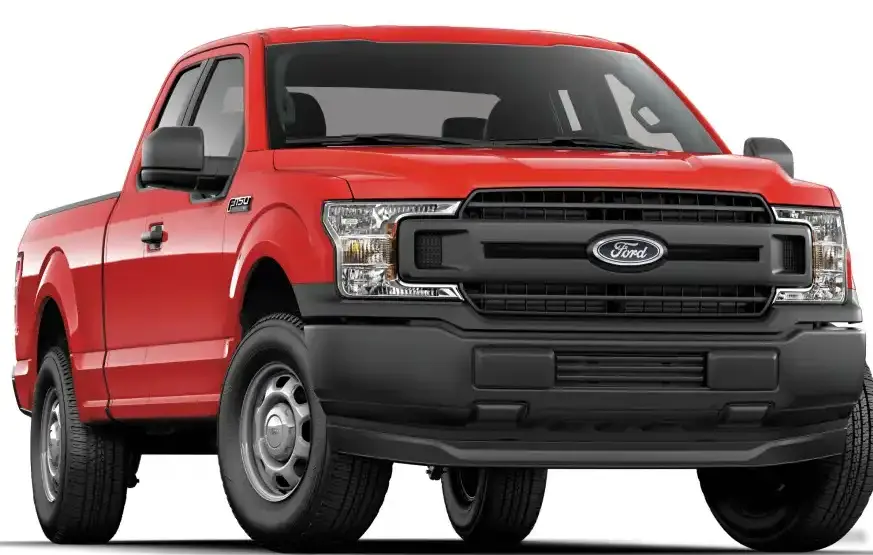
The Ford F-150, a cornerstone of the American automotive landscape, saw a significant refresh in 2018 as part of its thirteenth generation (2015-2020). This facelift brought updated styling, enhanced technology, and continued powertrain refinement. Among the engine options offered, the 3.3-liter V6 paired with a six-speed automatic transmission and four-wheel drive represented a compelling blend of capability and affordability, positioned as a strong contender in the full-size pickup truck segment. Production of this specific configuration ran from 2018 through October 2020, serving as a popular choice for buyers prioritizing a balance between work and everyday usability.
Technical Specifications
| Brand | Ford |
| Model | F-Series F-150 |
| Generation | F-Series F-150 XIII SuperCab (facelift 2018) |
| Type (Engine) | 3.3 V6 (290 Hp) 4×4 Automatic |
| Start of production | 2018 |
| End of production | October, 2020 |
| Powertrain Architecture | Internal Combustion engine |
| Body type | Pick-up |
| Seats | 5-6 |
| Doors | 2 |
| Fuel consumption (urban) | 13.1 l/100 km (18 US mpg, 21.6 UK mpg, 7.6 km/l) |
| Fuel consumption (extra urban) | 10.2 l/100 km (23.1 US mpg, 27.7 UK mpg, 9.8 km/l) |
| Fuel consumption (combined) | 11.8 l/100 km (19.9 US mpg, 23.9 UK mpg, 8.5 km/l) |
| Fuel Type | Petrol (Gasoline) |
| Power | 290 Hp @ 6500 rpm |
| Power per litre | 87.9 Hp/l |
| Torque | 359 Nm @ 4000 rpm (264.78 lb.-ft. @ 4000 rpm) |
| Engine layout | Front, Longitudinal |
| Engine displacement | 3300 cm3 (201.38 cu. in.) |
| Number of cylinders | 6 |
| Engine configuration | V-engine |
| Number of valves per cylinder | 4 |
| Fuel injection system | Direct injection |
| Engine oil capacity | 5.7 l (6.02 US qt | 5.02 UK qt) |
| Coolant capacity | 12.86 l (13.59 US qt | 11.32 UK qt) |
| Trunk (boot) space (minimum) | 1764 l (62.3 cu. ft.) |
| Fuel tank capacity | 87 l (22.98 US gal | 19.14 UK gal) |
| Length | 5890-6363 mm (231.89 – 250.51 in.) |
| Width | 2029 mm (79.88 in.) |
| Width with mirrors folded | 2121 mm (83.5 in.) |
| Width including mirrors | 2459 mm (96.81 in.) |
| Height | 1956-1961 mm (77.01 – 77.2 in.) |
| Wheelbase | 3683-4158 mm (145 – 163.7 in.) |
| Ride height (ground clearance) | 236-239 mm (9.29 – 9.41 in.) |
| Drive wheel | All wheel drive (4×4) |
| Number of gears and type of gearbox | 6 gears, automatic transmission |
| Front suspension | Independent coil spring |
| Rear suspension | Leaf spring |
| Front brakes | Ventilated discs |
| Rear brakes | Ventilated discs |
| Assisting systems | ABS (Anti-lock braking system) |
| Steering type | Steering rack and pinion |
| Power steering | Electric Steering |
| Tires size | 265/70 R17 |
| Wheel rims size | 17 |
Powertrain & Engine Architecture
The heart of this F-150 variant is Ford’s 3.3-liter “Ti-VCT” V6 engine. This engine, part of Ford’s second-generation Coyote family, utilizes direct fuel injection and a dual overhead camshaft (DOHC) design with four valves per cylinder. The engine code is generally identified as the third generation of the 3.3L V6. This configuration allows for efficient combustion and a broad torque curve. The 290 horsepower and 264 lb-ft of torque are respectable figures, providing adequate power for both daily driving and moderate towing/hauling tasks. The six-speed automatic transmission, a workhorse unit known for its durability, is calibrated to prioritize smooth shifts and fuel efficiency. While not as quick-shifting as some newer transmissions, it’s well-suited to the engine’s characteristics and the truck’s intended use.
Driving Characteristics
The 3.3L V6 and six-speed automatic combination delivers a comfortable and predictable driving experience. Acceleration is adequate, though not particularly brisk. The engine provides sufficient power for merging onto highways and maintaining speed on inclines. The automatic transmission’s gear ratios are optimized for everyday driving, with a focus on keeping the engine in its sweet spot for fuel economy. Compared to the more powerful EcoBoost V6 options or the 5.0L V8, this configuration feels less urgent, but it offers a more relaxed and refined driving experience. The 4×4 system provides enhanced traction in inclement weather or off-road conditions, making it a versatile choice for a wide range of drivers.
Equipment & Trim Levels
The 3.3L V6 engine was typically offered on the base XL, mid-range XLT, and some lower trims of the Lariat models. Standard equipment on these trims generally included air conditioning, a basic infotainment system with a touchscreen display, power windows and locks, and a rearview camera. XLT models added features like alloy wheels, upgraded cloth upholstery, and a more comprehensive infotainment system. Optional extras included Ford’s SYNC 3 infotainment system, a navigation system, leather upholstery, heated and ventilated seats, and a suite of driver-assistance technologies such as blind-spot monitoring and lane-keeping assist. The SuperCab configuration provided additional passenger space compared to the regular cab models, with rear-hinged rear doors for easier access.
Chassis & Braking
The 2018 F-150 utilizes a high-strength steel frame and an aluminum alloy body, contributing to its overall durability and reduced weight. The front suspension features independent coil springs, while the rear suspension employs a traditional leaf spring setup. This combination provides a comfortable ride quality and adequate load-carrying capacity. Braking duties are handled by ventilated discs at all four corners, providing ample stopping power. ABS (Anti-lock Braking System) is standard, enhancing safety and control during emergency braking situations. The steering system is a rack-and-pinion setup with electric power steering, offering responsive handling and ease of maneuverability.
Market Reception & Comparison
The 3.3L V6 F-150 was generally well-received by critics as a practical and affordable option. It offered a good balance of power, fuel economy, and capability for buyers who didn’t require the extra performance of the more expensive engine options. Fuel economy figures of around 19 mpg combined were considered competitive for a full-size pickup truck. Compared to the EcoBoost engines, the 3.3L V6 offered lower upfront cost and potentially lower maintenance expenses. However, it lacked the EcoBoost’s impressive torque and towing capacity. Compared to the 5.0L V8, the 3.3L V6 was more fuel-efficient but offered less overall power and a less engaging driving experience.
Legacy
The 3.3L V6 engine has proven to be a reliable and durable powertrain in the F-150. While not as widely celebrated as the EcoBoost engines, it has earned a reputation for dependability and relatively low maintenance costs. In the used car market, these F-150s represent a good value proposition for buyers seeking a capable and affordable full-size pickup truck. The combination of the 3.3L V6, six-speed automatic, and 4×4 drivetrain continues to be a popular choice among truck buyers who prioritize practicality and long-term reliability over outright performance.