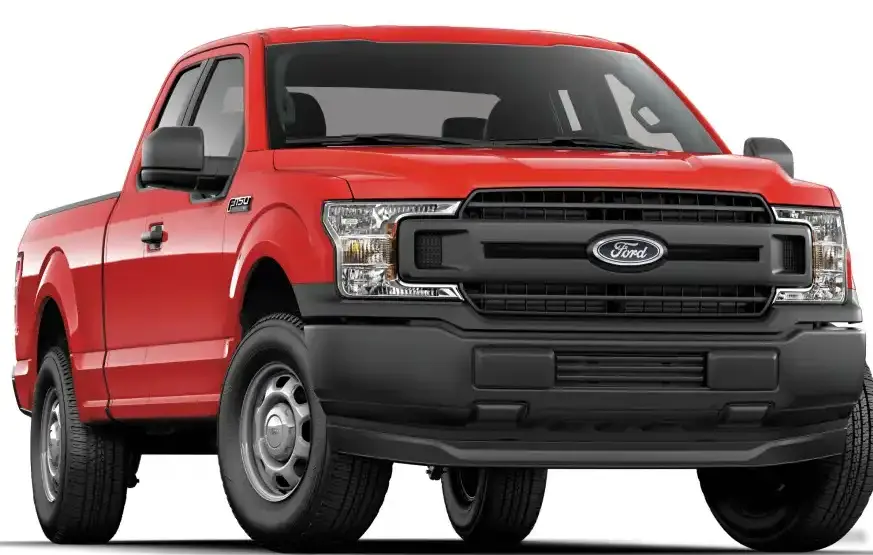
The Ford F-150, a mainstay of the American automotive landscape, saw a significant refresh in 2018 as part of its thirteenth generation (2015-2020). This facelift brought updated styling, enhanced technology, and powertrain refinements. Among the engine options offered, the 3.3-liter V6 paired with a six-speed automatic transmission represented a compelling blend of capability and affordability, positioned as the standard engine for many F-150 SuperCab configurations. Production of this specific combination ran from 2018 through October 2020, serving as a popular entry point into the F-150 lineup.
Technical Specifications
| Brand | Ford |
| Model | F-Series F-150 |
| Generation | F-Series F-150 XIII SuperCab (facelift 2018) |
| Type (Engine) | 3.3 V6 (290 Hp) Automatic |
| Start of production | 2018 |
| End of production | October, 2020 |
| Powertrain Architecture | Internal Combustion engine |
| Body type | Pick-up |
| Seats | 5-6 |
| Doors | 2 |
| Fuel consumption (urban) | 12.4 l/100 km (19 US mpg) |
| Fuel consumption (extra urban) | 9.4 l/100 km (25 US mpg) |
| Fuel consumption (combined) | 10.7 l/100 km (22 US mpg) |
| Fuel Type | Petrol (Gasoline) |
| Power | 290 Hp @ 6500 rpm |
| Torque | 359 Nm @ 4000 rpm (264.78 lb.-ft. @ 4000 rpm) |
| Engine layout | Front, Longitudinal |
| Engine displacement | 3300 cm3 (201.38 cu. in.) |
| Number of cylinders | 6 |
| Engine configuration | V-engine |
| Number of valves per cylinder | 4 |
| Fuel injection system | Direct injection |
| Engine oil capacity | 5.7 l (6.02 US qt | 5.02 UK qt) |
| Coolant capacity | 12.86 l (13.59 US qt | 11.32 UK qt) |
| Trunk (boot) space (minimum) | 1764 l (62.3 cu. ft.) |
| Fuel tank capacity | 87 l (22.98 US gal | 19.14 UK gal) |
| Length | 5890-6363 mm (231.89 – 250.51 in.) |
| Width | 2029 mm (79.88 in.) |
| Width with mirrors folded | 2121 mm (83.5 in.) |
| Width including mirrors | 2459 mm (96.81 in.) |
| Height | 1918 mm (75.51 in.) |
| Wheelbase | 3683-4158 mm (145 – 163.7 in.) |
| Ride height (ground clearance) | 221 mm (8.7 in.) |
| Drivetrain Architecture | Rear wheel drive |
| Number of gears and type of gearbox | 6 gears, automatic transmission |
| Front suspension | Independent coil spring |
| Rear suspension | Leaf spring |
| Front brakes | Ventilated discs |
| Rear brakes | Ventilated discs |
| Assisting systems | ABS (Anti-lock braking system) |
| Steering type | Steering rack and pinion |
| Power steering | Electric Steering |
| Tires size | 245/70 R17 |
| Wheel rims size | 17 |
Powertrain & Engine Architecture
The heart of this F-150 variant is Ford’s 3.3-liter “Ti-VCT” V6 engine. This engine, internally designated as the third generation of the Cyclone family, utilizes direct fuel injection and twin independent variable camshaft timing (Ti-VCT) to optimize performance and efficiency. The engine produces 290 horsepower at 6500 rpm and 264 lb-ft of torque at 4000 rpm. The 3.3L V6 is a naturally aspirated engine, meaning it doesn’t rely on turbocharging or supercharging for increased power. It’s a relatively simple and robust design, contributing to its generally good reliability. The engine is paired with a six-speed automatic transmission, a proven unit designed to handle the demands of truck duty. This transmission features a wide gear ratio spread, prioritizing both towing capability and fuel economy.
Driving Characteristics
The 3.3L V6 and six-speed automatic combination delivers a comfortable and capable driving experience, though it doesn’t offer the outright acceleration of the turbocharged EcoBoost engines or the V8 options. Acceleration is adequate for everyday driving and light-duty tasks. The automatic transmission shifts smoothly and predictably, and the gear ratios are well-suited for maintaining momentum on the highway. While not a performance-oriented setup, the 3.3L provides sufficient power for towing smaller trailers and hauling moderate payloads. Compared to the higher-output engines, this variant prioritizes fuel efficiency and a more relaxed driving experience. The manual transmission, when available on other F-150 trims, offered a more engaging driving experience, but at the expense of some convenience.
Equipment & Trim Levels
The 3.3L V6 engine was typically offered on the base XL, mid-range XLT, and some lower trims of the Lariat models. Standard equipment on these trims generally included air conditioning, a basic infotainment system with a touchscreen display, and a rearview camera. XLT models added features like alloy wheels, power windows and locks, and a more comprehensive infotainment system. Optional extras included Ford’s SYNC 3 infotainment system, a trailer tow package, and various comfort and convenience features. Interior upholstery typically consisted of cloth seating, with leather options available on higher trims. The SuperCab configuration provided seating for up to six passengers, with rear doors for easier access to the back seats.
Chassis & Braking
The 2018 F-150 featured a high-strength steel frame and an aluminum alloy body, contributing to its overall durability and reduced weight. The front suspension utilized an independent coil spring design, providing a comfortable ride and good handling characteristics. The rear suspension employed a traditional leaf spring setup, optimized for load-carrying capacity. Braking duties were handled by ventilated discs on all four wheels, providing adequate stopping power for most driving situations. An anti-lock braking system (ABS) was standard equipment. The rear axle ratio varied depending on the specific configuration and optional equipment, influencing both fuel economy and towing capacity.
Market Reception & Comparison
The 3.3L V6 F-150 was generally well-received by critics as a solid, dependable work truck. It offered a good balance of capability and affordability, making it an attractive option for buyers who didn’t require the extra power of the EcoBoost or V8 engines. Fuel economy was a strong point, with combined MPG figures around 22, making it more efficient than many of its competitors. Compared to the 2.7L EcoBoost, the 3.3L offered less horsepower and torque, but it was generally considered more reliable and less prone to issues. The 5.0L V8 provided significantly more power, but at the cost of fuel economy. The 3.5L EcoBoost offered the best of both worlds, but was also the most expensive option.
Legacy
The 3.3L V6 engine has proven to be a relatively reliable powertrain in the F-150. While not as widely discussed as the EcoBoost engines, it has earned a reputation for durability and longevity. In the used car market, F-150s equipped with the 3.3L V6 and six-speed automatic transmission represent a good value proposition, offering a capable and dependable truck at a reasonable price. Maintenance costs are generally lower than those associated with the more complex EcoBoost engines. As a result, this variant remains a popular choice for buyers seeking a practical and affordable full-size pickup truck.