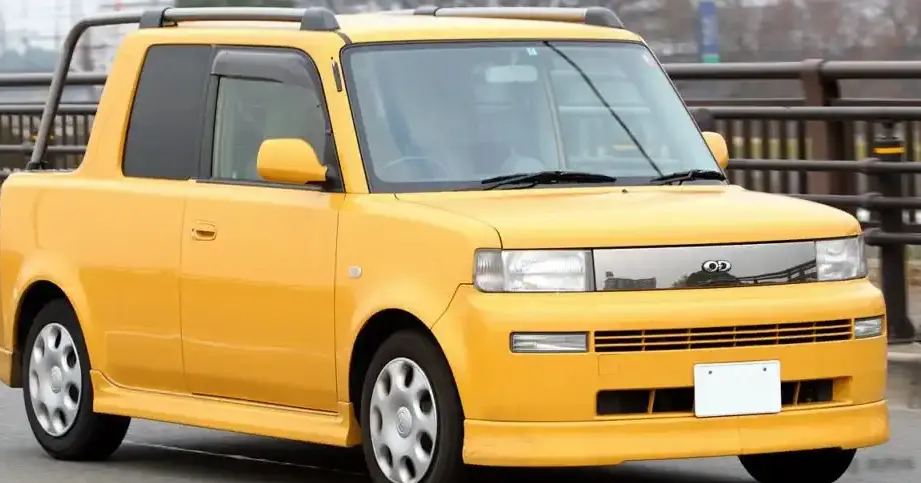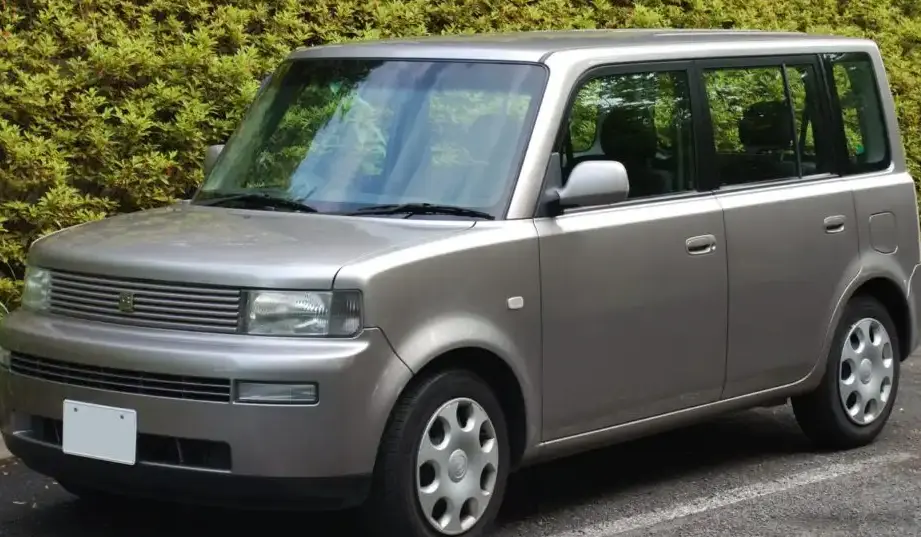
The Toyota bB 1.5 i 16V, produced between 2000 and 2005, represents a distinctive entry in Toyota’s lineup, primarily aimed at the Japanese domestic market (JDM). This compact, five-door minivan, known for its boxy styling and spacious interior, offered a unique alternative to traditional hatchbacks and small sedans. The “bB” designation stood for “Boxy Buddy,” reflecting its design philosophy. This particular 1.5L variant, equipped with a four-speed automatic transmission, served as a popular entry point into the bB range, prioritizing affordability and ease of use over outright performance. It was part of the first generation (X20 series) of the bB, which shared a platform with the Daihatsu Boon.
Technical Specifications
| Brand | Toyota |
| Model | bB |
| Generation | bB |
| Type (Engine) | 1.5 i 16V (110 Hp) |
| Start of production | 2000 |
| End of production | 2005 |
| Powertrain Architecture | Internal Combustion engine |
| Body type | Minivan |
| Seats | 5 |
| Doors | 5 |
| Fuel consumption (urban) | 10 l/100 km (23.5 US mpg) |
| Fuel consumption (extra urban) | 6 l/100 km (39.2 US mpg) |
| Fuel Type | Petrol (Gasoline) |
| Maximum speed | 175 km/h (108.74 mph) |
| Weight-to-power ratio | 9.5 kg/Hp |
| Weight-to-torque ratio | 7.3 kg/Nm |
| Power | 110 Hp @ 6000 rpm |
| Power per litre | 73.5 Hp/l |
| Torque | 143 Nm @ 4200 rpm (105.47 lb.-ft. @ 4200 rpm) |
| Engine layout | Front, Transverse |
| Engine Model/Code | 1NZ-FE |
| Engine displacement | 1496 cm3 (91.29 cu. in.) |
| Number of cylinders | 4 |
| Engine configuration | Inline |
| Cylinder Bore | 75 mm (2.95 in.) |
| Piston Stroke | 84.7 mm (3.33 in.) |
| Compression ratio | 10.5:1 |
| Number of valves per cylinder | 4 |
| Fuel injection system | Multi-port manifold injection |
| Engine aspiration | Naturally aspirated engine |
| Valvetrain | DOHC |
| Engine oil capacity | 3.7 l (3.91 US qt | 3.26 UK qt) |
| Coolant | 4.3 l (4.54 US qt | 3.78 UK qt) |
| Kerb Weight | 1040 kg (2292.81 lbs.) |
| Fuel tank capacity | 45 l (11.89 US gal | 9.9 UK gal) |
| Length | 3825 mm (150.59 in.) |
| Width | 1690 mm (66.54 in.) |
| Height | 1640 mm (64.57 in.) |
| Wheelbase | 2500 mm (98.43 in.) |
| Front track | 1450 mm (57.09 in.) |
| Rear track | 1435 mm (56.5 in.) |
| Drivetrain Architecture | Front wheel drive |
| Number of gears | 4 |
| Gearbox type | automatic transmission |
| Front suspension | Wishbone |
| Rear suspension | Coil spring |
| Front brakes | Ventilated discs |
| Rear brakes | Drum |
| Assisting systems | ABS (Anti-lock braking system) |
| Steering type | Steering rack and pinion |
| Power steering | Hydraulic Steering |
| Tires size | 185/65 R15 |
Powertrain & Engine Architecture
The 1.5 i 16V bB utilizes the 1NZ-FE engine, a 1.5-liter inline-four cylinder gasoline engine. This engine is known for its reliability and fuel efficiency, rather than outright power. The 1NZ-FE features a double overhead camshaft (DOHC) valvetrain with four valves per cylinder, contributing to improved breathing and efficiency. Fuel delivery is managed by a multi-port fuel injection system. The engine produces 110 horsepower at 6000 rpm and 143 Nm (105.47 lb-ft) of torque at 4200 rpm. Paired with this engine is a four-speed automatic transmission, designed for smooth and convenient operation. This transmission was a common choice for buyers prioritizing ease of driving over sporty performance. The 1NZ-FE engine is known for its relatively simple design, contributing to its longevity and ease of maintenance.
Driving Characteristics
The 1.5L automatic bB offers a comfortable and practical driving experience, but it’s not designed for spirited acceleration. The four-speed automatic transmission, while smooth, has relatively wide gear ratios, which can result in the engine feeling strained during quick acceleration or when climbing hills. Compared to the more powerful engine options available in the bB lineup (such as the 1.8L), this variant feels noticeably slower. However, the automatic transmission makes it ideal for city driving and commuting, where ease of use is paramount. The front-wheel-drive configuration provides adequate traction in most conditions, but it’s not suited for off-road driving. The steering is light and responsive, making it easy to maneuver in tight spaces.
Equipment & Trim Levels
The 1.5 i 16V bB typically came equipped with a reasonable level of standard features. These included power windows, power door locks, air conditioning, and a basic audio system. Interior upholstery was typically cloth, with a simple and functional dashboard layout. Optional extras included alloy wheels, upgraded audio systems, and a sunroof. Higher trim levels offered features like keyless entry, upgraded interior trim, and more sophisticated audio systems. The bB was also known for its customizable interior, with a variety of aftermarket accessories available to personalize the vehicle.
Chassis & Braking
The bB’s chassis is a typical front-wheel-drive configuration, utilizing a MacPherson strut suspension in the front and a coil spring suspension in the rear. The suspension is tuned for comfort rather than sporty handling. Braking duties are handled by ventilated discs in the front and drum brakes in the rear. Anti-lock Braking System (ABS) was standard, enhancing safety. The relatively lightweight nature of the 1.5L bB (1040 kg / 2292.81 lbs) helps to offset the modest power output, providing adequate stopping power for everyday driving.
Market Reception & Comparison
The Toyota bB 1.5 i 16V was well-received in Japan as an affordable and practical urban vehicle. Critics praised its spacious interior, distinctive styling, and fuel efficiency. However, some criticized its lack of power and somewhat basic interior appointments. Compared to the higher-spec bB models, the 1.5L automatic variant offered a more budget-friendly option, appealing to buyers who prioritized affordability and ease of use. It was often compared to other compact minivans and hatchbacks in the Japanese market, such as the Honda Fit and the Nissan Cube.
Legacy
The Toyota bB, particularly the 1.5L variants, has proven to be a reliable and durable vehicle. The 1NZ-FE engine is known for its longevity, and the four-speed automatic transmission is generally trouble-free. In the used car market, the bB remains a popular choice for those seeking an affordable and practical vehicle with a unique style. While not a performance car, the 1.5L automatic bB offers a comfortable and reliable driving experience, making it a sensible choice for everyday transportation. Its distinctive styling continues to attract a loyal following, and it remains a recognizable icon of early 2000s JDM culture.