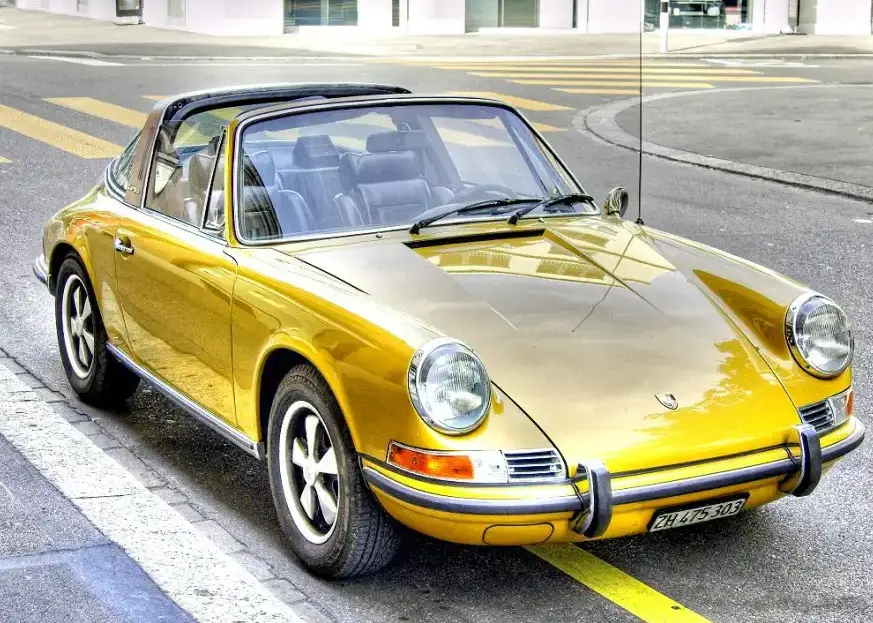
The Porsche 911 Targa (F) 2.3 E, produced between 1971 and 1973, represents a pivotal point in the evolution of the iconic 911. Falling within the “F” series (1970-1973) of the original 911 generation, this variant offered a unique open-air driving experience with the Targa top, combining the feel of a convertible with the structural rigidity of a coupe. The 2.3 E designation signified the engine displacement and performance level, positioning it as a step up from the base 911T, but below the more potent 911S. This model played a significant role in solidifying the 911’s reputation for both performance and sophisticated design, particularly within the North American market where Targa models were exceptionally popular due to emerging safety regulations regarding convertible tops.
Technical Specifications
| Brand | Porsche |
| Model | 911 |
| Generation | 911 Targa (F) |
| Type (Engine) | 2.3 E (165 Hp) |
| Start of production | 1971 |
| End of production | 1973 |
| Powertrain Architecture | Internal Combustion engine |
| Body type | Targa |
| Seats | 4 |
| Doors | 2 |
| Fuel Type | Petrol (Gasoline) |
| Maximum speed | 220 km/h (136.7 mph) |
| Weight-to-power ratio | 6.2 kg/Hp, 161.8 Hp/tonne |
| Power | 165 Hp @ 6200 rpm |
| Power per litre | 70.5 Hp/l |
| Engine layout | Rear, Longitudinal |
| Engine Model/Code | 911.62 |
| Engine displacement | 2340 cm3 (142.8 cu. in.) |
| Number of cylinders | 6 |
| Engine configuration | Boxer |
| Cylinder Bore | 84 mm (3.31 in.) |
| Piston Stroke | 70.4 mm (2.77 in.) |
| Engine aspiration | Naturally aspirated engine |
| Kerb Weight | 1020 kg (2248.72 lbs.) |
| Max. weight | 1400 kg (3086.47 lbs.) |
| Max load | 380 kg (837.76 lbs.) |
| Fuel tank capacity | 60 l (15.85 US gal | 13.2 UK gal) |
| Permitted trailer load with brakes (12%) | 600 kg (1322.77 lbs.) |
| Permitted trailer load without brakes | 480 kg (1058.22 lbs.) |
| Length | 4147 mm (163.27 in.) |
| Width | 1610 mm (63.39 in.) |
| Height | 1320 mm (51.97 in.) |
| Wheelbase | 2271 mm (89.41 in.) |
| Front track | 1360 mm (53.54 in.) |
| Rear (Back) track | 1342 mm (52.83 in.) |
| Front overhang | 884 mm (34.8 in.) |
| Rear overhang | 992 mm (39.06 in.) |
| Drivetrain Architecture | The Internal combustion engine (ICE) drives the rear wheels of the vehicle. |
| Drive wheel | Rear wheel drive |
| Number of gears and type of gearbox | 5 gears, manual transmission |
| Front suspension | Spring Strut, Wishbone |
| Rear suspension | Trailing arm |
| Front brakes | Disc |
| Rear brakes | Disc |
| Steering type | Steering rack and pinion |
| Tires size | 185/70 R15 |
| Wheel rims size | 6J x 15; 7J x 15 |
Powertrain & Engine Architecture
The heart of the 911 Targa 2.3 E is the 911.62 engine, a 2340cc air-cooled flat-six (boxer) engine. This engine featured a bore of 84mm and a stroke of 70.4mm. It utilized Bosch mechanical fuel injection, a significant upgrade over the carburetors used in earlier 911 models, providing improved fuel atomization and more consistent performance. The engine produced 165 horsepower at 6200 rpm, a respectable figure for the time. The engine’s flat-six configuration contributed to a low center of gravity, enhancing handling characteristics. The 2.3 E was paired with a robust 5-speed manual transmission, delivering power to the rear wheels. This transmission was known for its precise shifts and durability. While an automatic transmission was available as an option, the manual was favored by enthusiasts for its enhanced driving experience.
Driving Characteristics
The 911 Targa 2.3 E offered a unique driving experience. The rear-engine layout, combined with the relatively lightweight construction, resulted in a distinct handling feel. While not as nimble as mid-engined competitors, the 911 provided predictable handling and excellent traction. The 165 hp engine provided adequate power for spirited driving, although it wasn’t as overtly powerful as the 911S. Acceleration from 0 to 60 mph was typically around 8.5 seconds, and the car could reach a top speed of 136.7 mph. The 5-speed manual transmission allowed drivers to fully exploit the engine’s powerband, while the Targa top offered an open-air experience without sacrificing structural rigidity. Compared to the base 911T, the 2.3 E offered a noticeable improvement in performance and refinement.
Equipment & Trim Levels
The 911 Targa 2.3 E came standard with a well-appointed interior, featuring comfortable seats upholstered in leatherette or optional leather. The dashboard was characterized by its five circular gauges, providing essential information to the driver. Standard features included power-assisted brakes, a four-wheel disc braking system, and a Blaupunkt radio. Optional extras included air conditioning, power windows, and a limited-slip differential. The Targa top itself was a defining feature, consisting of a removable roof panel that stowed behind the rear seats and a fixed roll bar. The interior trim was generally understated and functional, reflecting Porsche’s focus on driving experience.
Chassis & Braking
The 911 Targa 2.3 E utilized a robust chassis with independent suspension on all four wheels. The front suspension featured spring struts and wishbones, while the rear suspension employed trailing arms and torsion bars. This suspension setup provided a comfortable ride and excellent handling. The car was equipped with four-wheel disc brakes, providing ample stopping power. The braking system was unassisted, requiring a firm pedal effort. The Targa model’s chassis was reinforced to compensate for the removal of the roof, ensuring structural integrity. Tire size was typically 185/70 R15, mounted on 6J or 7J x 15 inch wheels.
Market Reception & Comparison
The 911 Targa 2.3 E was well-received by automotive critics and enthusiasts alike. It was praised for its unique styling, comfortable ride, and engaging driving experience. Compared to the 911T, the 2.3 E offered a noticeable performance upgrade, while remaining more affordable than the top-of-the-line 911S. Fuel economy was reasonable for the time, averaging around 18-22 mpg. Reliability was generally good, although air-cooled engines required regular maintenance. The Targa model proved particularly popular in the United States, where it accounted for a significant portion of 911 sales.
Legacy
The Porsche 911 Targa 2.3 E remains a highly sought-after classic car today. Its combination of iconic styling, engaging driving dynamics, and relative reliability has ensured its enduring appeal. Well-maintained examples command high prices in the collector car market. The 911.62 engine is known for its durability, although regular maintenance is essential to prevent issues. The Targa top, while requiring occasional refurbishment, continues to provide a unique open-air driving experience. The 2.3 E represents a sweet spot in the early 911 lineup, offering a balance of performance, comfort, and style that continues to resonate with enthusiasts.