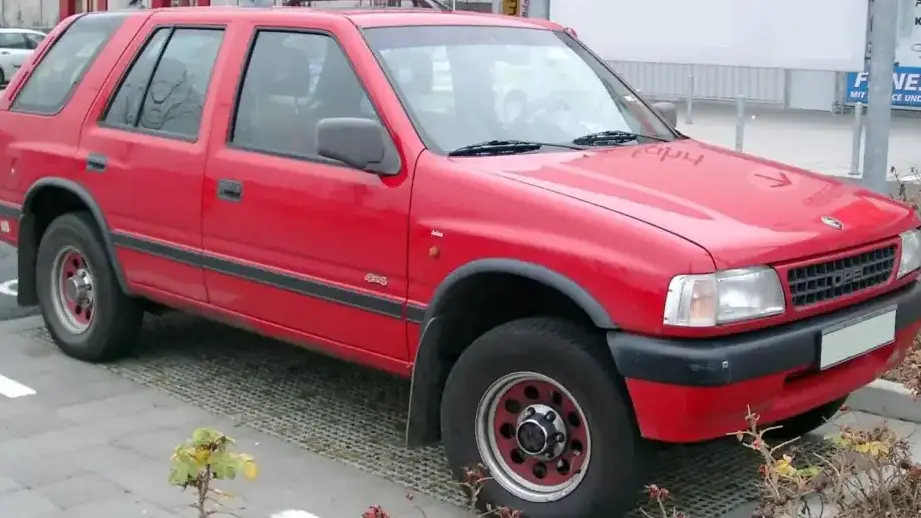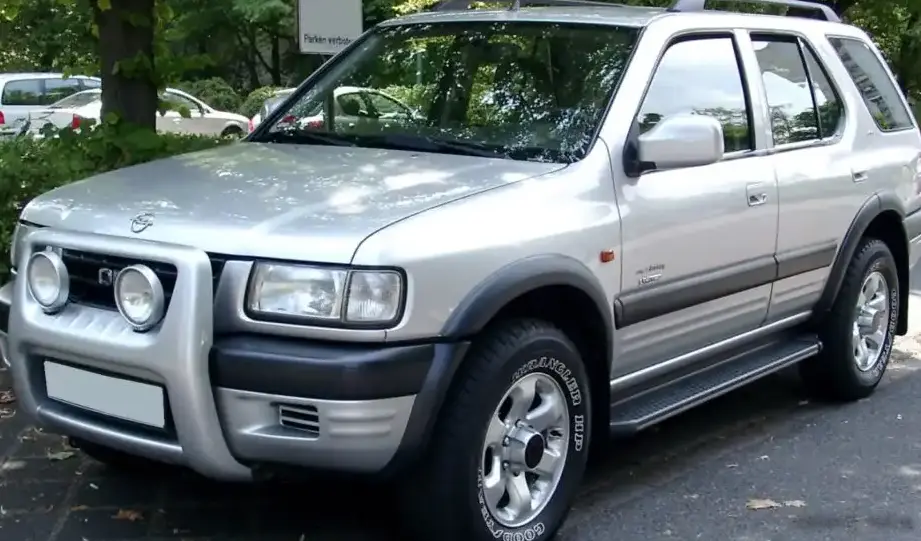
The Opel Frontera B 2.2 DTI 4×4, produced from 2001 to December 2003, represented a significant iteration of Opel’s mid-size SUV offering. Positioned within the Frontera B generation (introduced in 1998, internally designated as the 6B platform), the 2.2 DTI variant aimed to provide a balance of off-road capability, diesel fuel economy, and a more accessible price point compared to the gasoline-powered models. It served as a workhorse option for those needing a robust vehicle for both on and off-road duties, particularly in European markets where diesel engines held a strong preference. This model was a direct response to the growing demand for SUVs capable of handling diverse terrains while remaining relatively economical to operate.
Technical Specifications
| Brand | Opel |
| Model | Frontera |
| Generation | Frontera B |
| Type (Engine) | 2.2 DTI (120 Hp) 4×4 |
| Start of production | 2001 |
| End of production | December, 2003 |
| Powertrain Architecture | Internal Combustion engine |
| Body type | SUV |
| Seats | 5 |
| Doors | 5 |
| Fuel consumption (urban) | 10.8 l/100 km (21.8 US mpg) |
| Fuel consumption (extra urban) | 7.2 l/100 km (32.7 US mpg) |
| CO2 emissions | 273 g/km |
| Fuel Type | Diesel |
| Acceleration 0 – 100 km/h | 14 sec |
| Acceleration 0 – 62 mph | 14 sec |
| Acceleration 0 – 60 mph | 13.3 sec |
| Maximum speed | 161 km/h (100.04 mph) |
| Emission standard | Euro 3 |
| Weight-to-power ratio | 14.8 kg/Hp |
| Weight-to-torque ratio | 6.4 kg/Nm |
| Power | 120 Hp @ 4000 rpm |
| Torque | 280 Nm @ 1500 rpm (206.52 lb.-ft. @ 1500 rpm) |
| Engine layout | Front, Longitudinal |
| Engine Model/Code | Y22DTH |
| Engine displacement | 2171 cm3 (132.48 cu. in.) |
| Number of cylinders | 4 |
| Engine configuration | Inline |
| Cylinder Bore | 84 mm (3.31 in.) |
| Piston Stroke | 98 mm (3.86 in.) |
| Compression ratio | 18.5:1 |
| Number of valves per cylinder | 4 |
| Fuel injection system | Diesel Commonrail |
| Engine aspiration | Turbocharger, Intercooler |
| Valvetrain | OHC |
| Engine oil capacity | 6.1 l (6.45 US qt | 5.37 UK qt) |
| Coolant capacity | 7.9 l (8.35 US qt | 6.95 UK qt) |
| Kerb Weight | 1780 kg (3924.23 lbs.) |
| Max. weight | 2450 kg (5401.33 lbs.) |
| Max load | 670 kg (1477.1 lbs.) |
| Trunk (boot) space – minimum | 389 l (13.74 cu. ft.) |
| Trunk (boot) space – maximum | 1790 l (63.21 cu. ft.) |
| Fuel tank capacity | 65 l (17.17 US gal | 14.3 UK gal) |
| Length | 4658 mm (183.39 in.) |
| Width | 1814 mm (71.42 in.) |
| Height | 1740 mm (68.5 in.) |
| Wheelbase | 2702 mm (106.38 in.) |
| Front track | 1515 mm (59.65 in.) |
| Rear (Back) track | 1520 mm (59.84 in.) |
| Ride height (ground clearance) | 208 mm (8.19 in.) |
| Drive wheel | All wheel drive (4×4) |
| Number of gears | 5 |
| Gearbox type | Manual transmission |
| Front suspension | Torsion |
| Rear suspension | Coil spring |
| Front brakes | Ventilated discs |
| Rear brakes | Ventilated discs |
| Assisting systems | ABS (Anti-lock braking system) |
| Steering type | Worm-reduction unit |
| Power steering | Hydraulic Steering |
| Tires size | 235/75 R15 |
| Wheel rims size | 6.5J x 15 |
Powertrain & Engine Architecture
The heart of the Frontera B 2.2 DTI was the Y22DTH engine, a 2.2-liter inline-four cylinder diesel. This engine was part of Opel/Isuzu’s family of diesel engines, benefiting from a collaboration that provided robust and relatively simple diesel technology. The Y22DTH utilized a direct injection common rail system, a significant advancement over older diesel injection methods. This system allowed for higher injection pressures, resulting in improved fuel atomization, more complete combustion, and reduced noise and emissions. A turbocharger with an intercooler was employed to boost power output, bringing it to 120 horsepower at 4000 rpm and 280 Nm (206.52 lb-ft) of torque at a low 1500 rpm. The engine featured an overhead camshaft (OHC) valvetrain with four valves per cylinder. The five-speed manual transmission was the standard offering for this variant, providing a balance between fuel efficiency and usability. The engine was mounted longitudinally in the chassis, a configuration common for four-wheel-drive vehicles.
Driving Characteristics
The 2.2 DTI 4×4 Frontera B offered a driving experience geared towards practicality and capability rather than outright performance. Acceleration was modest, taking around 14 seconds to reach 60 mph, but the engine’s strong low-end torque made it well-suited for towing and off-road driving. The five-speed manual transmission allowed drivers to keep the engine in its optimal power band, but the gear ratios were spaced to prioritize fuel economy over rapid acceleration. Compared to the more powerful gasoline-powered Fronteras, the 2.2 DTI felt noticeably slower, but it offered significantly better fuel economy. The 4×4 system, typically part-time with selectable 2H, 4H, and 4L modes, provided good traction in challenging conditions. The ride quality was typical for a body-on-frame SUV – firm and somewhat truck-like, but acceptable for everyday use.
Equipment & Trim Levels
The 2.2 DTI 4×4 typically represented a mid-range trim level within the Frontera B lineup. Standard equipment generally included power steering, ABS brakes, air conditioning, and basic audio system. Interior upholstery was typically cloth, with durable plastics used throughout the cabin. Optional extras included alloy wheels, upgraded audio systems, and a sunroof. The dashboard layout was functional and straightforward, prioritizing usability over aesthetics. The Frontera B offered a relatively spacious interior for its class, with ample headroom and legroom for both front and rear passengers. The rear seats could be folded down to increase cargo capacity.
Chassis & Braking
The Frontera B utilized a traditional body-on-frame construction, providing a robust and durable chassis. The front suspension consisted of torsion bars, while the rear suspension employed coil springs. This setup provided a good balance between ride comfort and off-road capability. Brakes were ventilated discs on all four wheels, providing adequate stopping power for the vehicle’s weight. The steering system was a worm-reduction unit with hydraulic power assistance. The 235/75 R15 tires provided a good compromise between on-road comfort and off-road traction.
Market Reception & Comparison
The Opel Frontera B 2.2 DTI 4×4 was generally well-received in European markets as a practical and affordable SUV. Critics praised its fuel economy, off-road capability, and robust construction. However, it was often criticized for its relatively slow acceleration and somewhat dated interior. Compared to the gasoline-powered Fronteras, the 2.2 DTI offered significantly better fuel economy and lower running costs, making it a popular choice for those who prioritized practicality over performance. Compared to competitors like the Mitsubishi Pajero and Nissan Terrano, the Frontera B offered a competitive price point and a good level of standard equipment.
Legacy
The Y22DTH engine, while not known for being particularly sophisticated, proved to be relatively reliable when properly maintained. Common issues included turbocharger failure and injector problems, but these were generally addressable with routine maintenance and timely repairs. Today, the Frontera B 2.2 DTI 4×4 can be found on the used car market at relatively affordable prices. It remains a viable option for those seeking a capable and durable off-road vehicle, but potential buyers should be aware of the potential maintenance costs associated with a vehicle of this age. The Frontera B, and particularly the 2.2 DTI variant, represents a significant chapter in Opel’s SUV history, demonstrating the brand’s ability to produce robust and practical vehicles for a diverse range of customers.