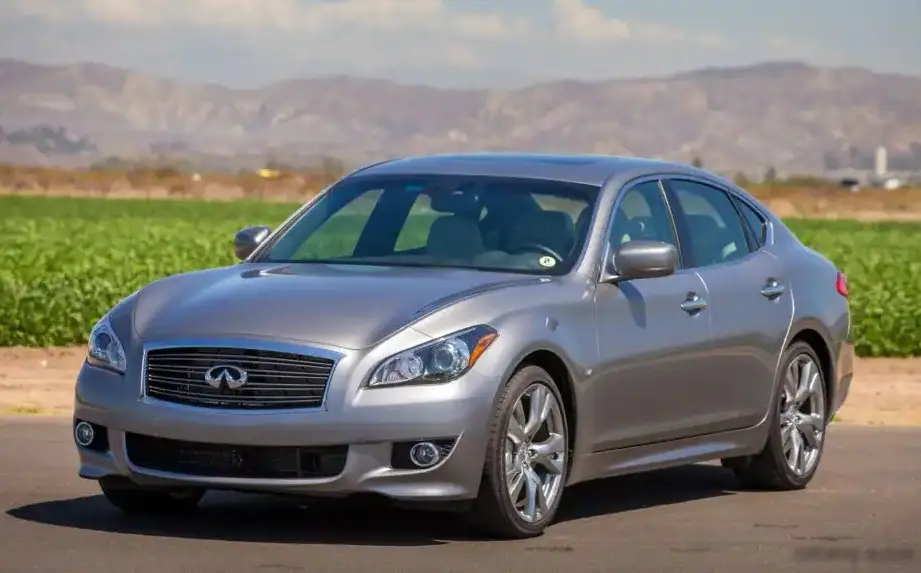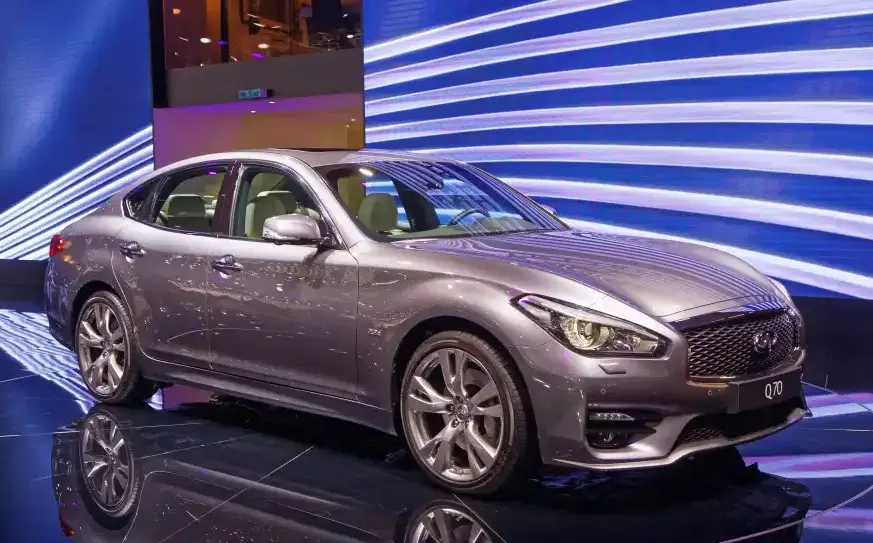
The Infiniti Q70, particularly the facelifted version introduced in 2014, represented Infiniti’s entry into the mid-size luxury sedan segment, aiming to compete with established European and domestic rivals. This iteration, produced through 2018, offered a blend of performance, technology, and comfort. The 3.5 V6 Hybrid Automatic variant occupied a premium position within the Q70 lineup, offering a sophisticated powertrain and a comprehensive suite of features. It was positioned as a step up from the standard 3.7-liter V6 models, appealing to buyers seeking improved fuel efficiency without sacrificing power or luxury.
Technical Specifications
| Brand | Infiniti |
| Model | Q70 |
| Generation | Q70 (facelift 2014) |
| Type (Engine) | 3.5 V6 (360 Hp) Hybrid Automatic |
| Start of production | 2014 |
| End of production | 2018 |
| Powertrain Architecture | FHEV (Full Hybrid Electric Vehicle) |
| Body type | Sedan |
| Seats | 5 |
| Doors | 4 |
| Fuel consumption (urban) | 8.4 l/100 km (28 US mpg) |
| Fuel consumption (extra urban) | 7.1 l/100 km (33.1 US mpg) |
| Fuel Type | Petrol (Gasoline) |
| Weight-to-power ratio | 5.2 kg/Hp |
| Weight-to-torque ratio | 3.3 kg/Nm |
| Electric motor power | 68 Hp @ 1770 rpm |
| Electric motor Torque | 290 Nm @ 1770 rpm (213.89 lb.-ft. @ 1770 rpm) |
| System power | 360 Hp @ 6500 rpm |
| System torque | 564 Nm (415.99 lb.-ft.) |
| Engine Power | 302 Hp @ 6800 rpm |
| Power per litre | 86.3 Hp/l |
| Engine Torque | 350 Nm @ 4800 rpm (258.15 lb.-ft. @ 4800 rpm) |
| Engine layout | Front, Longitudinal |
| Engine Model/Code | VQ35HR |
| Engine displacement | 3498 cm3 (213.46 cu. in.) |
| Number of cylinders | 6 |
| Engine configuration | V-engine |
| Cylinder Bore | 95.5 mm (3.76 in.) |
| Piston Stroke | 81.4 mm (3.2 in.) |
| Compression ratio | 10.6:1 |
| Number of valves per cylinder | 4 |
| Fuel injection system | Multi-port manifold injection |
| Valvetrain | DOHC, CVTCS |
| Engine oil capacity | 4.9 l (5.18 US qt | 4.31 UK qt) |
| Coolant capacity | 8.6 l (9.09 US qt | 7.57 UK qt) |
| Kerb Weight | 1875 kg (4133.67 lbs.) |
| Trunk (boot) space | 320 l (11.3 cu. ft.) |
| Fuel tank capacity | 67 l (17.7 US gal | 14.74 UK gal) |
| Length | 4981 mm (196.1 in.) |
| Width | 1844 mm (72.6 in.) |
| Height | 1501 mm (59.09 in.) |
| Wheelbase | 2901 mm (114.21 in.) |
| Front track | 1575 mm (62.01 in.) |
| Rear track | 1570 mm (61.81 in.) |
| Drag coefficient (Cd) | 0.26 |
| Minimum turning circle | 11.2 m (36.75 ft.) |
| Drive wheel | Rear wheel drive |
| Number of gears | 7 |
| Gearbox type | Automatic transmission ASC |
| Front suspension | Double wishbone |
| Rear suspension | Independent multi-link spring suspension with stabilizer |
| Front brakes | Ventilated discs |
| Rear brakes | Ventilated discs |
| Assisting systems | ABS (Anti-lock braking system) |
| Steering type | Steering rack and pinion |
| Power steering | Electric Steering |
| Tires size | 245/50 R18 |
| Wheel rims size | 8J x 18 |
INTRODUCTION
The 2014-2018 Infiniti Q70 3.5 V6 Hybrid Automatic was a significant offering in the luxury sedan market. Built on the Nissan FM platform (also known as the 1HX0/A3 platform), it represented a refinement of the previous M35/M56 models. The introduction of the hybrid powertrain aimed to address growing consumer demand for fuel efficiency without compromising the performance and luxury expected from an Infiniti vehicle. This variant was marketed towards buyers who prioritized a smooth driving experience, advanced technology, and a sophisticated image.
Powertrain & Engine Architecture
At the heart of the Q70 Hybrid lies the VQ35HR 3.5-liter V6 engine. This engine, a staple of Nissan and Infiniti lineups for years, is known for its reliability and smooth power delivery. The VQ35HR utilizes multi-port fuel injection and a Double Overhead Camshaft (DOHC) valvetrain with Continuously Variable Valve Timing Control System (CVTCS) for optimized performance and efficiency. The engine produces 302 horsepower and 258 lb-ft of torque. Coupled with a 68-horsepower electric motor, the total system output reaches 360 horsepower and 415.99 lb-ft of torque. The electric motor draws power from a compact lithium-ion battery pack. The transmission is a 7-speed automatic with manual shift mode (ASC), designed to seamlessly integrate with the hybrid system. The hybrid system operates in a full hybrid (FHEV) configuration, allowing for electric-only driving at low speeds and assisting the gasoline engine during acceleration.
Driving Characteristics
The Q70 3.5 V6 Hybrid Automatic delivers a refined and comfortable driving experience. The combination of the V6 engine and electric motor provides ample power for both city and highway driving. While not as overtly sporty as some of its rivals, the Q70 offers a smooth and responsive acceleration. The 7-speed automatic transmission is well-tuned, providing seamless gear changes. The hybrid system contributes to a quieter cabin experience, particularly during low-speed electric-only operation. Compared to the standard 3.7-liter V6 Q70, the hybrid variant offers improved fuel economy, but with a slightly reduced overall power output. The weight distribution is well-balanced, contributing to stable handling characteristics. The steering is precise, though it lacks the direct feedback found in some European competitors.
Equipment & Trim Levels
The Q70 3.5 V6 Hybrid Automatic typically came well-equipped with standard features including leather upholstery, heated front seats, a power-adjustable driver’s seat, a premium audio system, and a navigation system. Infiniti’s touchscreen display provided access to various vehicle settings and infotainment features. Available options included a rear-seat entertainment system, a panoramic sunroof, adaptive cruise control, lane departure warning, and blind-spot monitoring. Interior trim options varied, with choices in wood or metallic accents. The overall interior design emphasized luxury and comfort, with high-quality materials and a spacious cabin.
Chassis & Braking
The Q70 Hybrid utilizes a double wishbone front suspension and an independent multi-link rear suspension with a stabilizer bar. This suspension setup provides a comfortable ride while maintaining good handling characteristics. Ventilated disc brakes are used on all four wheels, providing ample stopping power. The Q70 is equipped with an Anti-lock Braking System (ABS) and Electronic Brake-force Distribution (EBD) for enhanced safety. The electric power steering system offers a responsive and precise steering feel. The chassis is designed to minimize noise, vibration, and harshness, contributing to a refined driving experience.
Market Reception & Comparison
The Infiniti Q70 Hybrid was generally well-received by automotive critics, who praised its comfortable ride, luxurious interior, and fuel efficiency. However, some reviewers noted that it lacked the sporty driving dynamics of some of its European competitors. Compared to the standard Q70 3.7-liter V6, the hybrid variant offered significantly better fuel economy, making it an attractive option for buyers prioritizing efficiency. Against rivals like the Lexus GS Hybrid and Acura RLX Sport Hybrid, the Q70 offered a competitive combination of features, performance, and price. Reliability ratings were generally positive, with owners reporting few major issues.
Legacy
The Infiniti Q70 Hybrid, while not a massive sales success, established Infiniti as a player in the hybrid luxury sedan segment. The VQ35HR engine, known for its durability, continues to be a reliable powertrain in the used car market. The hybrid system, while relatively complex, has proven to be reasonably reliable with proper maintenance. Today, the Q70 Hybrid represents a good value for buyers seeking a comfortable, well-equipped, and fuel-efficient luxury sedan. Its blend of performance, technology, and refinement ensures its continued appeal in the used car market.