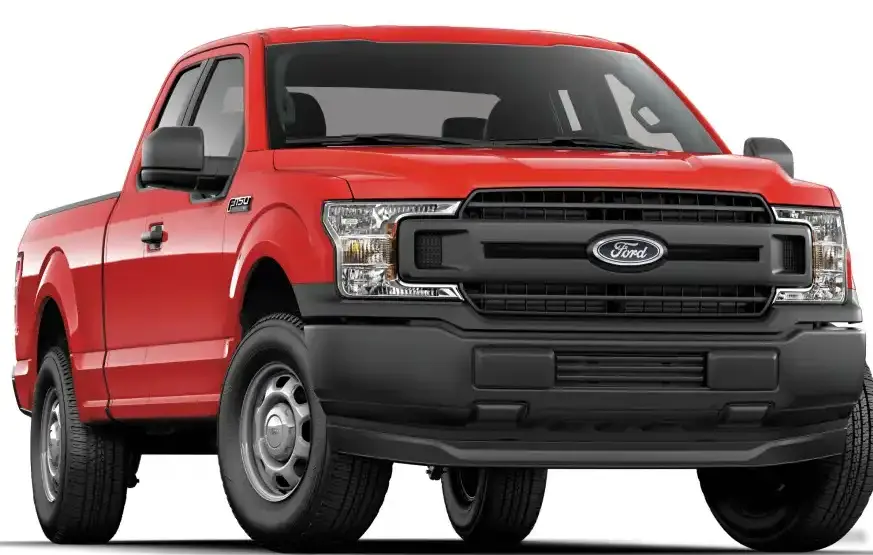
The Ford F-150, a mainstay of the American automotive landscape, saw a significant facelift for the 2018 model year as part of its thirteenth generation (2015-2020). This refresh brought updated styling, enhanced technology, and continued powertrain refinement. Among the engine options available, the 3.5-liter V6 producing 375 horsepower paired with a 10-speed automatic transmission represented a compelling blend of power, capability, and efficiency, positioned as a strong mid-range offering within the F-150 lineup. Production of this specific configuration ran from 2018 through October 2020, catering to buyers seeking a robust engine without the higher price tag of the top-tier options.
Technical Specifications
| Brand | Ford |
| Model | F-Series F-150 |
| Generation | F-Series F-150 XIII SuperCab (facelift 2018) |
| Type (Engine) | 3.5 V6 (375 Hp) Automatic |
| Start of production | 2018 |
| End of production | October, 2020 |
| Powertrain Architecture | Internal Combustion engine |
| Body type | Pick-up |
| Seats | 5-6 |
| Doors | 2 |
| Fuel consumption (urban) | 13.8 l/100 km (17 US mpg) |
| Fuel consumption (extra urban) | 11.2 l/100 km (21 US mpg) |
| Fuel consumption (combined) | 12.4 l/100 km (19 US mpg) |
| Fuel Type | Petrol (Gasoline) |
| Power | 375 Hp @ 5000 rpm |
| Torque | 637 Nm @ 3500 rpm (469.83 lb.-ft. @ 3500 rpm) |
| Engine layout | Front, Longitudinal |
| Engine displacement | 3490 cm3 (212.97 cu. in.) |
| Number of cylinders | 6 |
| Engine configuration | V-engine |
| Number of valves per cylinder | 4 |
| Fuel injection system | Direct injection |
| Engine aspiration | Twin-Turbo, Intercooler |
| Engine oil capacity | 5.7 l (6.02 US qt | 5.02 UK qt) |
| Coolant capacity | 14.35 l (15.16 US qt | 12.63 UK qt) |
| Trunk (boot) space (minimum) | 1764 l (62.3 cu. ft.) |
| Fuel tank capacity | 87 l (22.98 US gal | 19.14 UK gal) |
| Length | 5890-6363 mm (231.89 – 250.51 in.) |
| Width | 2029 mm (79.88 in.) |
| Width with mirrors folded | 2121 mm (83.5 in.) |
| Width including mirrors | 2459 mm (96.81 in.) |
| Height | 1918 mm (75.51 in.) |
| Wheelbase | 3683-4158 mm (145 – 163.7 in.) |
| Ride height (ground clearance) | 221 mm (8.7 in.) |
| Drivetrain Architecture | Rear wheel drive |
| Number of gears and type of gearbox | 10 gears, automatic transmission |
| Front suspension | Independent coil spring |
| Rear suspension | Leaf spring |
| Front brakes | Ventilated discs |
| Rear brakes | Ventilated discs |
| Assisting systems | ABS (Anti-lock braking system) |
| Steering type | Steering rack and pinion |
| Power steering | Electric Steering |
| Tires size | 275/45 R22 |
| Wheel rims size | 22 |
Powertrain & Engine Architecture
At the heart of this F-150 variant lies the 3.5-liter EcoBoost V6 engine. This engine, designated within Ford’s engine family as part of the second generation EcoBoost design, utilizes direct fuel injection and twin turbochargers to deliver a substantial 375 horsepower and 470 lb-ft of torque. The twin-turbo setup minimizes turbo lag, providing a broad and relatively flat torque curve. The engine’s architecture features a 60-degree V-angle, contributing to a more compact engine bay layout. The 10-speed automatic transmission, co-developed with General Motors, is a key component of this powertrain. Its wide gear ratio spread allows for both strong acceleration and efficient highway cruising. The transmission’s sophisticated control algorithms optimize shift points based on driving conditions and driver input.
Driving Characteristics
The 3.5L EcoBoost V6 with the 10-speed automatic delivers a noticeably different driving experience compared to the base 3.3L V6 or the 2.7L EcoBoost. Acceleration is brisk, making it well-suited for towing and hauling. The 10-speed transmission keeps the engine in its optimal power band, providing responsive performance in various driving scenarios. While not as fuel-efficient as the smaller engines, the 3.5L offers a compelling balance between power and economy. Compared to the higher-output 3.5L High Output version, this 375 hp variant prioritizes everyday drivability and fuel economy over outright performance.
Equipment & Trim Levels
The 3.5L V6 automatic was available across several F-150 trim levels, including XLT, Lariat, and King Ranch. Standard features typically included air conditioning, power windows and locks, a rearview camera, and a basic infotainment system. Higher trims like Lariat and King Ranch added leather upholstery, heated and ventilated front seats, a premium sound system, and advanced driver-assistance features such as blind-spot monitoring and lane-keeping assist. Optional extras included a panoramic sunroof, a navigation system, and various towing packages.
Chassis & Braking
The 2018 F-150 utilizes a fully boxed frame constructed from high-strength steel, contributing to its impressive rigidity and towing capacity. The front suspension features independent coil springs, while the rear suspension employs leaf springs. This configuration provides a comfortable ride while maintaining robust load-carrying capabilities. Braking duties are handled by ventilated discs on all four wheels, providing ample stopping power. Anti-lock brakes (ABS) are standard, enhancing safety and control during emergency braking situations.
Market Reception & Comparison
The 3.5L EcoBoost V6 automatic was generally well-received by automotive critics and consumers alike. It was praised for its strong performance, smooth shifting transmission, and relatively good fuel economy for a full-size pickup truck. Compared to the 2.7L EcoBoost, the 3.5L offered more power and towing capacity, while the 3.3L V6 was considered less refined and capable. Fuel economy figures averaged around 19 mpg combined, making it a competitive option in its class. Reliability has been generally good, although some owners have reported issues with the turbochargers and fuel injectors.
Legacy
The 3.5L EcoBoost V6 has become a cornerstone of the Ford F-150 lineup, and the 375-horsepower variant remains a popular choice in the used car market. Its combination of power, capability, and relative reliability has made it a desirable option for buyers seeking a versatile and dependable pickup truck. While newer F-150 models offer even more advanced technology and higher output engines, the 2018-2020 3.5L EcoBoost continues to represent a solid value proposition for those seeking a well-rounded and capable full-size truck.