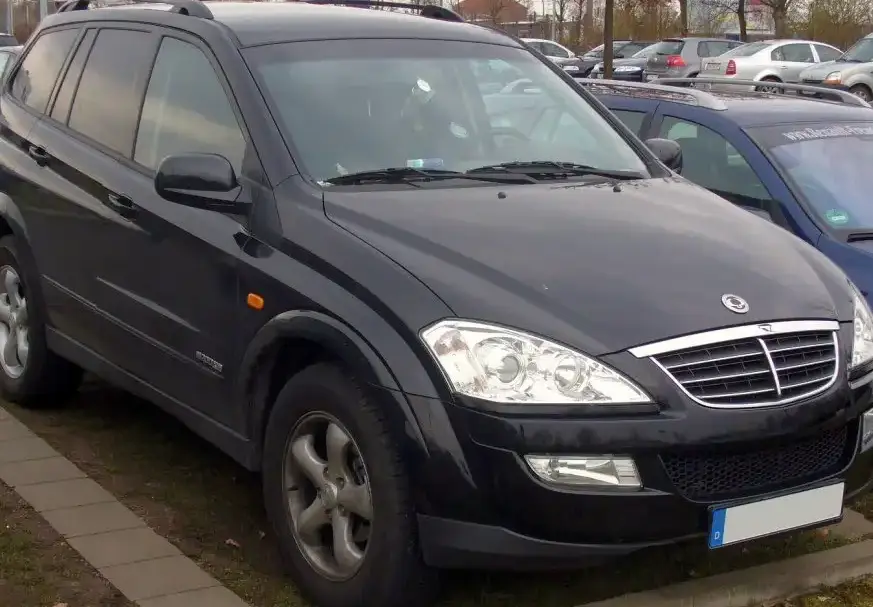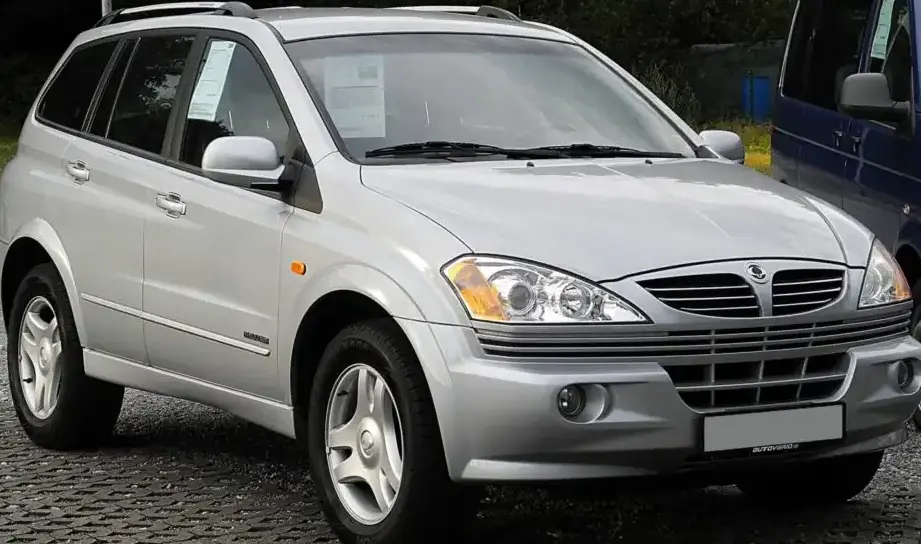
The SsangYong Kyron 2.0 TD, produced between 2005 and 2007, was a mid-size SUV aimed at offering a rugged, capable vehicle at a competitive price point. Positioned within the first generation Kyron (codenamed 1HX0), the 2.0 TD variant represented a key offering in European and Asian markets, providing a diesel-powered alternative to gasoline models. It was designed to appeal to buyers seeking fuel efficiency and torque for towing or off-road use, though it wasn’t marketed heavily in the United States. The Kyron, as a whole, represented SsangYong’s attempt to move upmarket and compete with established SUV brands.
Technical Specifications
| Brand | SsangYong |
| Model | Kyron |
| Generation | Kyron |
| Type (Engine) | 2.0 TD (141 Hp) |
| Start of production | 2005 |
| End of production | 2007 |
| Powertrain Architecture | Internal Combustion engine |
| Body type | SUV |
| Seats | 5 |
| Doors | 5 |
| Fuel consumption (urban) | 10.6 l/100 km (22.2 US mpg) |
| Fuel consumption (extra urban) | 7.1 l/100 km (33.1 US mpg) |
| Fuel consumption (combined) | 8.4 l/100 km (28 US mpg) |
| Fuel Type | Diesel |
| Acceleration 0 – 100 km/h | 15.4 sec |
| Acceleration 0 – 62 mph | 15.4 sec |
| Acceleration 0 – 60 mph | 14.6 sec |
| Maximum speed | 166 km/h (103.15 mph) |
| Emission standard | Euro 3 |
| Weight-to-power ratio | 13.9 kg/Hp |
| Weight-to-torque ratio | 6.3 kg/Nm |
| Power | 141 Hp @ 4000 rpm |
| Torque | 310 Nm @ 1800-2750 rpm (228.64 lb.-ft.) |
| Engine layout | Front, Longitudinal |
| Engine Model/Code | D20DT 664.950 |
| Engine displacement | 1998 cm3 (121.93 cu. in.) |
| Number of cylinders | 4 |
| Engine configuration | Inline |
| Cylinder Bore | 86.2 mm (3.39 in.) |
| Piston Stroke | 85.6 mm (3.37 in.) |
| Number of valves per cylinder | 4 |
| Fuel injection system | Diesel Commonrail |
| Engine aspiration | Turbocharger, Intercooler |
| Engine oil capacity | 7.5 l (7.93 US qt | 6.6 UK qt) |
| Coolant capacity | 10.5 l (11.1 US qt | 9.24 UK qt) |
| Kerb Weight | 1956 kg (4312.24 lbs.) |
| Max. weight | 2530 kg (5577.7 lbs.) |
| Max load | 574 kg (1265.45 lbs.) |
| Trunk (boot) space – minimum | 625 l (22.07 cu. ft.) |
| Trunk (boot) space – maximum | 1222 l (43.15 cu. ft.) |
| Fuel tank capacity | 50 l (13.21 US gal | 11 UK gal) |
| Length | 4660 mm (183.46 in.) |
| Width | 1880 mm (74.02 in.) |
| Height | 1755 mm (69.09 in.) |
| Wheelbase | 2740 mm (107.87 in.) |
| Front track | 1570 mm (61.81 in.) |
| Rear track | 1570 mm (61.81 in.) |
| Drive wheel | All wheel drive (4×4) |
| Number of gears | 5 |
| Gearbox type | Manual transmission |
| Front suspension | Double wishbone |
| Front brakes | Ventilated discs |
| Rear brakes | Disc |
| Steering type | Steering rack and pinion |
INTRODUCTION
The SsangYong Kyron 2.0 TD, launched in 2005, was a significant model for the South Korean automaker. It represented a departure from SsangYong’s traditionally utilitarian vehicles, aiming for a more modern and stylish SUV design. The Kyron was built on a body-on-frame construction, emphasizing durability and off-road capability. The 2.0-liter turbodiesel engine was a core component of the Kyron’s appeal in Europe and other markets where diesel fuel was prevalent and often incentivized. This variant slotted into the middle of the Kyron range, offering a balance between performance and fuel economy, positioned below the more powerful 2.7-liter gasoline engine and above base-level trims.
Powertrain & Engine Architecture
The heart of the Kyron 2.0 TD is the D20DT engine, a 1998cc inline-four cylinder diesel. This engine utilizes a common rail direct injection system, delivering fuel at extremely high pressure for improved combustion efficiency and reduced emissions. The D20DT is a turbocharged engine, with an intercooler to further enhance performance by cooling the intake air. The engine code ‘664.950’ identifies a specific iteration of this engine. The engine features four valves per cylinder, contributing to its breathing efficiency. The 2.0 TD was paired with a five-speed manual transmission as standard, sending power to all four wheels via a part-time four-wheel-drive system. The longitudinal engine layout was a key characteristic of the Kyron’s drivetrain, allowing for a more traditional SUV setup with a transfer case for selecting between 2WD, 4WD High, and 4WD Low.
Driving Characteristics
The Kyron 2.0 TD, with its 141 horsepower and 310 Nm (228.64 lb-ft) of torque, offered adequate, but not exhilarating, performance. Acceleration from 0-60 mph took around 14.6 seconds, and top speed was limited to 166 km/h (103.15 mph). The engine’s torque peak, available from 1800-2750 rpm, provided good pulling power for everyday driving and towing. Compared to the 2.7-liter gasoline engine, the 2.0 TD felt less responsive but offered significantly better fuel economy. The five-speed manual transmission was well-matched to the engine’s characteristics, although the gear ratios were geared more towards fuel efficiency than outright performance. The Kyron’s body-on-frame construction resulted in a noticeable body roll during cornering, and the steering felt somewhat vague compared to more modern SUVs.
Equipment & Trim Levels
The Kyron 2.0 TD typically came equipped with features such as air conditioning, power windows, central locking, and an audio system. Higher trim levels added features like alloy wheels, leather upholstery, a sunroof, and upgraded audio systems. Safety features included ABS brakes and dual front airbags. Interior materials were generally durable but not particularly luxurious, reflecting the Kyron’s price point. The dashboard layout was functional and straightforward, with clearly labeled controls. Optional extras included a rear parking sensor, heated seats, and a navigation system.
Chassis & Braking
The Kyron’s chassis was based on a traditional body-on-frame construction, providing a robust and durable platform. The front suspension utilized a double wishbone setup, while the rear suspension employed a multi-link design. This configuration aimed to balance ride comfort with off-road capability. The braking system consisted of ventilated discs at the front and solid discs at the rear. The Kyron 2.0 TD’s weight of approximately 1956 kg (4312.24 lbs) meant that the braking performance was adequate but not exceptional. Stabilizer bars were fitted to both the front and rear axles to reduce body roll during cornering.
Market Reception & Comparison
The SsangYong Kyron 2.0 TD received mixed reviews from automotive critics. While praised for its ruggedness, spacious interior, and competitive price, it was often criticized for its dated design, unrefined engine, and somewhat clumsy handling. Compared to rivals like the Hyundai Santa Fe and Kia Sorento, the Kyron felt less polished and sophisticated. However, the 2.0 TD offered better fuel economy than many of its gasoline-powered competitors. Reliability reports were generally positive, with the D20DT engine proving to be a relatively durable unit. The Kyron’s value proposition was its affordability and off-road capability, making it an attractive option for buyers seeking a practical and capable SUV without breaking the bank.
Legacy
The SsangYong Kyron, while not a massive sales success, played a role in SsangYong’s efforts to modernize its lineup and expand its market reach. The 2.0 TD powertrain proved to be a reliable and fuel-efficient option, and many examples are still on the road today. In the used car market, the Kyron 2.0 TD represents an affordable and capable SUV, particularly for those seeking a vehicle for towing or light off-road use. While it may lack the refinement of more modern SUVs, its rugged construction and durable engine make it a viable option for budget-conscious buyers. The Kyron paved the way for SsangYong’s subsequent SUV models, such as the Korando and Rexton, which have achieved greater success in the global market.