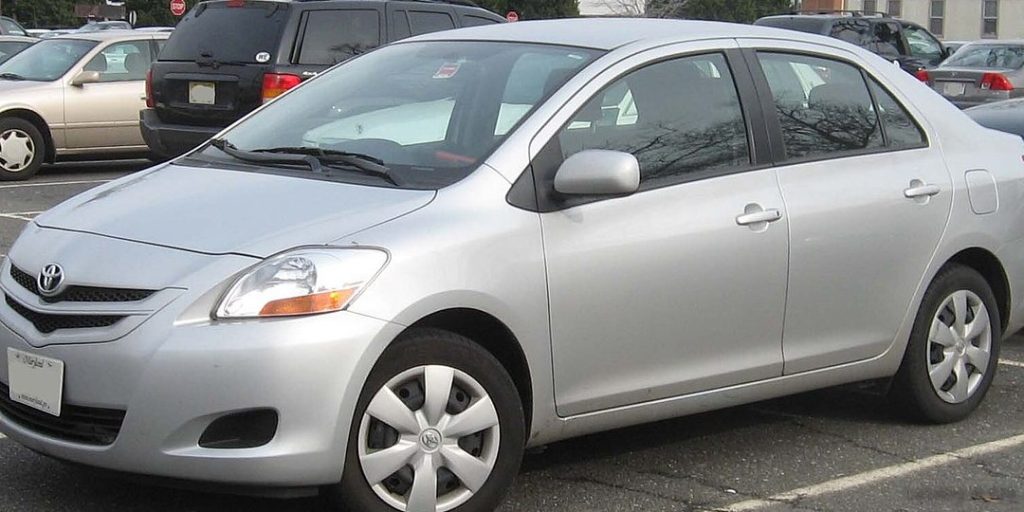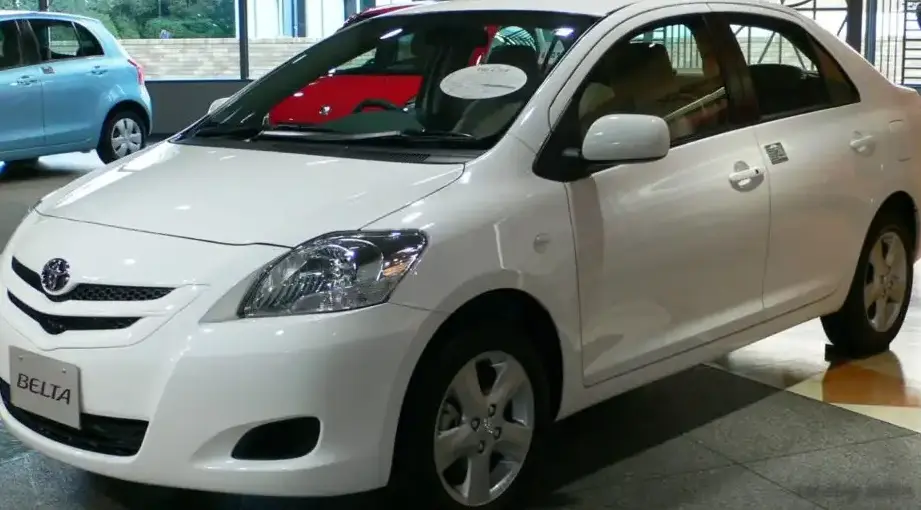
The Toyota Belta 1.3, equipped with an 86 horsepower engine and automatic transmission, was a subcompact sedan produced by Toyota from November 2005 to June 2012. Primarily aimed at the Asian market, particularly countries like Indonesia, Thailand, and the Philippines, the Belta represented Toyota’s entry-level offering in the sedan segment. It was essentially a rebadged version of the Daihatsu YRV, a result of the close partnership between the two Japanese automakers. The Belta occupied a niche below the Corolla, offering affordability and practicality for first-time car buyers or those seeking a small, fuel-efficient vehicle for urban commuting. This specific 1.3L automatic variant served as the base model, offering a balance of cost and convenience.
Technical Specifications
| Brand | Toyota |
| Model | Belta |
| Generation | Belta |
| Type (Engine) | 1.3 (86 Hp) Automatic |
| Start of production | November, 2005 |
| End of production | June, 2012 |
| Powertrain Architecture | Internal Combustion engine |
| Body type | Sedan |
| Seats | 5 |
| Doors | 4 |
| Fuel Type | Petrol (Gasoline) |
| Acceleration 0 – 100 km/h | 13 sec |
| Acceleration 0 – 62 mph | 13 sec |
| Acceleration 0 – 60 mph | 12.4 sec |
| Power | 86 Hp @ 6000 rpm |
| Power per litre | 66.2 Hp/l |
| Torque | 124 Nm @ 4400 rpm / 91.46 lb.-ft. @ 4400 rpm |
| Engine layout | Front, Transverse |
| Engine Model/Code | 2SZ-FE |
| Engine displacement | 1299 cm3 / 79.27 cu. in. |
| Number of cylinders | 4 |
| Engine configuration | Inline |
| Cylinder Bore | 75 mm / 2.95 in. |
| Piston Stroke | 73.5 mm / 2.89 in. |
| Compression ratio | 10.5:1 |
| Number of valves per cylinder | 4 |
| Fuel injection system | Multi-port manifold injection |
| Engine aspiration | Naturally aspirated engine |
| Valvetrain | DOHC |
| Engine oil capacity | 3.2 l / 3.38 US qt | 2.82 UK qt |
| Coolant | 5.4 l / 5.71 US qt | 4.75 UK qt |
| Fuel tank capacity | 42 l / 11.1 US gal | 9.24 UK gal |
| Length | 4300 mm / 169.29 in. |
| Width | 1895 mm / 74.61 in. |
| Height | 1460 mm / 57.48 in. |
| Wheelbase | 2550 mm / 100.39 in. |
| Drivetrain Architecture | The Internal combustion engine (ICE) drives the front wheels of the vehicle. |
| Drive wheel | Front wheel drive |
| Number of gears and type of gearbox | 4 gears, automatic transmission |
Powertrain & Engine Architecture
The Toyota Belta 1.3 Automatic was powered by the 2SZ-FE engine, a 1.3-liter inline-four cylinder gasoline engine. This engine was a relatively simple design, utilizing a multi-port fuel injection system and a double overhead camshaft (DOHC) valvetrain. The 2SZ-FE was known for its reliability and fuel efficiency, rather than outright performance. The engine featured a compression ratio of 10.5:1, contributing to its modest power output. Paired with this engine was a four-speed automatic transmission. This transmission was chosen for its ease of use and convenience, appealing to the target demographic who prioritized comfort over sporty driving dynamics. The transmission’s gear ratios were optimized for fuel economy and smooth acceleration in city driving conditions.
Driving Characteristics
The 1.3L engine and four-speed automatic combination in the Belta resulted in a driving experience focused on practicality and fuel efficiency. Acceleration was modest, with a 0-60 mph time of around 12.4 seconds. The automatic transmission, while smooth, lacked the responsiveness of a manual gearbox or more modern automatic transmissions with additional gears. The gear ratios were spaced to prioritize fuel economy, meaning the engine often felt strained during quick acceleration or when climbing hills. Compared to other Belta variants, such as those equipped with a manual transmission, the automatic version offered less driver engagement and slightly lower fuel economy. However, it provided a more relaxed and convenient driving experience, particularly in congested urban environments.
Equipment & Trim Levels
The Belta 1.3 Automatic, as the base trim level, typically came equipped with essential features. Standard equipment generally included air conditioning, power steering, and basic audio system with AM/FM radio and CD player. Interior upholstery was typically cloth, and the dashboard featured a simple, functional design. Optional extras, depending on the market, could include power windows, central locking, and alloy wheels. Safety features were relatively basic, usually consisting of dual airbags and anti-lock brakes (ABS) on higher trim levels. The overall interior ambiance was geared towards affordability and practicality, rather than luxury or sophistication.
Chassis & Braking
The Belta utilized a front-wheel-drive chassis with a MacPherson strut suspension in the front and a torsion beam suspension in the rear. This suspension setup was chosen for its cost-effectiveness and ability to provide a comfortable ride. Braking systems varied depending on the market, with some models featuring front disc brakes and rear drum brakes, while others had disc brakes all around. The braking system was adequate for the vehicle’s weight and performance, but lacked the stopping power of more advanced braking systems. Stabilizer bars were typically included to reduce body roll during cornering, but the Belta was not designed for spirited driving.
Market Reception & Comparison
The Toyota Belta 1.3 Automatic was generally well-received in its target markets as an affordable and reliable subcompact sedan. Critics praised its fuel efficiency and ease of use, but noted its lack of performance and relatively basic interior. Compared to other vehicles in its class, such as the Honda City or Nissan Versa, the Belta offered a competitive price point and Toyota’s reputation for reliability. However, it often lagged behind in terms of features and driving dynamics. Fuel economy was a key selling point, with the Belta achieving respectable mileage figures for its class. Reliability was also a strong suit, with the 2SZ-FE engine proving to be durable and long-lasting.
Legacy
The Toyota Belta, and specifically the 1.3L automatic variant, has established a reputation as a dependable and economical used car. The 2SZ-FE engine is known for its longevity, and with proper maintenance, can provide many years of service. Parts availability is generally good, thanks to the widespread use of this engine in other Toyota and Daihatsu models. Today, the Belta 1.3 Automatic remains a popular choice for budget-conscious buyers seeking a reliable and fuel-efficient vehicle for daily commuting. While it may not offer the latest technology or performance, its simplicity and durability continue to make it a viable option in the used car market.