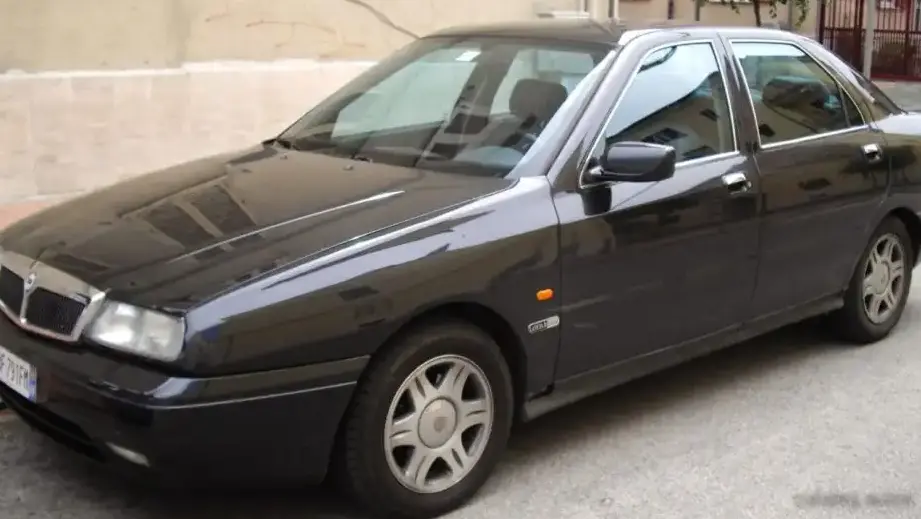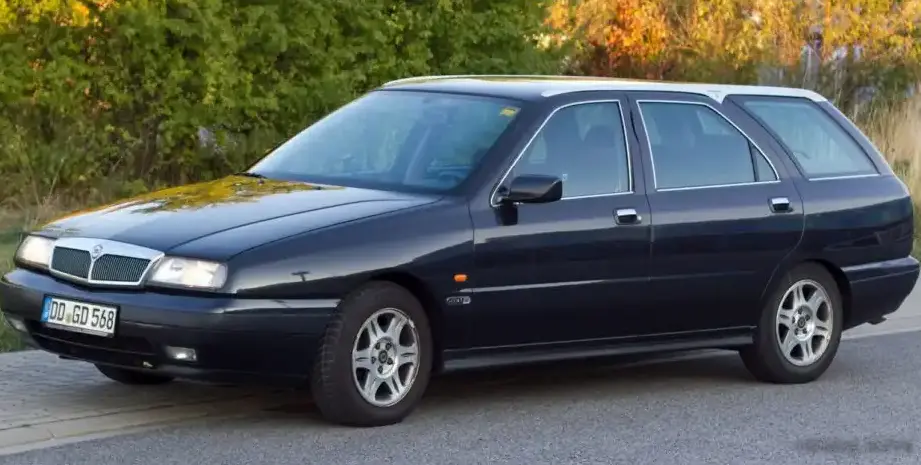
The Lancia Kappa Station Wagon (838) 2.4 TD, produced from 1996 to May 1998, represented a significant offering in the European market as a spacious and relatively luxurious family vehicle. Positioned as a practical alternative to more mainstream estate cars, the Kappa aimed to blend Italian styling with diesel-powered economy. It was part of the broader Kappa range, built on the 838 platform, and offered a more versatile body style compared to the sedan. This particular 2.4 TD variant occupied a mid-range position within the Kappa lineup, offering a balance between performance, fuel efficiency, and equipment levels.
Technical Specifications
| Brand | Lancia |
| Model | Kappa |
| Generation | Kappa Station Wagon (838) |
| Type (Engine) | 2.4 TD (124 Hp) |
| Start of production | 1996 |
| End of production | May, 1998 |
| Powertrain Architecture | Internal Combustion engine |
| Body type | Station wagon (estate) |
| Seats | 5 |
| Doors | 5 |
| Fuel consumption (combined) | 7.6 l/100 km (30.9 US mpg, 37.2 UK mpg, 13.2 km/l) |
| Fuel Type | Diesel |
| Acceleration 0 – 100 km/h | 11.5 sec |
| Acceleration 0 – 62 mph | 11.5 sec |
| Acceleration 0 – 60 mph | 10.9 sec |
| Maximum speed | 190 km/h (118.06 mph) |
| Weight-to-power ratio | 12 kg/Hp, 83.5 Hp/tonne |
| Weight-to-torque ratio | 5.9 kg/Nm, 168.4 Nm/tonne |
| Power | 124 Hp @ 4250 rpm |
| Power per litre | 51.9 Hp/l |
| Torque | 250 Nm @ 2250 rpm (184.39 lb.-ft. @ 2250 rpm) |
| Engine layout | Front, Transverse |
| Engine Model/Code | 838 A7.000 |
| Engine displacement | 2387 cm3 (145.66 cu. in.) |
| Number of cylinders | 5 |
| Engine configuration | Inline |
| Cylinder Bore | 82 mm (3.23 in.) |
| Piston Stroke | 90.4 mm (3.56 in.) |
| Compression ratio | 21:1 |
| Number of valves per cylinder | 2 |
| Fuel injection system | Precombustion chamber injection |
| Engine aspiration | Turbocharger |
| Valvetrain | OHC |
| Engine oil capacity | 5.4 l (5.71 US qt | 4.75 UK qt) |
| Coolant | 8.3 l (8.77 US qt | 7.3 UK qt) |
| Kerb Weight | 1485 kg (3273.86 lbs.) |
| Max. weight | 2000 kg (4409.25 lbs.) |
| Max load | 515 kg (1135.38 lbs.) |
| Trunk (boot) space – minimum | 505 l (17.83 cu. ft.) |
| Trunk (boot) space – maximum | 1500 l (52.97 cu. ft.) |
| Fuel tank capacity | 70 l (18.49 US gal | 15.4 UK gal) |
| Length | 4687 mm (184.53 in.) |
| Width | 1826 mm (71.89 in.) |
| Height | 1462 mm (57.56 in.) |
| Wheelbase | 2700 mm (106.3 in.) |
| Front track | 1546 mm (60.87 in.) |
| Rear (Back) track | 1530 mm (60.24 in.) |
| Drivetrain Architecture | The Internal combustion engine (ICE) drives the front wheels of the vehicle. |
| Drive wheel | Front wheel drive |
| Number of gears and type of gearbox | 5 gears, manual transmission |
| Front suspension | Wishbone |
| Rear suspension | Spring Strut |
| Front brakes | Ventilated discs |
| Rear brakes | Disc |
| Assisting systems | ABS (Anti-lock braking system) |
| Steering type | Steering rack and pinion |
| Power steering | Hydraulic Steering |
| Tires size | 195/60 R15 |
Powertrain & Engine Architecture
The heart of the Kappa 2.4 TD was the 838 A7.000 engine, a 2.4-liter, inline-five cylinder diesel. This engine utilized a precombustion chamber injection system, a common technology for diesel engines of the era, designed to improve combustion efficiency and reduce noise. A turbocharger was employed to boost power output to 124 horsepower at 4250 rpm and 250 Nm (184 lb-ft) of torque at 2250 rpm. The engine featured an overhead camshaft (OHC) valvetrain with two valves per cylinder. The five-speed manual transmission was the standard offering, providing a relatively long-legged gearing setup suited for highway cruising. The engine’s transverse mounting within the front-wheel-drive configuration contributed to a compact engine bay layout.
Driving Characteristics
The 2.4 TD Kappa Station Wagon offered a comfortable, if not particularly sporty, driving experience. The turbocharger provided a noticeable boost in power, but the engine’s peak torque was available at a relatively low 2250 rpm, making it feel responsive in everyday driving situations. Acceleration to 60 mph took around 10.9 seconds, and top speed was approximately 118 mph. Compared to the gasoline-powered Kappa variants, the 2.4 TD prioritized fuel economy and low-end torque over outright performance. The manual transmission, while offering good control, had a somewhat long throw. The suspension was tuned for comfort, absorbing bumps reasonably well, but didn’t offer particularly sharp handling.
Equipment & Trim Levels
The 2.4 TD Kappa Station Wagon typically came equipped with features considered standard for a mid-range European vehicle of the late 1990s. This included power windows, central locking, power steering, and an anti-lock braking system (ABS). Interior upholstery was generally cloth, with options for leather available. Dashboard design was functional and relatively understated, with a focus on ergonomics. Optional extras could include air conditioning, a sunroof, and upgraded audio systems. The station wagon body style itself added to the practicality, offering a generous cargo capacity of 505-1500 liters depending on the rear seats configuration.
Chassis & Braking
The Kappa Station Wagon utilized a front-wheel-drive layout with an independent wishbone suspension at the front and a spring strut rear suspension. Braking duties were handled by ventilated discs at the front and solid discs at the rear. The ABS system provided enhanced braking control, particularly on slippery surfaces. The chassis was designed to provide a comfortable ride, and stabilizer bars were included to reduce body roll during cornering. The relatively modest power output of the 2.4 TD engine meant that the braking system was generally adequate for the vehicle’s weight and performance.
Market Reception & Comparison
The Lancia Kappa 2.4 TD Station Wagon was generally well-received by automotive critics as a practical and comfortable family vehicle. Its fuel economy was a significant selling point, particularly in Europe where diesel fuel was often cheaper than gasoline. Compared to other diesel estate cars of the time, the Kappa offered a more stylish and luxurious interior. However, some critics noted that the engine could be somewhat noisy and that the handling wasn’t as sharp as some of its competitors. The 2.4 TD offered a good compromise between the more powerful (but less economical) gasoline engines and the lower-powered diesel options in the Kappa range.
Legacy
The Lancia Kappa, while not a massive sales success, remains a fondly remembered vehicle among enthusiasts. The 2.4 TD engine, when properly maintained, proved to be relatively reliable. However, like many European cars of the era, finding parts can be challenging today. The Kappa’s unique styling and comfortable ride continue to appeal to those seeking a distinctive and practical classic estate car. On the used car market, well-maintained examples of the 2.4 TD Station Wagon are becoming increasingly rare and are sought after by collectors and enthusiasts who appreciate its blend of Italian flair and diesel practicality.