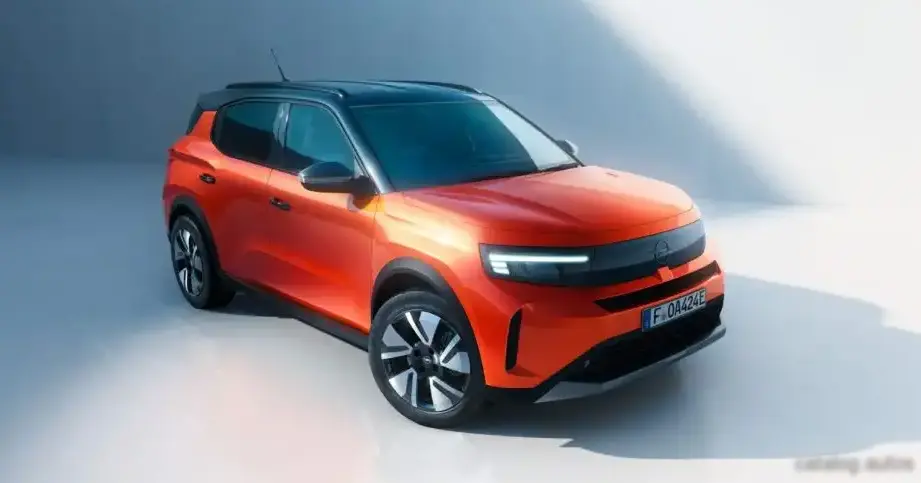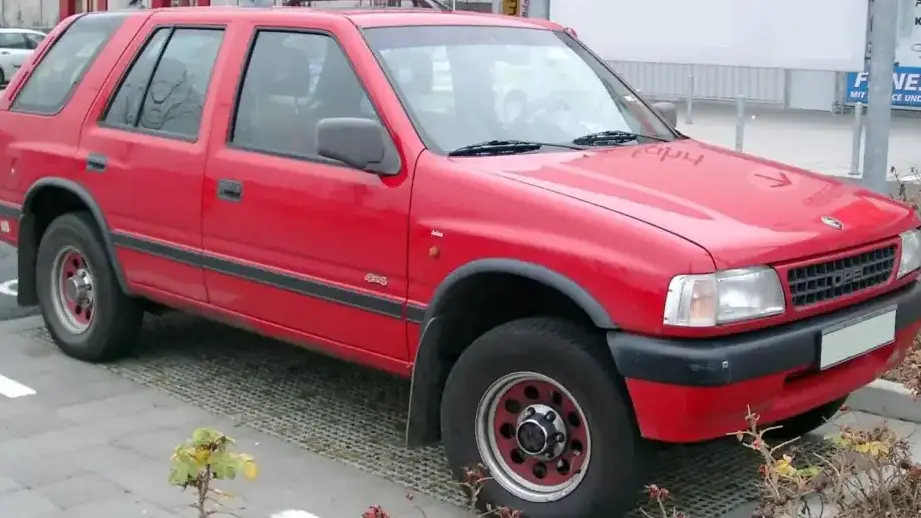
The Opel Frontera B Sport 2.2 16V, produced from November 1998 to December 2003, represented a performance-oriented variant within the broader Frontera B range. Positioned as a more engaging alternative to the base models, the Sport trim aimed to attract buyers seeking a blend of off-road capability and on-road driving enjoyment. It was a key offering in Opel’s SUV lineup during a period of growing popularity for this vehicle segment in Europe. The Frontera B itself was a significant update to the original Frontera, sharing its platform with the Isuzu Rodeo and Holden Rodeo, a result of GM’s global partnerships. This particular 2.2-liter 16-valve engine and five-speed manual transmission combination offered a balance between power and affordability within the Frontera B lineup.
Technical Specifications
| Brand | Opel |
| Model | Frontera |
| Generation | Frontera B Sport |
| Type (Engine) | 2.2 16V (136 Hp) |
| Start of production | November, 1998 |
| End of production | December, 2003 |
| Powertrain Architecture | Internal Combustion engine |
| Body type | SUV |
| Seats | 5 |
| Doors | 3 |
| Fuel consumption (urban) | 14.8 l/100 km (15.9 US mpg, 19.1 UK mpg, 6.8 km/l) |
| Fuel consumption (extra urban) | 9 l/100 km (26.1 US mpg, 31.4 UK mpg, 11.1 km/l) |
| Fuel consumption (combined) | 11.4 l/100 km (20.6 US mpg, 24.8 UK mpg, 8.8 km/l) |
| CO2 emissions | 273 g/km |
| Fuel Type | Petrol (Gasoline) |
| Acceleration 0 – 100 km/h | 13.4 sec |
| Acceleration 0 – 62 mph | 13.4 sec |
| Acceleration 0 – 60 mph | 12.7 sec |
| Maximum speed | 165 km/h (102.53 mph) |
| Emission standard | Euro 2 |
| Weight-to-power ratio | 12.2 kg/Hp, 81.9 Hp/tonne |
| Weight-to-torque ratio | 8.2 kg/Nm, 121.7 Nm/tonne |
| Power | 136 Hp @ 5200 rpm |
| Power per litre | 61.9 Hp/l |
| Torque | 202 Nm @ 2500 rpm (148.99 lb.-ft. @ 2500 rpm) |
| Engine layout | Front, Longitudinal |
| Engine Model/Code | X22SE, Y22SE |
| Engine displacement | 2198 cm3 (134.13 cu. in.) |
| Number of cylinders | 4 |
| Engine configuration | Inline |
| Cylinder Bore | 86 mm (3.39 in.) |
| Piston Stroke | 94.6 mm (3.72 in.) |
| Compression ratio | 9.6:1 |
| Number of valves per cylinder | 4 |
| Fuel injection system | Multi-port manifold injection |
| Engine aspiration | Naturally aspirated engine |
| Valvetrain | DOHC |
| Engine oil capacity | 4.5 l (4.76 US qt | 3.96 UK qt) |
| Coolant | 7.2 l (7.61 US qt | 6.34 UK qt) |
| Kerb Weight | 1660 kg (3659.67 lbs.) |
| Max. weight | 2300 kg (5070.63 lbs.) |
| Max load | 640 kg (1410.96 lbs.) |
| Trunk (boot) space – minimum | 320 l (11.3 cu. ft.) |
| Trunk (boot) space – maximum | 1137 l (40.15 cu. ft.) |
| Fuel tank capacity | 65 l (17.17 US gal | 14.3 UK gal) |
| Length | 4268 mm (168.03 in.) |
| Width | 1787 mm (70.35 in.) |
| Height | 1692 mm (66.61 in.) |
| Wheelbase | 2462 mm (96.93 in.) |
| Front track | 1515 mm (59.65 in.) |
| Rear (Back) track | 1520 mm (59.84 in.) |
| Ride height (ground clearance) | 208 mm (8.19 in.) |
| Drivetrain Architecture | The Internal combustion engine (ICE) drives the rear wheels of the vehicle. |
| Drive wheel | Rear wheel drive |
| Number of gears and type of gearbox | 5 gears, manual transmission |
| Front suspension | Torsion |
| Rear suspension | Coil spring |
| Front brakes | Ventilated discs |
| Rear brakes | Ventilated discs |
| Assisting systems | ABS (Anti-lock braking system) |
| Steering type | Worm-reduction unit |
| Power steering | Hydraulic Steering |
| Tires size | 235/75 R15 |
| Wheel rims size | 6.5J x 15 |
Powertrain & Engine Architecture
The heart of the Frontera B Sport 2.2 16V is the X22SE or Y22SE engine, a 2.2-liter inline-four cylinder gasoline engine. This engine is a member of Opel’s ‘E’ family of engines, known for its relatively simple and robust design. The ‘SE’ designation indicates a specific iteration optimized for emissions and fuel efficiency. The engine utilizes a multi-port fuel injection system, delivering fuel directly to each intake port for improved combustion. The 16-valve DOHC (Dual Overhead Camshaft) valvetrain allows for precise control of valve timing, contributing to the engine’s power output. The engine’s longitudinal mounting within the chassis, coupled with rear-wheel drive, provided a more traditional driving experience compared to the increasingly common front-wheel-drive SUVs. The five-speed manual transmission offered precise gear changes and allowed the driver to fully utilize the engine’s power band.
Driving Characteristics
The 136 horsepower and 202 Nm (148.99 lb-ft) of torque delivered by the 2.2-liter engine provided adequate performance for the Frontera B Sport, though it wasn’t a particularly quick vehicle. Acceleration from 0-60 mph took around 12.7 seconds, and top speed was limited to 165 km/h (102.53 mph). Compared to the more powerful V6 versions of the Frontera B, the 2.2 16V felt less responsive, particularly when fully loaded or tackling steep inclines. However, the manual transmission allowed for greater driver control and a more engaging driving experience than the available automatic options. The rear-wheel-drive configuration contributed to a more balanced feel, especially on paved roads, although it did require more careful throttle control in slippery conditions. The gear ratios were tuned for a balance between acceleration and fuel economy, making it suitable for both on-road cruising and moderate off-road excursions.
Equipment & Trim Levels
The Frontera B Sport 2.2 16V typically came equipped with features aimed at enhancing both comfort and practicality. Standard equipment often included power steering, ABS brakes, and a basic audio system. Interior upholstery was typically cloth, with a functional and durable design. Optional extras could include air conditioning, electric windows, and upgraded audio systems. The Sport trim level often featured unique exterior styling cues, such as body-colored bumpers and side moldings, to differentiate it from the base models. The dashboard layout was straightforward and focused on functionality, with clearly labeled controls and a relatively simple instrument cluster.
Chassis & Braking
The Frontera B Sport utilized a body-on-frame construction, providing a robust and durable chassis capable of handling off-road terrain. Front suspension consisted of torsion bars, while the rear employed coil springs. This setup offered a reasonable compromise between ride comfort and off-road capability. Braking duties were handled by ventilated discs on all four wheels, providing adequate stopping power for the vehicle’s weight. The ABS system helped to maintain steering control during emergency braking situations. The relatively high ride height (208 mm / 8.19 in) provided good ground clearance for navigating rough terrain.
Market Reception & Comparison
The Frontera B Sport 2.2 16V was generally well-received as a capable and affordable SUV. Critics praised its robust construction and off-road capability, but noted that its on-road performance was not as refined as some of its competitors. Compared to the V6-powered Frontera B models, the 2.2 16V offered better fuel economy (around 11.4 l/100 km combined) but significantly less power. The manual transmission was favored by enthusiasts for its engaging driving experience, while the automatic option was preferred by those seeking greater convenience. Reliability was generally good, although some owners reported issues with the cooling system and electrical components.
Legacy
The Opel Frontera B Sport 2.2 16V remains a relatively affordable and capable SUV in the used car market. The X22SE engine is known for its durability, although regular maintenance is essential to prevent issues. Parts availability is generally good, although some specific trim pieces may be difficult to find. The Frontera B Sport represents a unique blend of off-road capability and on-road practicality, making it a popular choice for those seeking a rugged and reliable vehicle. While not a performance icon, it holds a place as a solid and dependable SUV from a bygone era.