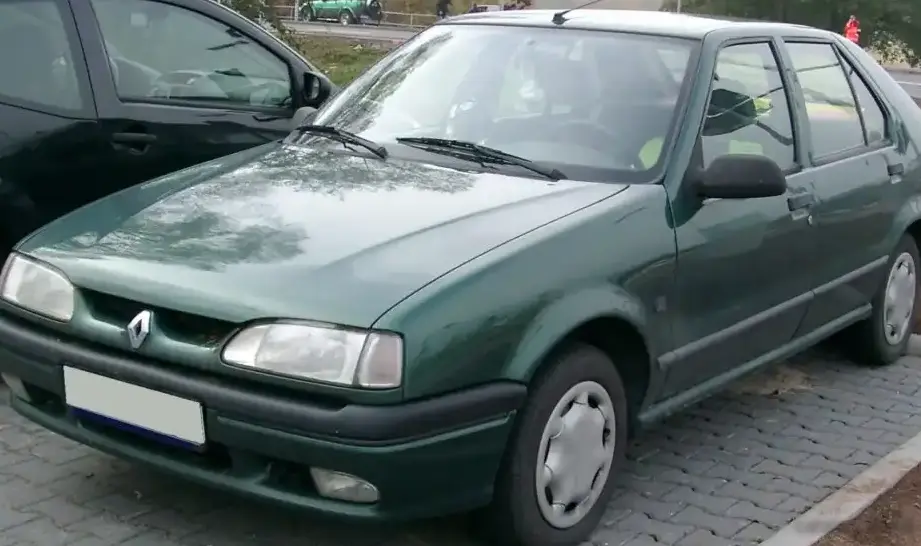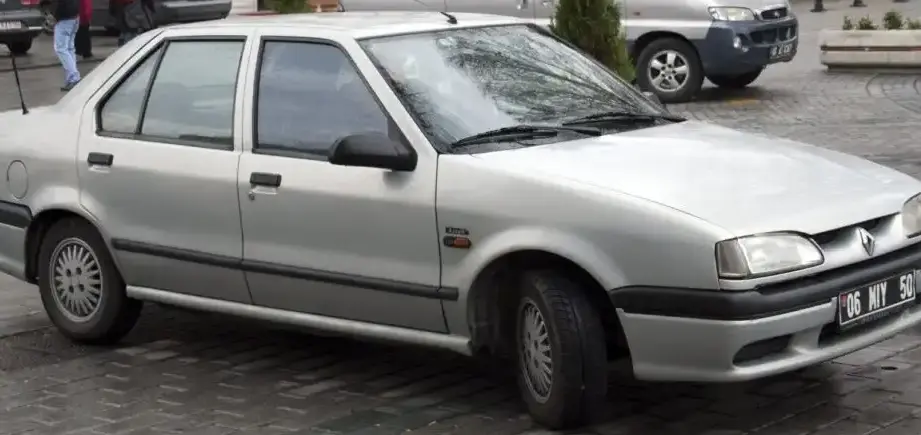
The Renault 19 Europa 1.6i (90 hp) was a popular compact hatchback produced by Renault between 1996 and 2000. Positioned as a mid-range offering within the broader Renault 19 lineup, it aimed to provide a balance of affordability, practicality, and reasonable performance. This variant was primarily sold in European markets, where the Renault 19 competed with vehicles like the Volkswagen Golf, Opel Astra, and Peugeot 306. The Europa trim level generally signified a step up in equipment compared to the base models, offering a more comfortable and well-appointed interior. It represented a significant evolution of the original Renault 9, offering improved styling, a more refined interior, and updated mechanical components.
Technical Specifications
| Brand | Renault |
| Model | 19 |
| Generation | 19 Europa |
| Type (Engine) | 1.6i (90 Hp) |
| Start of production | 1996 |
| End of production | 2000 |
| Powertrain Architecture | Internal Combustion engine |
| Body type | Hatchback |
| Seats | 5 |
| Doors | 3-5 |
| Fuel consumption (urban) | 8.5 l/100 km (27.7 US mpg) |
| Fuel consumption (extra urban) | 5.3 l/100 km (44.4 US mpg) |
| Fuel consumption (combined) | 6.9 l/100 km (34.1 US mpg) |
| Fuel Type | Petrol (Gasoline) |
| Acceleration 0 – 100 km/h | 14.8 sec |
| Acceleration 0 – 62 mph | 14.8 sec |
| Acceleration 0 – 60 mph | 14.1 sec |
| Maximum speed | 187 km/h (116.2 mph) |
| Weight-to-power ratio | 10.7 kg/Hp |
| Weight-to-torque ratio | 7.4 kg/Nm |
| Power | 90 Hp @ 5250 rpm |
| Torque | 131 Nm @ 2500 rpm (96.62 lb.-ft. @ 2500 rpm) |
| Engine layout | Front, Transverse |
| Engine Model/Code | C3L |
| Engine displacement | 1598 cm3 (97.52 cu. in.) |
| Number of cylinders | 4 |
| Engine configuration | Inline |
| Cylinder Bore | 79.5 mm (3.13 in.) |
| Piston Stroke | 80.5 mm (3.17 in.) |
| Compression ratio | 9.5:1 |
| Number of valves per cylinder | 2 |
| Fuel injection system | Multi-port manifold injection |
| Engine aspiration | Naturally aspirated engine |
| Valvetrain | DOHC |
| Engine oil capacity | 3.5 l (3.7 US qt | 3.08 UK qt) |
| Coolant capacity | 6 l (6.34 US qt | 5.28 UK qt) |
| Kerb Weight | 965 kg (2127.46 lbs.) |
| Max. weight | 1420 kg (3130.56 lbs.) |
| Max load | 455 kg (1003.1 lbs.) |
| Trunk (boot) space – minimum | 386 l (13.63 cu. ft.) |
| Trunk (boot) space – maximum | 865 l (30.55 cu. ft.) |
| Fuel tank capacity | 55 l (14.53 US gal | 12.1 UK gal) |
| Length | 4162 mm (163.86 in.) |
| Width | 1696 mm (66.77 in.) |
| Height | 1412 mm (55.59 in.) |
| Wheelbase | 2544 mm (100.16 in.) |
| Front track | 1426 mm (56.14 in.) |
| Rear track | 1417 mm (55.79 in.) |
| Drivetrain Architecture | Front wheel drive |
| Number of gears | 5 gears, manual transmission |
| Front suspension | Wishbone |
| Rear suspension | Torsion |
| Front brakes | Disc |
| Rear brakes | Drum |
| Steering type | Steering rack and pinion |
| Power steering | Hydraulic Steering |
| Tires size | 165/70 R13 |
| Wheel rims size | 13 |
Powertrain & Engine Architecture
The Renault 19 Europa 1.6i was powered by the C3L engine, a 1.6-liter inline-four cylinder gasoline engine. This engine featured a multi-port fuel injection system and a double overhead camshaft (DOHC) valvetrain, contributing to its relatively smooth operation and decent power output for its displacement. The engine produced 90 horsepower at 5250 rpm and 131 Nm (96.62 lb-ft) of torque at 2500 rpm. The C3L engine was a relatively simple and robust design, known for its reliability. It wasn’t a particularly high-tech engine by the standards of the late 1990s, but it was well-suited to the needs of the average driver. The five-speed manual transmission was the standard offering, providing adequate gear ratios for everyday driving. The transmission was known for its light shift action, but wasn’t particularly sporty.
Driving Characteristics
The 1.6i engine, paired with the five-speed manual transmission, provided adequate, though not exhilarating, performance. Acceleration from 0 to 60 mph took around 14.1 seconds, and the top speed was approximately 116 mph. The engine felt reasonably responsive in the mid-range, making it suitable for overtaking maneuvers on the highway. However, it lacked the punch of the higher-output engines available in the Renault 19 range, such as the 1.8-liter or the 2.0-liter 16V variants. The suspension provided a comfortable ride, absorbing bumps and imperfections in the road well. Handling was predictable and safe, but not particularly engaging. The steering was light and easy to use, making it well-suited for city driving.
Equipment & Trim Levels
The Europa trim level offered a good level of standard equipment for its time. This typically included central locking, power steering, electric front windows, and an upgraded interior trim compared to the base models. Optional extras included air conditioning, a sunroof, and alloy wheels. The interior featured a functional and straightforward dashboard layout, with easy-to-read gauges. Upholstery was typically cloth, with a choice of colors available. The Europa trim aimed to provide a comfortable and practical interior for both driver and passengers.
Chassis & Braking
The Renault 19 Europa 1.6i utilized a front-wheel-drive layout with a wishbone front suspension and a torsion beam rear suspension. This setup provided a good balance of ride comfort and handling. The front brakes were disc brakes, while the rear brakes were drum brakes. This was a common configuration for cars in this class at the time. The hydraulic power steering provided light and easy steering, making it convenient for maneuvering in tight spaces. The tires were typically 165/70 R13, providing adequate grip for everyday driving conditions.
Market Reception & Comparison
The Renault 19 Europa 1.6i was generally well-received by critics as a practical and affordable compact hatchback. It was praised for its comfortable ride, decent fuel economy (around 34.1 US mpg combined), and reliable engine. However, it was criticized for its relatively uninspiring performance and somewhat dated interior design. Compared to the higher-output Renault 19 variants, the 1.6i offered less performance but better fuel economy and lower running costs. It was a popular choice for drivers who prioritized practicality and affordability over outright performance.
Legacy
The Renault 19 Europa 1.6i has proven to be a relatively reliable car over the long term, with many examples still on the road today. The C3L engine is known for its durability, and parts availability is generally good. However, like any older car, it is susceptible to age-related issues such as rust and wear and tear on suspension components. In the used car market, the Renault 19 Europa 1.6i represents an affordable and practical option for those seeking a classic European hatchback. It’s a car that offers a simple, honest driving experience and a reasonable level of reliability.