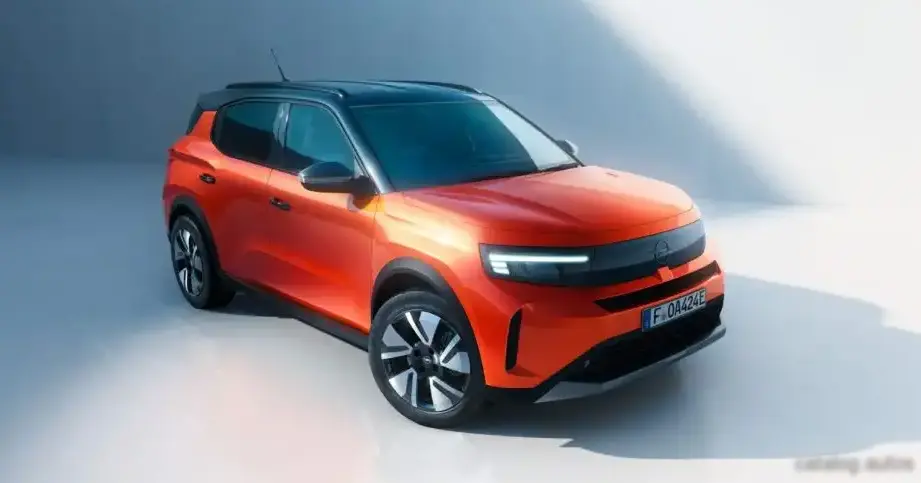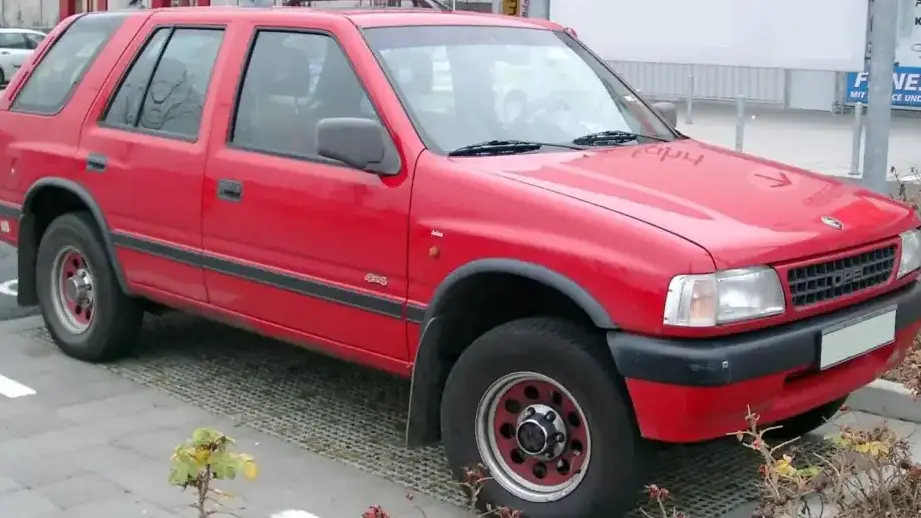
The Opel Frontera B Sport 2.2 DTI 4×4, produced between 2001 and December 2003, represented a mid-cycle update to the Frontera B series, a rugged SUV designed to compete in the growing European off-road and leisure vehicle market. Positioned as a more sporting variant within the Frontera B range, the 2.2 DTI model aimed to offer a balance between fuel efficiency, torque for off-road capability, and a slightly more refined driving experience than its larger-displacement counterparts. It was primarily sold in Europe, where it found a niche among buyers seeking a practical and capable vehicle for both on and off-road adventures. The Frontera B was based on the GM U platform, shared with the Isuzu Rodeo and Honda Passport in some markets.
Technical Specifications
| Brand | Opel |
| Model | Frontera |
| Generation | Frontera B Sport |
| Type (Engine) | 2.2 DTI (120 Hp) 4×4 |
| Start of production | 2001 |
| End of production | December, 2003 |
| Powertrain Architecture | Internal Combustion engine |
| Body type | SUV |
| Seats | 5 |
| Doors | 3 |
| Fuel consumption (urban) | 10.6 l/100 km (22.2 US mpg, 26.6 UK mpg, 9.4 km/l) |
| Fuel consumption (extra urban) | 6.9 l/100 km (34.1 US mpg, 40.9 UK mpg, 14.5 km/l) |
| Fuel consumption (combined) | 8.3 l/100 km (28.3 US mpg, 34 UK mpg, 12 km/l) |
| CO2 emissions | 224 g/km |
| Fuel Type | Diesel |
| Acceleration 0 – 100 km/h | 14.5 sec |
| Acceleration 0 – 62 mph | 14.5 sec |
| Acceleration 0 – 60 mph | 13.8 sec |
| Maximum speed | 158 km/h (98.18 mph) |
| Emission standard | Euro 3 |
| Weight-to-power ratio | 14.3 kg/Hp, 69.8 Hp/tonne |
| Weight-to-torque ratio | 6.1 kg/Nm, 162.8 Nm/tonne |
| Power | 120 Hp @ 4000 rpm |
| Power per litre | 55.3 Hp/l |
| Torque | 280 Nm @ 1500 rpm (206.52 lb.-ft. @ 1500 rpm) |
| Engine layout | Front, Longitudinal |
| Engine Model/Code | Y22DTH |
| Engine displacement | 2171 cm3 (132.48 cu. in.) |
| Number of cylinders | 4 |
| Engine configuration | Inline |
| Cylinder Bore | 84 mm (3.31 in.) |
| Piston Stroke | 98 mm (3.86 in.) |
| Compression ratio | 18.5:1 |
| Number of valves per cylinder | 4 |
| Fuel injection system | Diesel Commonrail |
| Engine aspiration | Turbocharger, Intercooler |
| Valvetrain | OHC |
| Engine oil capacity | 6.1 l (6.45 US qt | 5.37 UK qt) |
| Coolant | 7.9 l (8.35 US qt | 6.95 UK qt) |
| Kerb Weight | 1720 kg (3791.95 lbs.) |
| Max. weight | 2300 kg (5070.63 lbs.) |
| Max load | 580 kg (1278.68 lbs.) |
| Trunk (boot) space – minimum | 320 l (11.3 cu. ft.) |
| Trunk (boot) space – maximum | 1137 l (40.15 cu. ft.) |
| Fuel tank capacity | 65 l (17.17 US gal | 14.3 UK gal) |
| Length | 4268 mm (168.03 in.) |
| Width | 1787 mm (70.35 in.) |
| Height | 1692 mm (66.61 in.) |
| Wheelbase | 2462 mm (96.93 in.) |
| Front track | 1515 mm (59.65 in.) |
| Rear (Back) track | 1520 mm (59.84 in.) |
| Ride height (ground clearance) | 208 mm (8.19 in.) |
| Drive wheel | All wheel drive (4×4) |
| Number of gears and type of gearbox | 5 gears, manual transmission |
| Front suspension | Torsion |
| Rear suspension | Coil spring |
| Front brakes | Disc |
| Rear brakes | Disc |
| Assisting systems | ABS (Anti-lock braking system) |
| Steering type | Steering rack and pinion |
| Power steering | Hydraulic Steering |
| Tires size | 235/75 R15 |
| Wheel rims size | 15 |
Powertrain & Engine Architecture
The heart of the Frontera B Sport 2.2 DTI was the Y22DTH engine, a 2.2-liter inline-four cylinder diesel. This engine utilized a direct injection common rail system, a relatively advanced technology for the time, allowing for precise fuel delivery and improved combustion efficiency. The common rail system, supplied by Bosch, operated at extremely high pressures (around 1,800 bar) to atomize the fuel effectively. A turbocharger with an intercooler was employed to boost power output, providing 120 horsepower at 4,000 rpm and a substantial 280 Nm (206 lb-ft) of torque at a low 1,500 rpm. The engine featured an overhead camshaft (OHC) valvetrain with four valves per cylinder. The engine was mounted longitudinally in the chassis. The 5-speed manual transmission was chosen for its durability and suitability for off-road driving, offering a relatively deep gearing to maximize torque multiplication.
Driving Characteristics
The 2.2 DTI engine, paired with the manual transmission, provided a usable, if not exhilarating, driving experience. Acceleration was modest, taking around 14.5 seconds to reach 62 mph (100 km/h). However, the engine’s strong low-end torque made it well-suited for tackling challenging terrain and towing. The gear ratios were optimized for off-road performance, prioritizing tractability over outright speed. Compared to the more powerful 3.2-liter V6 petrol engine offered in other Frontera B models, the 2.2 DTI lacked the V6’s responsiveness and high-speed capability. However, it significantly outperformed the V6 in fuel economy. Compared to the 2.5 TDI engine, the 2.2 DTI offered a more refined driving experience due to the common rail injection system, with reduced engine noise and vibration.
Equipment & Trim Levels
The Frontera B Sport 2.2 DTI 4×4 typically came with a reasonable level of standard equipment. This included power steering, ABS brakes, air conditioning, and basic audio system. Interior upholstery was typically cloth, with durable plastics used throughout the cabin. Optional extras included alloy wheels, a sunroof, upgraded audio systems, and metallic paint finishes. The “Sport” designation indicated a slightly more focused trim level, often featuring unique badging and interior trim details. The dashboard layout was functional and straightforward, prioritizing practicality over luxury.
Chassis & Braking
The Frontera B Sport utilized a body-on-frame construction, providing robust durability and off-road capability. The front suspension employed a torsion bar setup, while the rear featured coil springs. This configuration offered a good balance between ride comfort and off-road articulation. Brakes were disc brakes on all four wheels, providing adequate stopping power for the vehicle’s weight. The 4×4 system was typically a part-time system, allowing the driver to switch between two-wheel drive and four-wheel drive as needed. Ground clearance was a respectable 208mm (8.19 inches), enabling the Frontera B to navigate moderately challenging terrain.
Market Reception & Comparison
The Frontera B Sport 2.2 DTI 4×4 was generally well-received by automotive critics as a practical and capable SUV. Its fuel efficiency was a major selling point, particularly in Europe where diesel fuel was often cheaper than petrol. However, some critics noted its relatively slow acceleration and somewhat basic interior. Compared to rivals like the Suzuki Grand Vitara and the Mitsubishi Pajero, the Frontera B offered a competitive level of off-road capability and value for money. The 2.2 DTI engine proved to be relatively reliable, although common rail diesel engines can be susceptible to issues with the fuel injectors and high-pressure pump if not properly maintained.
Legacy
The Opel Frontera B, and specifically the 2.2 DTI variant, has developed a following among enthusiasts seeking a rugged and affordable SUV. While not known for its luxury or performance, the Frontera B’s durability and off-road capability have ensured its continued presence on roads and trails. The Y22DTH engine, while not without its potential issues, is generally considered a robust and reliable unit when properly maintained. Today, well-maintained examples of the Frontera B Sport 2.2 DTI 4×4 can be found on the used car market, offering a relatively inexpensive entry point into the world of off-road vehicles. Its simplicity and mechanical robustness make it a popular choice for those seeking a vehicle that can be easily maintained and repaired.