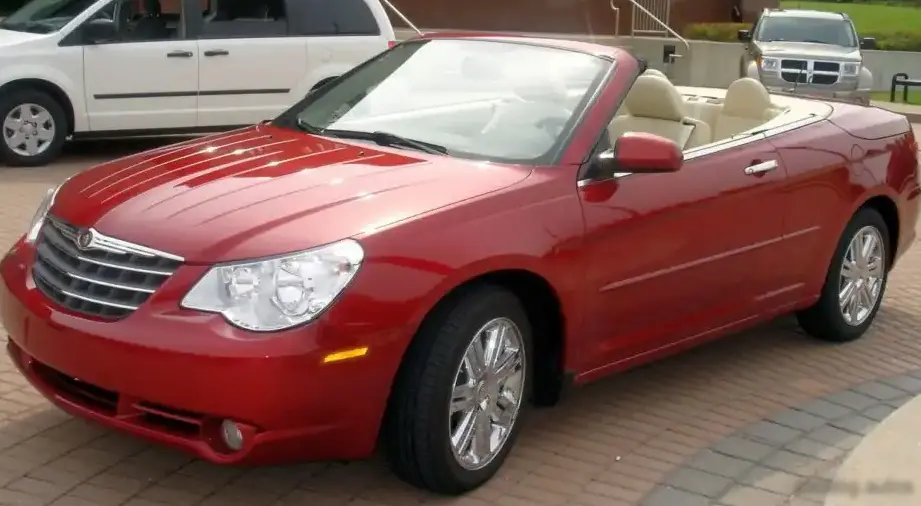
The Chrysler Sebring Sedan (JS) 3.5i V6 Automatic, produced from 2006 to 2010, represented the top-tier engine option for the JS generation of the Sebring. Positioned as the premium trim, it aimed to offer a blend of performance and comfort within the mid-size sedan segment. This variant was a key part of Chrysler’s attempt to revitalize the Sebring nameplate, competing with established rivals like the Honda Accord, Toyota Camry, and Ford Fusion. The JS generation Sebring, built on the DaimlerChrysler JH platform, sought to improve upon its predecessor with a more modern design and enhanced features, though it faced criticism regarding interior quality and overall refinement.
Technical Specifications
| Brand | Chrysler |
| Model | Sebring |
| Generation | Sebring Sedan (JS) |
| Type (Engine) | 3.5i V6 (235 Hp) Automatic |
| Start of production | 2006 |
| End of production | 2010 |
| Powertrain Architecture | Internal Combustion engine |
| Body type | Sedan |
| Seats | 5 |
| Doors | 4 |
| Fuel consumption (urban) | 12.4 l/100 km (19 US mpg, 22.8 UK mpg) |
| Fuel consumption (extra urban) | 8.4 l/100 km (28 US mpg, 33.6 UK mpg) |
| Fuel Type | Petrol (Gasoline) |
| Emission standard | Euro 5 |
| Power | 235 Hp @ 6000 rpm |
| Power per litre | 66.8 Hp/l |
| Torque | 339 Nm @ 4400 rpm (250.03 lb.-ft. @ 4400 rpm) |
| Engine layout | Front, Longitudinal |
| Engine Model/Code | EGG |
| Engine displacement | 3518 cm3 (214.68 cu. in.) |
| Number of cylinders | 6 |
| Engine configuration | V-engine |
| Cylinder Bore | 96 mm (3.78 in.) |
| Piston Stroke | 81 mm (3.19 in.) |
| Compression ratio | 10:1 |
| Number of valves per cylinder | 4 |
| Fuel injection system | Multi-port manifold injection |
| Engine aspiration | Naturally aspirated engine |
| Engine oil capacity | 5.2 l (5.49 US qt | 4.58 UK qt) |
| Coolant | 11 l (11.62 US qt | 9.68 UK qt) |
| Trunk (boot) space (minimum) | 441 l (15.57 cu. ft.) |
| Fuel tank capacity | 64 l (16.91 US gal | 14.08 UK gal) |
| Length | 4850 mm (190.94 in.) |
| Width | 1843 mm (72.56 in.) |
| Height | 1497 mm (58.94 in.) |
| Wheelbase | 2767 mm (108.94 in.) |
| Front track | 1570 mm (61.81 in.) |
| Rear track | 1570 mm (61.81 in.) |
| Drivetrain Architecture | Front wheel drive |
| Number of gears and type of gearbox | 4 gears, automatic transmission |
| Front suspension | Independent type McPherson |
| Rear suspension | Several levers and rods |
| Front brakes | Ventilated discs |
| Rear brakes | Disc |
| Assisting systems | ABS (Anti-lock braking system) |
| Steering type | Steering rack and pinion |
| Power steering | Hydraulic Steering |
Powertrain & Engine Architecture
The heart of the Sebring 3.5i was the EGG engine, a 3.5-liter (3518 cc) naturally aspirated V6. This engine was part of Chrysler’s family of V6 engines, known for their relatively smooth operation and decent power output. The engine utilized a 60-degree V-angle, contributing to its balance and reduced vibrations. It featured a cast iron block with aluminum cylinder heads, a configuration common for balancing durability and weight. Fuel delivery was managed by a multi-port fuel injection system, providing precise fuel metering for optimal combustion. The engine boasted four valves per cylinder (DOHC), enhancing volumetric efficiency and contributing to its 235 horsepower peak at 6000 rpm and 339 Nm (250 lb-ft) of torque at 4400 rpm. The engine was paired with a four-speed automatic transmission, a common choice for American market vehicles at the time, prioritizing ease of use over outright performance. While not the most advanced transmission available, it was generally considered reliable.
Driving Characteristics
The 3.5L V6 Automatic Sebring offered a noticeable step up in performance compared to the base 2.4L four-cylinder models. Acceleration was brisk, allowing for confident merging and passing maneuvers. However, the four-speed automatic transmission limited the engine’s potential, lacking the closer gear ratios found in more modern transmissions. This resulted in a somewhat less engaging driving experience compared to the available manual transmission options in other Sebring trims. The automatic transmission’s shift points were tuned for comfort rather than performance, prioritizing smooth transitions over aggressive downshifts. Fuel economy, while adequate, was not a strong point, reflecting the larger engine displacement and the transmission’s limitations. The Sebring’s front-wheel-drive configuration provided predictable handling, but it wasn’t particularly sporty, leaning more towards a comfortable ride.
Equipment & Trim Levels
The 3.5i V6 Automatic trim typically included a generous array of standard features. These often included premium cloth upholstery, air conditioning, power windows and locks, a CD player with an auxiliary input, and cruise control. Higher-spec versions could be equipped with leather upholstery, a sunroof, upgraded audio systems (often including a premium sound system), and alloy wheels. Safety features such as anti-lock brakes (ABS) were standard. Optional extras frequently included a navigation system, heated front seats, and automatic climate control. The overall interior design, while functional, was often criticized for its use of lower-quality materials compared to some of its competitors.
Chassis & Braking
The Sebring JS utilized an independent McPherson strut suspension in the front, providing a comfortable ride and reasonable handling. The rear suspension employed a multi-link setup, designed to minimize body roll and improve stability. The braking system consisted of ventilated discs at the front and solid discs at the rear, providing adequate stopping power for most driving situations. ABS was standard, enhancing safety by preventing wheel lockup during hard braking. Steering was handled by a hydraulic power steering system, offering a light and easy steering feel. The suspension tuning prioritized comfort over sporty handling, resulting in a relatively soft ride quality.
Market Reception & Comparison
The Sebring 3.5i V6 Automatic received mixed reviews from automotive critics. While the engine was praised for its smooth power delivery, the overall package was often criticized for its interior quality and lack of refinement compared to rivals like the Honda Accord and Toyota Camry. Fuel economy was also a point of concern, particularly given the rising gas prices during its production run. Compared to the 2.4L four-cylinder Sebring, the 3.5i offered a significant performance boost, but at the cost of increased fuel consumption. The 3.5i also differed from the diesel options available in European markets, offering a more traditional American V6 experience.
Legacy
The Chrysler Sebring 3.5i V6 Automatic, while not a standout performer in its class, remains a relatively affordable and accessible used car option today. The 3.5L V6 engine, when properly maintained, is generally considered reliable, though it’s susceptible to the typical issues associated with older engines, such as oil leaks and sensor failures. The four-speed automatic transmission is also generally durable, but may exhibit signs of wear and tear with high mileage. The Sebring’s relatively simple design makes it relatively easy to repair and maintain, appealing to DIY mechanics. However, potential buyers should be aware of the Sebring’s reputation for interior quality issues and potential electrical problems. Overall, the 3.5i V6 Automatic represents a comfortable and reasonably powerful mid-size sedan from the mid-2000s, offering a good value proposition for budget-conscious buyers.