
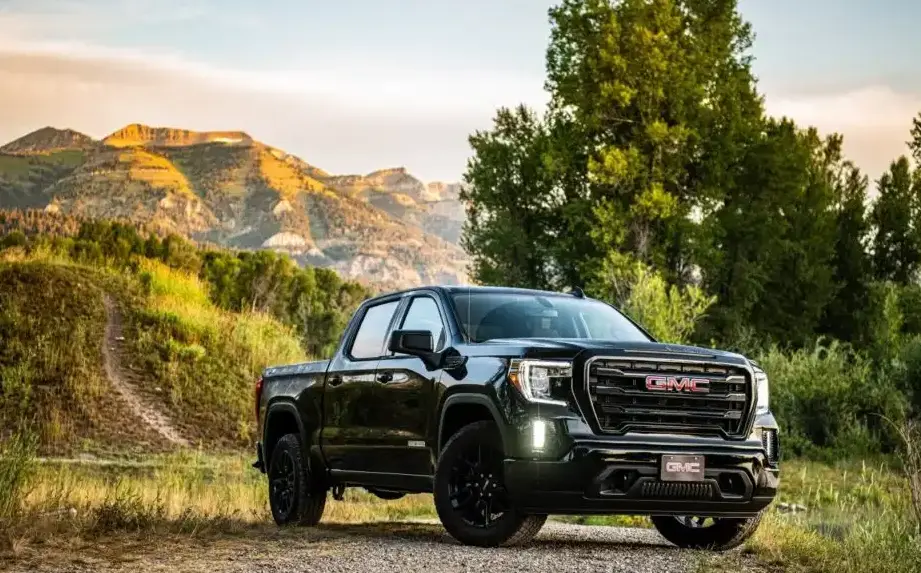
The GMC Sierra 1500 V (GMTT1XX) Crew Cab Short Box, equipped with the 4.3L V6 engine and automatic transmission, was a popular configuration within the redesigned Sierra 1500 lineup produced from 2018 to 2021. Representing a significant update to GMC’s full-size pickup truck, this variant aimed to provide a balance of capability, comfort, and affordability for buyers seeking a versatile work and family vehicle. It occupied a mid-range position in the Sierra 1500 portfolio, slotting below the more powerful 5.3L and 6.2L V8 options, but offering a more accessible entry point than those higher trims.
Technical Specifications
| Brand | GMC |
| Model | Sierra 1500 |
| Generation | Sierra 1500 V (GMTT1XX) Crew Cab Short Box |
| Type (Engine) | 4.3 V6 (285 Hp) Automatic |
| Start of production | 2018 |
| End of production | 2021 |
| Powertrain Architecture | Internal Combustion engine |
| Body type | Pick-up |
| Seats | 5 |
| Doors | 4 |
| Fuel consumption (urban) | 14.7 l/100 km (16 US mpg, 19.2 UK mpg) |
| Fuel consumption (extra urban) | 11.8 l/100 km (19.9 US mpg, 23.9 UK mpg) |
| Fuel Type | Petrol (Gasoline) |
| Weight-to-power ratio | 7.5 kg/Hp, 133.7 Hp/tonne |
| Weight-to-torque ratio | 5.2 kg/Nm, 193.7 Nm/tonne |
| Power | 285 Hp @ 5300 rpm |
| Power per litre | 66.3 Hp/l |
| Torque | 413 Nm @ 3900 rpm (304.61 lb.-ft. @ 3900 rpm) |
| Maximum engine speed | 5800 rpm |
| Engine layout | Front, Longitudinal |
| Engine Model/Code | LV3 |
| Engine displacement | 4301 cm3 (262.46 cu. in.) |
| Number of cylinders | 6 |
| Engine configuration | V-engine |
| Cylinder Bore | 99.6 mm (3.92 in.) |
| Piston Stroke | 92 mm (3.62 in.) |
| Compression ratio | 11:1 |
| Number of valves per cylinder | 2 |
| Fuel injection system | Direct injection |
| Engine aspiration | Naturally aspirated engine |
| Valvetrain | OHV |
| Engine oil capacity | 5.7 l (6.02 US qt | 5.02 UK qt) |
| Coolant capacity | 11.5 l (12.15 US qt | 10.12 UK qt) |
| Kerb Weight | 2132 kg (4700.26 lbs.) |
| Max. weight | 3130 kg (6900.47 lbs.) |
| Max load | 998 kg (2200.21 lbs.) |
| Fuel tank capacity | 91 l (24.04 US gal | 20.02 UK gal) |
| Permitted trailer load with brakes (12%) | 3493 kg (7700.75 lbs.) |
| Length | 5886 mm (231.73 in.) |
| Width including mirrors | 2063 mm (81.22 in.) |
| Height | 1917 mm (75.47 in.) |
| Wheelbase | 3745 mm (147.44 in.) |
| Drivetrain Architecture | Rear wheel drive |
| Number of gears and type of gearbox | 6 gears, automatic transmission |
| Front suspension | Independent coil spring |
| Rear suspension | Rigid axle suspension, Leaf spring |
| Front brakes | Ventilated discs, 330×30 mm |
| Rear brakes | Ventilated discs, 345×20 mm |
| Assisting systems | ABS (Anti-lock braking system) |
| Steering type | Steering rack and pinion |
| Power steering | Electric Steering |
| Tires size | 255/70 R17; 265/70 R17; 265/65 R18 |
| Wheel rims size | 8.0J x 17; 8.5J x 18 |
INTRODUCTION
The 2018-2021 GMC Sierra 1500 V, specifically the Crew Cab Short Box configuration with the 4.3L V6 engine and automatic transmission, represented GMC’s attempt to offer a compelling full-size pickup option for buyers prioritizing value and efficiency. Built on the GMTT1XX platform, this generation Sierra brought a more refined interior, updated technology, and improved ride quality compared to its predecessors. The 4.3L V6 was positioned as the base engine for the Sierra 1500, offering a lower price point and respectable performance for everyday tasks and light-duty hauling. This variant was particularly popular in regions where heavy-duty towing wasn’t a primary concern, and fuel economy was a higher priority.
Powertrain & Engine Architecture
The heart of this Sierra 1500 variant is the 4.3L (262 cubic inch) LV3 V6 engine. This engine is a member of GM’s EcoTec3 family, known for its aluminum block construction and direct injection technology. The LV3 utilizes a 60-degree V-angle and features a variable valve timing system to optimize performance and efficiency. The direct injection system delivers fuel directly into the combustion chamber, improving combustion efficiency and power output. The engine produces 285 horsepower at 5300 rpm and 305 lb-ft of torque at 3900 rpm. The engine is paired with a six-speed automatic transmission (6L80) designed to provide smooth shifting and efficient power delivery. This transmission features electronically controlled shifting and a tow/haul mode for improved performance when towing. The 6L80 is a robust and reliable unit, known for its durability in light-to-medium duty applications.
Driving Characteristics
The 4.3L V6-powered Sierra 1500 offered a noticeably different driving experience compared to its V8 siblings. While lacking the outright acceleration of the 5.3L or 6.2L engines, the V6 provided adequate power for daily commuting, light hauling, and occasional towing. The six-speed automatic transmission was well-tuned, offering smooth and predictable shifts. However, the transmission could sometimes feel hesitant during quick acceleration or when attempting to pass on the highway. The gear ratios were optimized for fuel efficiency rather than outright performance. Compared to the manual transmission options available on other Sierra trims, the automatic provided greater convenience and ease of use, particularly in stop-and-go traffic. The V6 engine was quieter and more refined than the larger V8s, contributing to a more comfortable cabin experience.
Equipment & Trim Levels
The 4.3L V6 Sierra 1500 was typically offered in SLE, Elevation, and SLT trim levels. Standard features generally included air conditioning, power windows and locks, a rearview camera, and a basic infotainment system with a 7-inch touchscreen. Higher trim levels added features such as leather upholstery, heated seats, a premium audio system, and advanced safety technologies like lane departure warning and forward collision alert. Optional extras included a larger touchscreen display, navigation, a sunroof, and various appearance packages. The interior materials were generally durable and well-assembled, though they didn’t quite match the luxury of higher-end pickup trucks. The Crew Cab configuration provided ample space for five passengers, making it a practical choice for families.
Chassis & Braking
The Sierra 1500 V utilized a fully boxed frame construction for enhanced rigidity and durability. The front suspension featured independent coil springs, while the rear suspension employed a traditional leaf spring setup. This configuration provided a comfortable ride quality, though it wasn’t as refined as some of the independent rear suspension systems found on competing trucks. Braking duties were handled by ventilated disc brakes on all four wheels. ABS (Anti-lock Braking System) was standard. The braking performance was adequate for the truck’s weight and intended use, but it wasn’t particularly sporty. Steering was provided by an electric power steering system, offering light and precise control.
Market Reception & Comparison
Critics generally praised the 2018-2021 GMC Sierra 1500 V for its comfortable ride, refined interior, and user-friendly technology. However, the 4.3L V6 engine received mixed reviews. Some reviewers found it to be adequate for most tasks, while others criticized its lack of power compared to the V8 options. Fuel economy was a strong point, with the V6 Sierra 1500 achieving better gas mileage than its V8 counterparts. In terms of reliability, the 4.3L V6 and 6L80 transmission proved to be generally dependable, with few widespread issues reported. Compared to competitors like the Ford F-150 and Ram 1500, the Sierra 1500 V offered a competitive package, particularly for buyers seeking a well-rounded and affordable full-size pickup.
Legacy
The 4.3L V6-powered GMC Sierra 1500 remains a popular choice in the used truck market. Its combination of affordability, reliability, and practicality makes it an attractive option for buyers seeking a capable and versatile pickup. While it may not offer the same level of performance as the V8 models, the V6 Sierra 1500 provides a solid value proposition for those who prioritize fuel efficiency and everyday usability. The 6L80 transmission has proven to be a durable and long-lasting unit, contributing to the overall reliability of this powertrain. As these trucks age, regular maintenance and preventative care will be crucial to ensuring their continued longevity.

