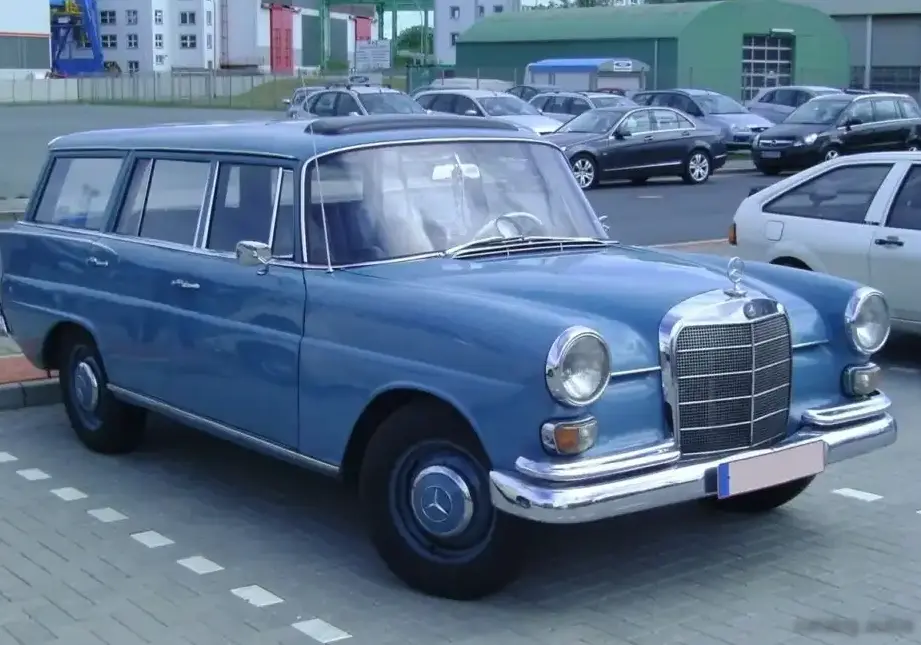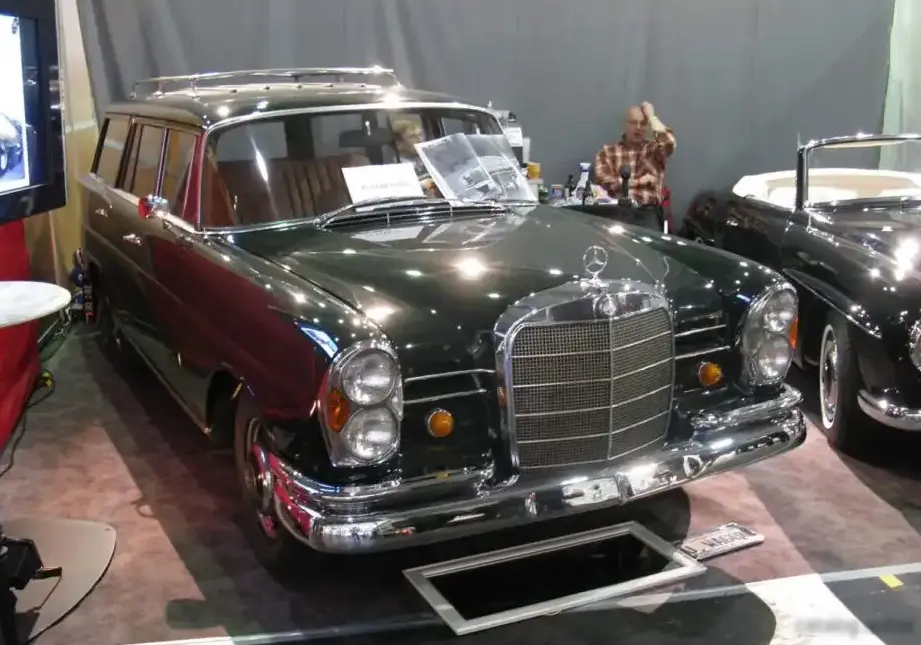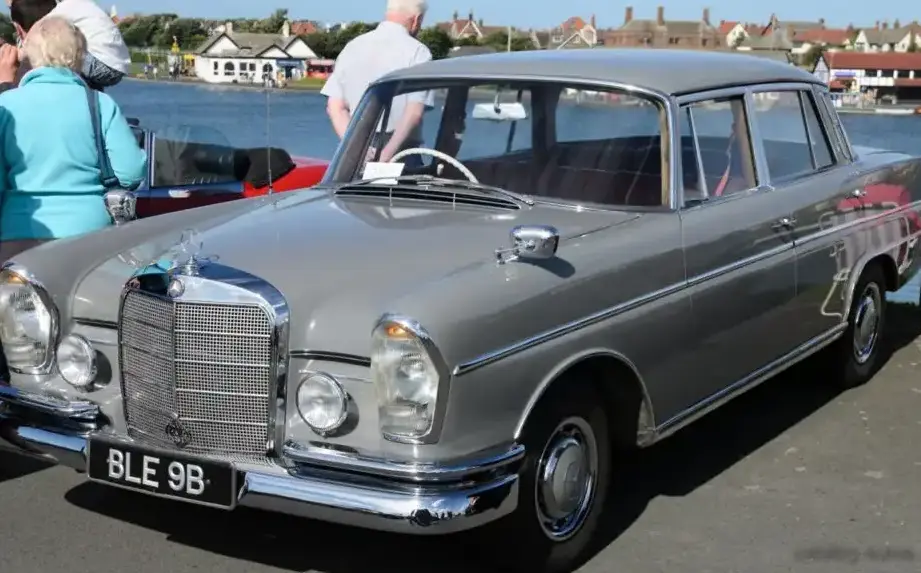
The Mercedes-Benz W112 “Fintail” 300 SE, produced between January 1964 and July 1965, represented a significant step forward in luxury and engineering for the German automaker. Positioned as the top-of-the-line sedan in the Mercedes-Benz range during its brief production run, the 300 SE was a direct descendant of the earlier 300 SL “Gullwing” and 300 D “Adenauer” models, inheriting their sophisticated mechanicals and aiming for a similar level of prestige. It served as a bridge between the older, more traditionally styled Mercedes-Benz models and the upcoming “New Generation” (W108/W109) series. The “Fintail” nickname derives from the distinctive, vertically oriented fins that adorned the rear fenders, a styling cue popular in the early 1960s.
Technical Specifications
| Brand | Mercedes-Benz |
| Model | Fintail |
| Generation | Fintail (W112) |
| Type (Engine) | 300 SE (170 Hp) |
| Start of production | January, 1964 |
| End of production | July, 1965 |
| Powertrain Architecture | Internal Combustion engine |
| Body type | Sedan |
| Seats | 5 |
| Doors | 4 |
| Fuel Type | Petrol (Gasoline) |
| Acceleration 0 – 100 km/h | 10.9 sec |
| Acceleration 0 – 62 mph | 10.9 sec |
| Acceleration 0 – 60 mph | 10.4 sec |
| Maximum speed | 200 km/h (124.27 mph) |
| Weight-to-power ratio | 9.2 kg/Hp, 108.6 Hp/tonne |
| Weight-to-torque ratio | 6.3 kg/Nm, 159.1 Nm/tonne |
| Power | 170 Hp @ 5400 rpm |
| Power per litre | 56.7 Hp/l |
| Torque | 249 Nm @ 4000 rpm (183.65 lb.-ft. @ 4000 rpm) |
| Engine layout | Front, Longitudinal |
| Engine Model/Code | M 189 V / 189.986 |
| Engine displacement | 2996 cm3 (182.83 cu. in.) |
| Number of cylinders | 6 |
| Engine configuration | Inline |
| Cylinder Bore | 85 mm (3.35 in.) |
| Piston Stroke | 88 mm (3.46 in.) |
| Compression ratio | 8.8:1 |
| Number of valves per cylinder | 2 |
| Fuel injection system | Multi-port manifold injection |
| Engine aspiration | Naturally aspirated engine |
| Valvetrain | SOHC |
| Kerb Weight | 1565 kg (3450.23 lbs.) |
| Max. weight | 2065 kg (4552.55 lbs.) |
| Max load | 500 kg (1102.31 lbs.) |
| Fuel tank capacity | 82 l (21.66 US gal | 18.04 UK gal) |
| Length | 4875 mm (191.93 in.) |
| Width | 1795 mm (70.67 in.) |
| Height | 1455 mm (57.28 in.) |
| Wheelbase | 2750 mm (108.27 in.) |
| Front track | 1482 mm (58.35 in.) |
| Rear (Back) track | 1490 mm (58.66 in.) |
| Drivetrain Architecture | The Internal combustion engine (ICE) drives the rear wheels of the vehicle. |
| Drive wheel | Rear wheel drive |
| Number of gears and type of gearbox | 5 gears, manual transmission |
| Front suspension | Double wishbone, Transverse stabilizer, Air suspension |
| Rear suspension | Air suspension, Transverse stabilizer, Trailing arm |
| Front brakes | Disc |
| Rear brakes | Disc |
| Steering type | Cone worm with recirculation balls |
Powertrain & Engine Architecture
The heart of the 300 SE was the M189 3.0-liter inline-six cylinder engine. This engine was a sophisticated design for its time, featuring a cast iron block and aluminum cylinder head. It employed Bosch multi-port fuel injection, a relatively advanced system that contributed to its smooth power delivery and improved fuel efficiency compared to carbureted engines. The engine produced 170 horsepower at 5,400 rpm and 249 Nm (183.65 lb-ft) of torque at 4,000 rpm. The engine code, 189.986, specifically denotes this configuration. The single overhead camshaft (SOHC) operated two valves per cylinder. The 300 SE was exclusively offered with a four-speed manual transmission, providing a direct and engaging driving experience. The transmission was robustly built to handle the engine’s output.
Driving Characteristics
The 300 SE with the manual transmission offered a refined and capable driving experience. While not overtly sporty, the engine provided ample power for comfortable cruising and confident overtaking. The 0-60 mph time of around 10.4 seconds was respectable for a large luxury sedan of the era. The manual gearbox allowed for precise control, and the engine’s torque curve meant that spirited driving didn’t require constant gear changes. The car’s weight (approximately 3,450 lbs) was noticeable, but the well-tuned suspension minimized body roll and provided a comfortable ride. Compared to the later, larger-engined 300 SEL models, the 300 SE felt more nimble and responsive.
Equipment & Trim Levels
The 300 SE was generously equipped for its time, reflecting its position as a flagship model. Standard features included power-assisted steering, power-assisted disc brakes on all four wheels, and a luxurious interior trimmed with high-quality materials. The interior typically featured leather upholstery, wood trim, and a comprehensive instrument panel. Optional extras included a sunroof, automatic transmission (though rare), and a Becker radio. The “Fintail” models were generally offered in a limited range of colors, often conservative shades of black, dark blue, and grey, befitting their sophisticated image.
Chassis & Braking
The 300 SE utilized a robust chassis with independent suspension all around. The front suspension employed double wishbones with a transverse stabilizer and, notably, air suspension. The rear suspension also featured air suspension and a transverse stabilizer, along with trailing arms. This air suspension system provided a remarkably smooth and comfortable ride, automatically adjusting to varying road conditions and load. The braking system consisted of disc brakes on all four wheels, providing excellent stopping power for the era. Power assistance was standard, making braking effortless.
Market Reception & Comparison
The 300 SE was well-received by automotive critics, who praised its refined engine, comfortable ride, and luxurious interior. It was considered a worthy competitor to other high-end sedans from manufacturers like Jaguar and Rolls-Royce. However, its relatively high price limited its sales volume. Compared to the later 300 SEL models, the 300 SE offered a more engaging driving experience due to its lighter weight and more responsive engine. The 300 SE was also generally considered more reliable than some of its contemporaries, benefiting from Mercedes-Benz’s reputation for engineering excellence.
Legacy
The Mercedes-Benz W112 300 SE holds a special place in automotive history as a beautifully designed and well-engineered luxury sedan. While production numbers were relatively low, surviving examples are highly sought after by collectors. The M189 engine is known for its durability and relatively straightforward maintenance, although sourcing parts can sometimes be challenging. The air suspension system, while providing a superior ride, requires periodic maintenance to prevent leaks and ensure proper operation. Today, the 300 SE represents a tangible link to Mercedes-Benz’s golden age of engineering and design, and a testament to the enduring appeal of classic German automobiles.