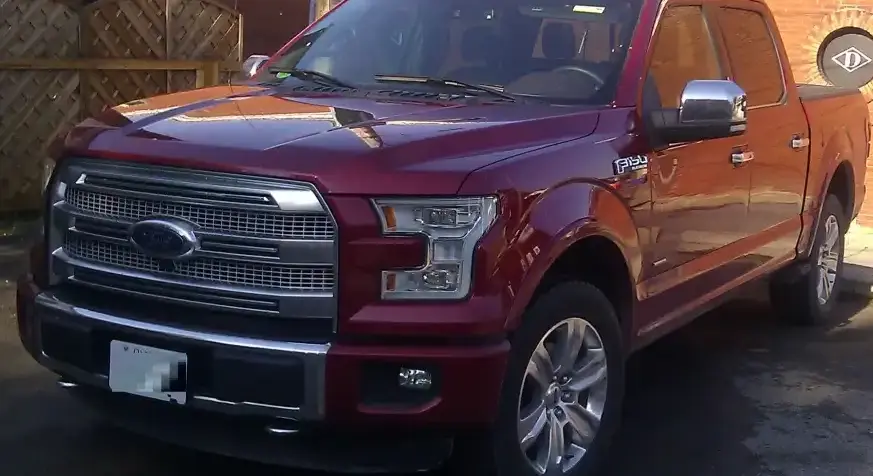
The Ford F-150 is a full-size pickup truck manufactured by Ford Motor Company, and has been the best-selling vehicle in the United States for over four decades. The thirteenth generation, produced from 2015 to 2017, represented a significant shift in F-150 construction, utilizing a high-strength, military-grade aluminum alloy body on a fully boxed steel frame. This particular variant, the SuperCrew with the 3.5-liter V6 engine producing 375 horsepower paired with a 10-speed automatic transmission and four-wheel drive, occupied a prominent position in the mid-to-upper range of the F-150 lineup, appealing to buyers seeking a balance of capability, comfort, and modern technology.
Technical Specifications
| Brand | Ford |
| Model | F-Series F-150 |
| Generation | F-Series F-150 XIII SuperCrew |
| Type (Engine) | 3.5 V6 (375 Hp) 4×4 Automatic |
| Start of production | 2015 |
| End of production | 2017 |
| Powertrain Architecture | Internal Combustion engine |
| Body type | Pick-up |
| Seats | 5-6 |
| Doors | 4 |
| Fuel consumption (urban) | 13.8 l/100 km (17 US mpg, 20.5 UK mpg, 7.2 km/l) |
| Fuel consumption (extra urban) | 10.2 l/100 km (23.1 US mpg, 27.7 UK mpg, 9.8 km/l) |
| Fuel consumption (combined) | 11.8 l/100 km (19.9 US mpg, 23.9 UK mpg, 8.5 km/l) |
| Fuel Type | Petrol (Gasoline) |
| Weight-to-power ratio | 5.9 kg/Hp, 169.1 Hp/tonne |
| Weight-to-torque ratio | 3.5 kg/Nm, 287.2 Nm/tonne |
| Power | 375 Hp @ 5000 rpm |
| Power per litre | 106.7 Hp/l |
| Torque | 637 Nm @ 3500 rpm (469.83 lb.-ft. @ 3500 rpm) |
| Engine layout | Front, Longitudinal |
| Engine displacement | 3514 cm3 (214.44 cu. in.) |
| Number of cylinders | 6 |
| Engine configuration | V-engine |
| Cylinder Bore | 92.4 mm (3.64 in.) |
| Piston Stroke | 87.6 mm (3.45 in.) |
| Compression ratio | 10.5:1 |
| Number of valves per cylinder | 4 |
| Fuel injection system | Direct injection |
| Engine aspiration | Twin-Turbo, Intercooler |
| Engine oil capacity | 5.7 l (6.02 US qt | 5.02 UK qt) |
| Coolant | 14.75 l (15.59 US qt | 12.98 UK qt) |
| Kerb Weight | 2218-2239 kg (4889.85 – 4936.15 lbs.) |
| Trunk (boot) space – minimum | 1495 l (52.8 cu. ft.) |
| Trunk (boot) space – maximum | 2200 l (77.69 cu. ft.) |
| Fuel tank capacity | 87 l (22.98 US gal | 19.14 UK gal) |
| Length | 5890-6190 mm (231.89 – 243.7 in.) |
| Width | 2029 mm (79.88 in.) |
| Width with mirrors folded | 2121 mm (83.5 in.) |
| Width including mirrors | 2459 mm (96.81 in.) |
| Height | 1961-1963 mm (77.2 – 77.28 in.) |
| Wheelbase | 3683-3983 mm (145 – 156.81 in.) |
| Front track | 1717 mm (67.6 in.) |
| Rear (Back) track | 1717 mm (67.6 in.) |
| Front overhang | 960 mm (37.8 in.) |
| Rear overhang | 1247 mm (49.09 in.) |
| Ride height (ground clearance) | 236-239 mm (9.29 – 9.41 in.) |
| Approach angle | 25.5° |
| Departure angle | 26.0-26.4° |
| Ramp-over (brakeover) angle | 19.7-21.0° |
| Drive wheel | All wheel drive (4×4) |
| Number of gears and type of gearbox | 10 gears, automatic transmission |
| Front suspension | Double wishbone |
| Rear suspension | Leaf spring |
| Front brakes | Ventilated discs |
| Rear brakes | Ventilated discs |
| Assisting systems | ABS (Anti-lock braking system) |
| Steering type | Steering rack and pinion |
| Power steering | Electric Steering |
| Tires size | 265/70 R17 |
| Wheel rims size | 17 |
Powertrain & Engine Architecture
The heart of this F-150 variant is the 3.5-liter EcoBoost V6 engine, internally designated as the third generation of the engine. This engine utilizes a twin-turbocharged configuration, with the turbochargers positioned within the V of the engine, contributing to a more compact design and improved responsiveness. Direct fuel injection is employed to precisely deliver fuel into the combustion chambers, maximizing efficiency and power output. The engine features a 10.5:1 compression ratio and a dual overhead camshaft (DOHC) valvetrain with four valves per cylinder. The 10-speed automatic transmission, co-developed with General Motors, was a groundbreaking feature for a pickup truck at the time. Its closely spaced gear ratios allowed the engine to operate in its optimal power band more frequently, improving both acceleration and fuel economy. The transmission’s sophisticated control system also enabled smoother shifting and quicker response times.
Driving Characteristics
The 375-horsepower and 470 lb-ft of torque delivered by the 3.5L EcoBoost engine, combined with the 10-speed automatic, provided a compelling driving experience. Acceleration was brisk, and the truck felt surprisingly nimble for its size. The 10-speed transmission minimized the sensation of turbo lag, providing readily available power across a wide range of speeds. Compared to the naturally aspirated 5.0-liter V8 option, the EcoBoost offered comparable power with improved low-end torque, making it well-suited for towing and hauling. While not as fuel-efficient as the base 3.5-liter V6, the EcoBoost provided a significant performance upgrade without the fuel economy penalty associated with the larger V8. The four-wheel-drive system provided confident traction in various conditions, enhancing the truck’s versatility.
Equipment & Trim Levels
The 3.5L EcoBoost engine was typically offered on higher trim levels of the F-150 SuperCrew, such as the XLT, Lariat, and King Ranch. Standard features included air conditioning, power windows and locks, a rearview camera, and a basic infotainment system. Higher trims added features like leather upholstery, heated and ventilated front seats, a premium sound system, and advanced driver-assistance technologies such as blind-spot monitoring and lane-keeping assist. Optional extras included a panoramic sunroof, a navigation system, and a trailer tow package. The SuperCrew configuration provided a spacious cabin with ample room for passengers and cargo.
Chassis & Braking
The F-150’s fully boxed steel frame provided a solid foundation for the truck’s robust construction. The front suspension utilized an independent double-wishbone design, while the rear suspension employed a traditional leaf spring setup. This combination offered a good balance of ride comfort and load-carrying capacity. Ventilated disc brakes were standard on all four wheels, providing ample stopping power. The anti-lock braking system (ABS) helped to maintain control during emergency braking situations. Steering was handled by an electric power-assisted rack-and-pinion system, offering precise and responsive handling.
Market Reception & Comparison
The 3.5L EcoBoost V6 quickly gained popularity among F-150 buyers, praised for its combination of power, efficiency, and refinement. Critics lauded the engine’s strong performance and the 10-speed transmission’s smooth operation. Compared to the 5.0-liter V8, the EcoBoost offered similar horsepower but significantly more torque, making it a better choice for those who frequently tow or haul heavy loads. Fuel economy was competitive with other full-size pickups, although the EcoBoost typically returned slightly lower mileage than the base 3.5-liter V6. Reliability proved to be generally good, although some early models experienced issues with the turbochargers and fuel injectors.
Legacy
The 2015-2017 Ford F-150 with the 3.5L EcoBoost V6 and 10-speed automatic transmission represents a pivotal moment in pickup truck design. The combination of aluminum body construction, turbocharged engine technology, and advanced transmission design set a new standard for capability, efficiency, and refinement. Today, these trucks remain popular on the used car market, offering a compelling blend of performance, features, and value. While some maintenance items, such as turbocharger replacement, may become necessary with age, the powertrain is generally considered to be durable and reliable, making it a solid choice for buyers seeking a capable and well-equipped full-size pickup truck.