
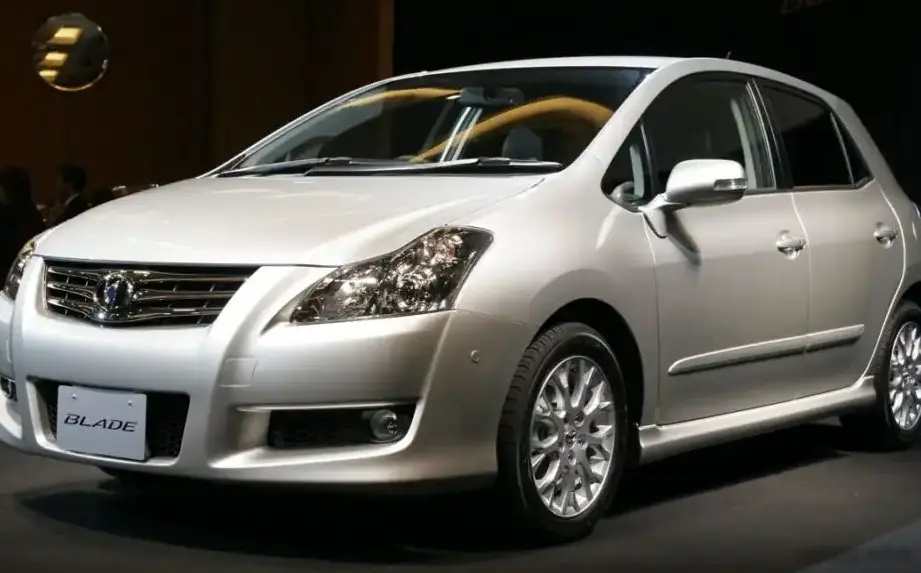
The Toyota Blade 2.4, produced between October 2006 and November 2011, was a compact hatchback marketed primarily in Japan. It represented Toyota’s entry into a more sporty and stylistically adventurous segment, often appealing to a younger demographic. The Blade shared its platform and many components with the Lexus CT 200h, though it distinguished itself through its more aggressive styling and focus on traditional gasoline engine performance. The 2.4-liter variant, producing 167 horsepower, occupied a mid-range position within the Blade lineup, offering a balance between performance and fuel efficiency. It was positioned above the smaller displacement engines and below any potential high-performance trims that were never officially released.
Technical Specifications
| Brand | Toyota |
| Model | Blade |
| Generation | Blade |
| Type (Engine) | 2.4 (167 Hp) |
| Start of production | October, 2006 |
| End of production | November, 2011 |
| Powertrain Architecture | Internal Combustion engine |
| Body type | Hatchback |
| Seats | 5 |
| Doors | 5 |
| Fuel Type | Petrol (Gasoline) |
| Weight-to-power ratio | 7.5 kg/Hp, 133.6 Hp/tonne |
| Power | 167 Hp |
| Engine layout | Front, Transverse |
| Engine Model/Code | 2AZ-FE |
| Engine aspiration | Naturally aspirated engine |
| Engine oil capacity | 4.3 l (4.54 US qt | 3.78 UK qt) |
| Coolant capacity | 6.2 l (6.55 US qt | 5.46 UK qt) |
| Kerb Weight | 1250 kg (2755.78 lbs.) |
| Trunk (boot) space – minimum | 354 l (12.5 cu. ft.) |
| Trunk (boot) space – maximum | 761 l (26.87 cu. ft.) |
| Fuel tank capacity | 60 l (15.85 US gal | 13.2 UK gal) |
| Length | 4220 mm (166.14 in.) |
| Width | 1760 mm (69.29 in.) |
| Height | 1515 mm (59.65 in.) |
| Wheelbase | 2600 mm (102.36 in.) |
| Front track | 1515 mm (59.65 in.) |
| Rear (Back) track | 1510 mm (59.45 in.) |
| Minimum turning circle | 10.4 m (34.12 ft.) |
Powertrain & Engine Architecture
The Toyota Blade 2.4 was powered by the 2AZ-FE engine, a 2.4-liter (2362 cc) inline-four cylinder gasoline engine. This engine was a member of Toyota’s AZ series, known for its reliability and relatively simple design. The 2AZ-FE featured a double overhead camshaft (DOHC) valvetrain with four valves per cylinder, contributing to its respectable power output. Fuel delivery was handled by electronic fuel injection (EFI), optimizing combustion efficiency and reducing emissions. The engine utilized a cast iron block and an aluminum cylinder head, balancing durability with weight reduction. The 2AZ-FE engine was known for its smooth operation and linear power delivery. The engine was paired with a four-speed automatic transmission, a common choice for drivers prioritizing convenience over ultimate performance. This transmission was electronically controlled, adapting shift points based on driving conditions and throttle input.
Driving Characteristics
The 2.4-liter Blade offered a noticeable step up in performance compared to the lower-displacement engine options. With 167 horsepower, acceleration was brisk, though not particularly sporty by modern standards. The four-speed automatic transmission, while smooth, did have relatively wide gear ratios, which could sometimes result in the engine feeling slightly strained during hard acceleration or when climbing hills. The Blade 2.4’s front-wheel-drive configuration provided predictable handling, but it lacked the all-wheel-drive capability found in some competing vehicles. Steering was light and responsive, making it easy to maneuver in urban environments. Overall, the driving experience was comfortable and refined, prioritizing ease of use over outright performance.
Equipment & Trim Levels
The Blade 2.4 typically came equipped with a reasonable level of standard features. These included air conditioning, power windows and locks, a basic audio system (often with CD player and AM/FM radio), and alloy wheels. Interior upholstery was typically cloth, though leather options were sometimes available as upgrades. Higher trim levels could include features such as a sunroof, upgraded audio system with more speakers, and automatic climate control. The dashboard layout was functional and straightforward, with easy-to-read gauges and intuitive controls. Safety features included dual front airbags and anti-lock brakes (ABS).
Chassis & Braking
The Blade 2.4 utilized an independent suspension system on both the front and rear axles. The front suspension employed a McPherson strut design with coil springs and an anti-roll bar, while the rear suspension featured a multi-link setup with coil springs and a stabilizer bar. This suspension configuration provided a comfortable ride quality while maintaining reasonable handling characteristics. Braking duties were handled by ventilated disc brakes on the front wheels and drum brakes on the rear wheels. The ABS system helped to prevent wheel lockup during hard braking, enhancing safety and control.
Market Reception & Comparison
The Toyota Blade, and specifically the 2.4-liter variant, received generally positive reviews for its stylish design, comfortable interior, and reliable powertrain. Critics praised the engine’s smooth operation and adequate power, but some noted that the four-speed automatic transmission felt somewhat dated compared to the continuously variable transmissions (CVTs) becoming increasingly common at the time. Fuel economy was considered average for its class. Compared to other hatchbacks in the Japanese market, the Blade offered a unique blend of style and practicality. It competed with vehicles such as the Honda Civic, Nissan Tiida, and Mazda Axela. The 2.4-liter engine provided a performance advantage over the base engine options in many of these competitors.
Legacy
The Toyota Blade, while not a mainstream success in international markets, remains a popular choice among enthusiasts in Japan. The 2AZ-FE engine is known for its durability and relatively low maintenance costs, making it a reliable option for used car buyers. Parts availability is generally good, and the engine is relatively easy to work on. The Blade’s unique styling and comfortable interior have also contributed to its enduring appeal. Today, well-maintained examples of the Blade 2.4 can be found on the used car market, offering a stylish and reliable transportation option for those seeking a compact hatchback with a bit of personality.
