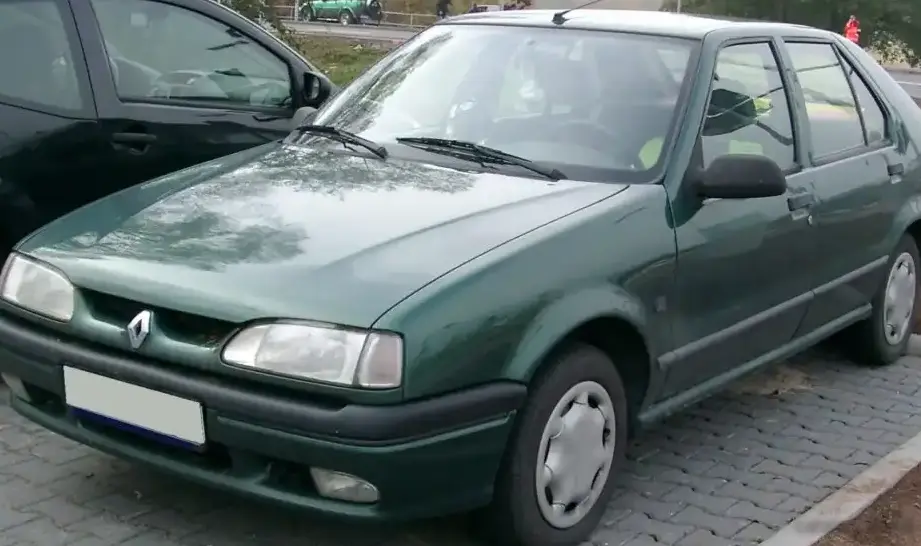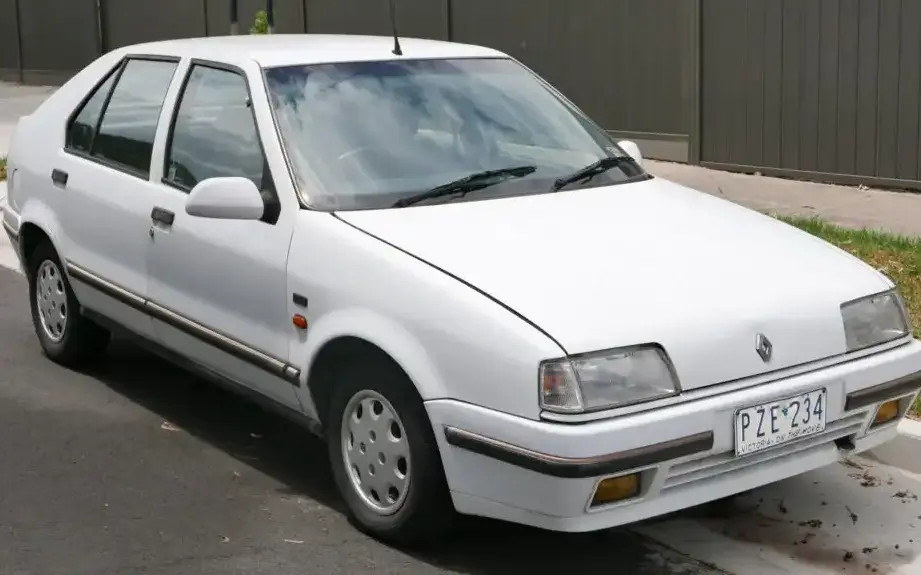
The Renault 19 I (B/C53) 1.7, internally designated B/C53B, was a popular subcompact hatchback manufactured by Renault between 1989 and 1992. It represented a significant evolution of the earlier Renault 9, boasting a more contemporary design and enhanced features. Positioned as an accessible and practical choice within the Renault range, the 1.7-liter variant served as a mid-tier offering, bridging the gap between the base 1.4-liter engine and the more potent 1.8 and 2.0-liter options. In the European market, the Renault 19 competed directly with vehicles such as the Peugeot 205, Citroën AX, and Volkswagen Polo, offering a blend of style, economy, and usability.
Technical Specifications
| Brand | Renault |
| Model | 19 |
| Generation | 19 I (B/C53) |
| Type (Engine) | 1.7 (B/C53B) (73 Hp) |
| Start of production | 1989 |
| End of production | 1992 |
| Powertrain Architecture | Internal Combustion engine |
| Body type | Hatchback |
| Seats | 5 |
| Doors | 3-5 |
| Fuel consumption (urban) | 8 l/100 km (29.4 US mpg, 35.3 UK mpg, 12.5 km/l) |
| Fuel consumption (extra urban) | 6.7 l/100 km (35.1 US mpg, 42.2 UK mpg, 14.9 km/l) |
| Fuel consumption (combined) | 7.5 l/100 km (31.4 US mpg, 37.7 UK mpg, 13.3 km/l) |
| Fuel Type | Petrol (Gasoline) |
| Power | 73 Hp |
| Power per litre | 42.4 Hp/l |
| Engine Model/Code | F3N |
| Engine displacement | 1721 cm3 (105.02 cu. in.) |
| Number of cylinders | 4 |
| Engine configuration | Inline |
| Number of valves per cylinder | 2 |
| Fuel injection system | Single-point injection |
| Engine aspiration | Naturally aspirated engine |
| Engine oil capacity | 5.2 l (5.49 US qt, 4.58 UK qt) |
| Coolant capacity | 6 l (6.34 US qt, 5.28 UK qt) |
| Fuel tank capacity | 55 l (14.53 US gal, 12.1 UK gal) |
| Drivetrain Architecture | Front wheel drive |
| Number of gears | 5 |
| Gearbox type | Manual transmission |
| Front brakes | Disc |
| Rear brakes | Drum |
| Tires size | 175/70 R13 |
| Wheel rims size | 13 |
Powertrain & Engine Architecture
The Renault 19 I 1.7 (B/C53B) was powered by the F3N engine, a 1.7-liter inline four-cylinder gasoline engine. This engine featured a relatively straightforward design, employing a single overhead camshaft (SOHC) and two valves per cylinder. The F3N engine utilized single-point fuel injection, a common technology of the era, where fuel was injected into the intake manifold rather than directly into the combustion chambers. While less efficient than subsequent multi-point injection systems, this approach contributed to the engine’s affordability and ease of maintenance. The engine produced 73 horsepower and approximately 107 lb-ft of torque. The engine’s design prioritized fuel economy and dependability over outright performance. A five-speed manual transmission was the standard offering for this variant, providing a reasonable compromise between acceleration and fuel efficiency. The gear ratios were fairly conventional for the period, designed to maximize fuel economy during highway driving while still delivering adequate acceleration in urban settings.
Driving Characteristics
The 1.7-liter Renault 19 offered a comfortable, though not particularly exhilarating, driving experience. With 73 horsepower, acceleration was sufficient for everyday driving, but it wasn’t a particularly quick vehicle. The five-speed manual transmission allowed drivers to maintain the engine within its optimal power band, but overtaking required careful consideration. Compared to the higher-output 1.8 and 2.0-liter versions, the 1.7 felt noticeably slower, especially when carrying passengers or luggage. However, the 1.7’s lighter weight and less stressed engine contributed to improved fuel economy and potentially greater long-term reliability. The suspension provided a comfortable ride, effectively absorbing bumps and road imperfections. Steering was light and responsive, making it well-suited for city driving.
Equipment & Trim Levels
The 1.7-liter Renault 19 typically came equipped with a fairly basic set of standard features. Interior upholstery was generally cloth, with a simple dashboard layout. Standard equipment usually included power steering, a basic stereo system, and manual windows and door locks. Optional extras included a sunroof, upgraded stereo systems, and central locking. The trim level for the 1.7 often positioned it in the middle of the range, offering an upgrade from the very basic entry-level models but lacking the more luxurious features found in the higher-specification versions. The interior plastics were durable but not particularly refined, reflecting the car’s affordable price point.
Chassis & Braking
The Renault 19 I utilized a relatively uncomplicated chassis design. The front suspension consisted of MacPherson struts, while the rear suspension employed a torsion beam axle. This setup provided a good balance between ride comfort and handling. Braking was handled by disc brakes on the front wheels and drum brakes on the rear wheels. This configuration was common for vehicles in this price bracket during the late 1980s and early 1990s. The braking performance was adequate for everyday driving, but it wasn’t exceptionally powerful. The car’s relatively light weight helped to compensate for the less sophisticated braking system.
Market Reception & Comparison
The Renault 19 I 1.7 was generally well-received by automotive critics as a practical and affordable hatchback. It was praised for its fuel economy, comfortable ride, and relatively spacious interior. However, it was also criticized for its lack of performance and somewhat spartan interior. Compared to the higher-output versions, the 1.7 offered a more economical option, appealing to buyers who prioritized fuel efficiency and affordability over outright performance. The 1.7 also tended to be more reliable than the more highly stressed 1.8 and 2.0-liter engines. Fuel economy figures of around 31.4 US mpg combined were considered respectable for the time.
Legacy
The Renault 19 I 1.7, while not a particularly groundbreaking vehicle, proved to be a reliable and durable car. The F3N engine, despite its simple design, was known for its longevity and relatively low maintenance costs. Today, the Renault 19 I 1.7 is becoming increasingly scarce, but well-maintained examples are sought after by classic car enthusiasts and collectors. The car’s simplicity and affordability make it a relatively easy and inexpensive vehicle to maintain and repair. The 1.7-liter engine, while not powerful, is generally considered to be more reliable than the larger engines in the Renault 19 lineup, making it a desirable option for those seeking a classic French hatchback.