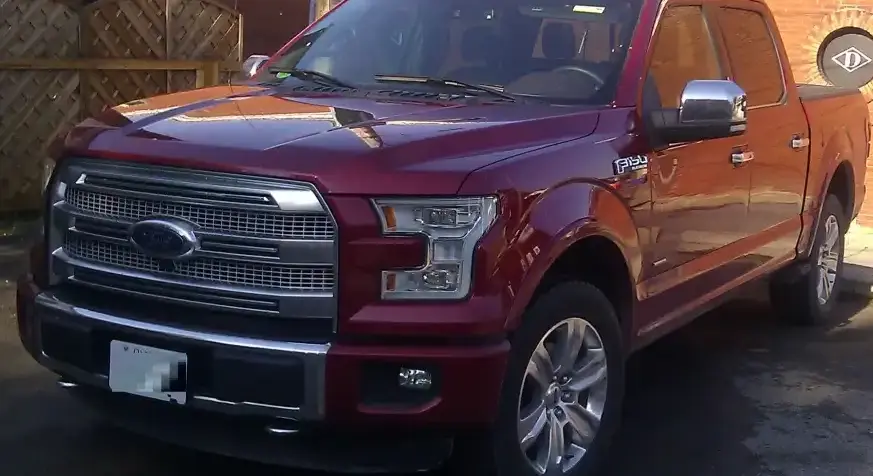
The Ford F-150 SuperCrew 3.5L V6, produced from 2015 to 2017, represents a significant iteration of the best-selling full-size pickup truck in the United States. This variant, part of the thirteenth generation (F-150 XIII), was positioned as a powerful and capable option within the SuperCrew body style, offering a blend of performance, technology, and passenger space. The introduction of the 3.5L EcoBoost V6 engine marked a shift towards smaller displacement, turbocharged engines in the full-size truck segment, aiming to deliver V8-like power with improved fuel efficiency. This model played a crucial role in Ford’s strategy to attract buyers seeking a versatile and modern pickup truck.
Technical Specifications
| Brand | Ford |
| Model | F-Series F-100/F-150 |
| Generation | F-Series F-150 XIII SuperCrew |
| Type (Engine) | 3.5 V6 (375 Hp) Automatic |
| Start of production | 2015 |
| End of production | 2017 |
| Powertrain Architecture | Internal Combustion engine |
| Body type | Pick-up |
| Seats | 5-6 |
| Doors | 4 |
| Fuel consumption (urban) | 13.1 l/100 km (18 US mpg, 21.6 UK mpg, 7.6 km/l) |
| Fuel consumption (extra urban) | 9.4 l/100 km (25 US mpg, 30.1 UK mpg, 10.6 km/l) |
| Fuel consumption (combined) | 11.2 l/100 km (21 US mpg, 25.2 UK mpg, 8.9 km/l) |
| Fuel Type | Petrol (Gasoline) |
| Weight-to-power ratio | 5.6 kg/Hp, 178.6 Hp/tonne |
| Weight-to-torque ratio | 3.3 kg/Nm, 303.3 Nm/tonne |
| Power | 375 Hp @ 5000 rpm |
| Power per litre | 106.7 Hp/l |
| Torque | 637 Nm @ 3500 rpm (469.83 lb.-ft. @ 3500 rpm) |
| Engine layout | Front, Longitudinal |
| Engine displacement | 3514 cm3 (214.44 cu. in.) |
| Number of cylinders | 6 |
| Engine configuration | V-engine |
| Cylinder Bore | 92.4 mm (3.64 in.) |
| Piston Stroke | 87.6 mm (3.45 in.) |
| Compression ratio | 10.5:1 |
| Number of valves per cylinder | 4 |
| Fuel injection system | Direct injection |
| Engine aspiration | Twin-Turbo, Intercooler |
| Engine oil capacity | 5.7 l (6.02 US qt | 5.02 UK qt) |
| Coolant | 14.75 l (15.59 US qt | 12.98 UK qt) |
| Kerb Weight | 2100-2125 kg (4629.71 – 4684.82 lbs.) |
| Trunk (boot) space – minimum | 1495 l (52.8 cu. ft.) |
| Trunk (boot) space – maximum | 2200 l (77.69 cu. ft.) |
| Fuel tank capacity | 87 l (22.98 US gal | 19.14 UK gal) |
| Length | 5890-6190 mm (231.89 – 243.7 in.) |
| Width | 2029 mm (79.88 in.) |
| Width with mirrors folded | 2121 mm (83.5 in.) |
| Width including mirrors | 2459 mm (96.81 in.) |
| Height | 1920-1923 mm (75.59 – 75.71 in.) |
| Wheelbase | 3683-3983 mm (145 – 156.81 in.) |
| Front track | 1717 mm (67.6 in.) |
| Rear (Back) track | 1717 mm (67.6 in.) |
| Front overhang | 960 mm (37.8 in.) |
| Rear overhang | 1247 mm (49.09 in.) |
| Ride height (ground clearance) | 213-216 mm (8.39 – 8.5 in.) |
| Approach angle | 23.8-24.1° |
| Departure angle | 23.8-24.5° |
| Ramp-over (brakeover) angle | 17.2-18.3° |
| Drivetrain Architecture | The Internal combustion engine (ICE) drives the rear wheels of the vehicle. |
| Drive wheel | Rear wheel drive |
| Number of gears and type of gearbox | 10 gears, automatic transmission |
| Front suspension | Double wishbone |
| Rear suspension | Leaf spring |
| Front brakes | Ventilated discs |
| Rear brakes | Ventilated discs |
| Assisting systems | ABS (Anti-lock braking system) |
| Steering type | Steering rack and pinion |
| Power steering | Electric Steering |
| Tires size | 245/70 R17 |
| Wheel rims size | 17 |
Powertrain & Engine Architecture
The heart of this F-150 variant is the 3.5L EcoBoost V6 engine, internally designated as the third generation of the engine. This engine utilizes a twin-turbocharged configuration, employing two Mitsubishi TD03L turbochargers to deliver increased power and torque. The engine features direct fuel injection, optimizing combustion efficiency and contributing to its power output. The 24-valve DOHC (Double Overhead Camshaft) valvetrain further enhances engine breathing and performance. Paired with this engine is a 10-speed automatic transmission, a significant upgrade from the previous six-speed unit. This transmission provides a wider gear ratio spread, improving both acceleration and fuel economy. The transmission’s sophisticated control system allows for smooth and precise shifting, adapting to driving conditions and driver input.
Driving Characteristics
The 375 horsepower and 470 lb-ft of torque produced by the 3.5L EcoBoost engine provide the F-150 SuperCrew with robust acceleration and towing capabilities. While not as immediately responsive as a naturally aspirated V8, the twin-turbochargers deliver a broad and flat torque curve, making it well-suited for hauling heavy loads and navigating challenging terrain. The 10-speed automatic transmission plays a crucial role in maximizing the engine’s potential, keeping the engine within its optimal power band. Compared to the 5.0L V8 option, the EcoBoost offered comparable power but with improved fuel economy. The EcoBoost also provided a quieter and more refined driving experience, particularly at highway speeds.
Equipment & Trim Levels
The 3.5L EcoBoost engine was available on various trim levels of the F-150 SuperCrew, including the XLT, Lariat, and King Ranch. Standard features typically included air conditioning, power windows and locks, a rearview camera, and a basic infotainment system. Higher trim levels, such as the Lariat and King Ranch, added premium features like leather upholstery, heated and ventilated front seats, a navigation system, and advanced safety technologies. Optional extras included a panoramic sunroof, a premium sound system, and various driver-assistance features.
Chassis & Braking
The F-150 SuperCrew utilizes a fully boxed frame constructed from high-strength steel, providing a solid foundation for the vehicle. The front suspension features an independent double-wishbone design, while the rear suspension employs a leaf spring setup. This combination delivers a comfortable ride quality while maintaining robust load-carrying capacity. Braking duties are handled by ventilated discs on all four wheels, coupled with an Anti-lock Braking System (ABS) for enhanced safety. The braking system is appropriately sized for the vehicle’s weight and performance capabilities.
Market Reception & Comparison
The 3.5L EcoBoost V6 engine was generally well-received by critics and consumers alike. It was praised for its combination of power, fuel efficiency, and refinement. Compared to the traditional V8 engines, the EcoBoost offered a compelling alternative for buyers seeking a more modern and technologically advanced powertrain. Fuel economy figures of 18 mpg city, 25 mpg highway, and 21 mpg combined were competitive for a full-size pickup truck. However, some critics noted that the EcoBoost engine could be more complex and potentially more expensive to repair than a traditional V8.
Legacy
The 3.5L EcoBoost engine has become a mainstay of the Ford F-150 lineup, and the 2015-2017 iteration established its reputation as a powerful and efficient powertrain option. While early versions of the EcoBoost engine experienced some issues with timing chain tensioners, these were addressed in later model years. Today, well-maintained examples of the 2015-2017 F-150 SuperCrew 3.5L EcoBoost remain popular in the used car market, offering a compelling blend of capability, comfort, and technology.