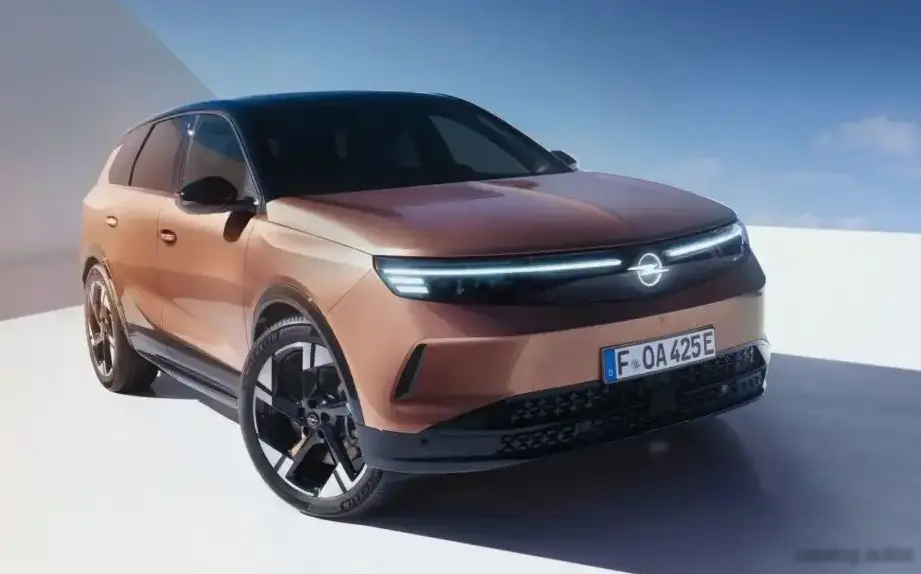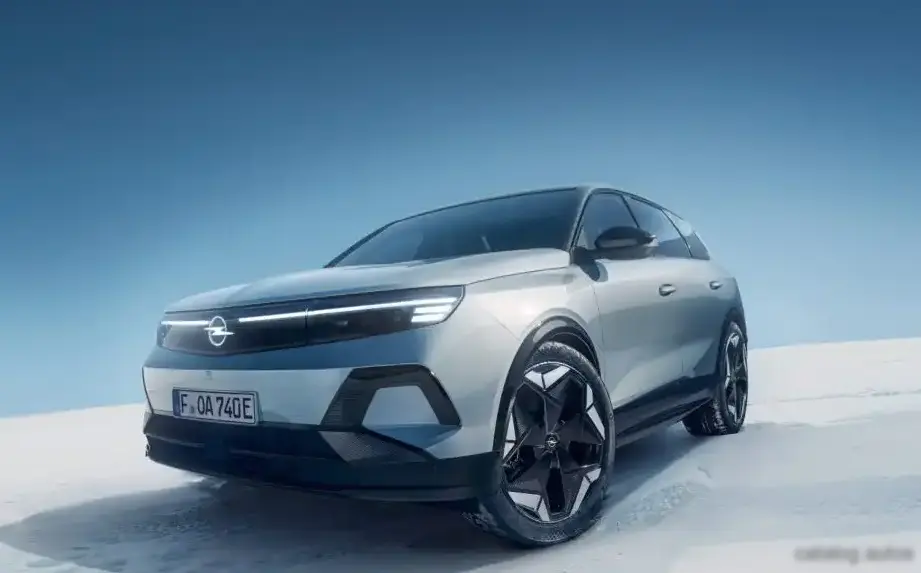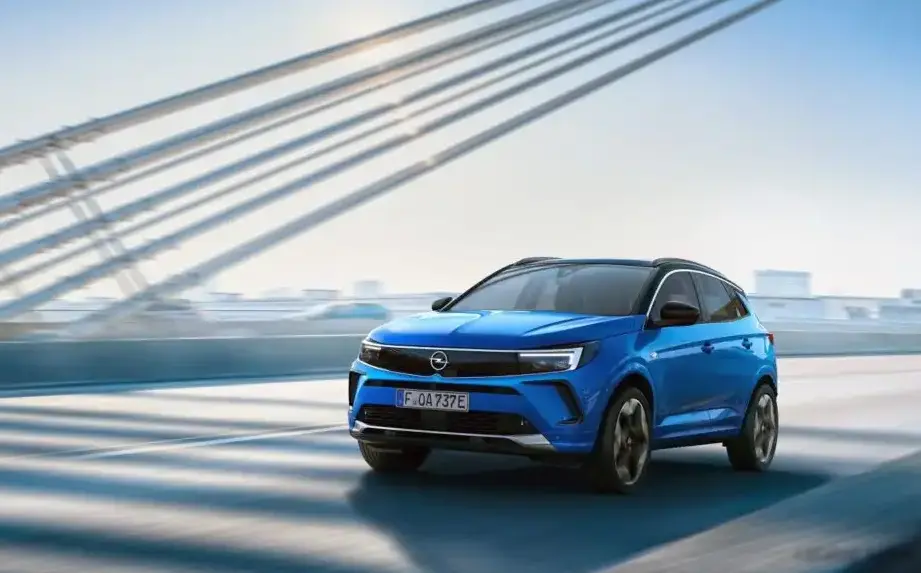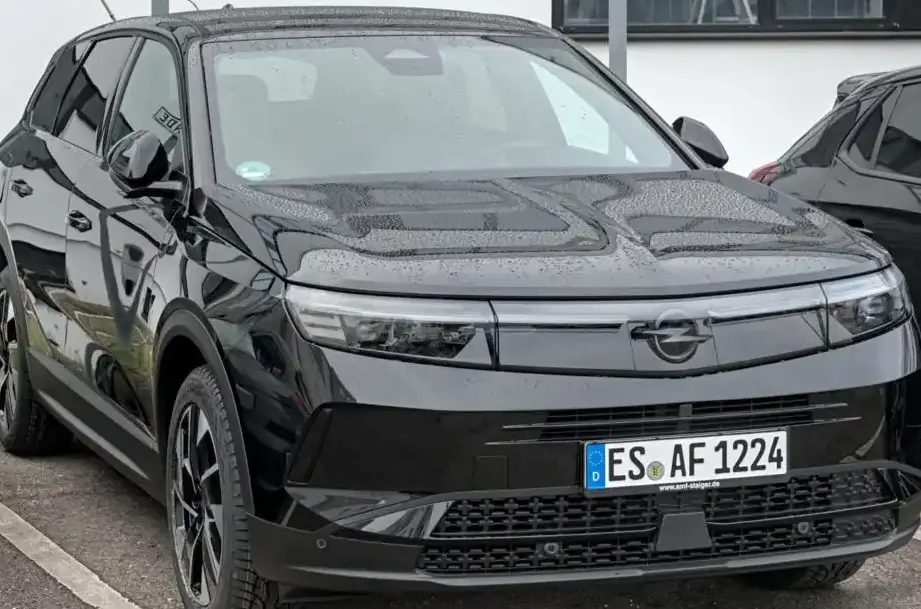
The Opel Grandland B 1.6 Turbo (195 Hp) Plug-in Hybrid e-DCT is a compact SUV introduced in October 2024 as part of the second-generation Grandland B series. Positioned as a mid-range offering within the Grandland B lineup, it combines a turbocharged gasoline engine with an electric motor and battery pack, offering both all-electric driving capability and extended range through its hybrid powertrain. This variant represents Opel’s commitment to electrification and caters to consumers seeking a fuel-efficient and environmentally conscious SUV. It builds upon the foundation of the 1HX0/A3 platform, shared with other Stellantis vehicles like the Peugeot 3008 and Citroën C5 Aircross.
Technical Specifications
| Brand | Opel |
| Model | Grandland |
| Generation | Grandland B |
| Type (Engine) | 1.6 Turbo (195 Hp) Plug-in Hybrid e-DCT |
| Start of production | October, 2024 |
| Powertrain Architecture | PHEV (Plug-in Hybrid Electric Vehicle) |
| Body type | SUV |
| Seats | 5 |
| Doors | 5 |
| Combined fuel consumption (WLTP) | 0.8-0.9 l/100 km (294 – 261.3 US mpg, 353.1 – 313.9 UK mpg, 125 – 111.1 km/l) |
| CO2 emissions (WLTP) | 19-21 g/km |
| Fuel Type | Petrol / electricity |
| Acceleration 0 – 100 km/h | 7.8 sec |
| Acceleration 0 – 62 mph | 7.8 sec |
| Acceleration 0 – 60 mph | 7.4 sec |
| Maximum speed | 220 km/h (136.7 mph) |
| Emission standard | Euro 6e |
| Weight-to-power ratio | 9.3 kg/Hp, 107.1 Hp/tonne |
| Weight-to-torque ratio | 5.2 kg/Nm, 192.2 Nm/tonne |
| Gross battery capacity | 17.9 kWh |
| Battery technology | Lithium-ion (Li-Ion) |
| All-electric range (WLTP) | 85-87 km (52.82 – 54.06 mi) |
| Average Energy consumption (WLTP) | 21.9-23.4 kWh/100 km (35.24 – 37.66 kWh/100 mi, 96 – 89 MPGe, 4.6 – 4.3 km/kWh, 2.8 – 2.7 mi/kWh) |
| Electric motor power | 125 Hp @ 9000 rpm |
| Electric motor Torque | 118-300-7320 Nm (87.03 – 221.27 lb.-ft.) |
| Electric motor location | Between the combustion engine and the transmission |
| Electric motor type | Synchronous |
| System power | 195 Hp |
| System torque | 350 Nm (258.15 lb.-ft.) |
| Power | 150 Hp @ 5500 rpm |
| Torque | 300 Nm @ 2000 rpm (221.27 lb.-ft. @ 2000 rpm) |
| Engine layout | Front, Transverse |
| Engine displacement | 1598 cm3 (97.52 cu. in.) |
| Number of cylinders | 4 |
| Engine configuration | Inline |
| Cylinder Bore | 77 mm (3.03 in.) |
| Piston Stroke | 85.8 mm (3.38 in.) |
| Number of valves per cylinder | 4 |
| Fuel injection system | Direct injection |
| Engine aspiration | Turbocharger, Intercooler |
| Valvetrain | DOHC |
| Kerb Weight | 1821 kg (4014.62 lbs.) |
| Max. weight | 2460 kg (5423.37 lbs.) |
| Max load | 639 kg (1408.75 lbs.) |
| Trunk (boot) space – minimum | 550 l (19.42 cu. ft.) |
| Trunk (boot) space – maximum | 1645 l (58.09 cu. ft.) |
| Fuel tank capacity | 55 l (14.53 US gal | 12.1 UK gal) |
| Max. roof load | 80 kg (176.37 lbs.) |
| Permitted trailer load with brakes (12%) | 1500 kg (3306.93 lbs.) |
| Permitted trailer load without brakes | 750 kg (1653.47 lbs.) |
| Permitted towbar download | 80 kg (176.37 lbs.) |
| Length | 4650 mm (183.07 in.) |
| Width | 1905 mm (75 in.) |
| Width with mirrors folded | 1934 mm (76.14 in.) |
| Width including mirrors | 2103 mm (82.8 in.) |
| Height | 1665-1667 mm (65.55 – 65.63 in.) |
| Wheelbase | 2784 mm (109.61 in.) |
| Front track | 1610-1624 mm (63.39 – 63.94 in.) |
| Rear (Back) track | 1598-1614 mm (62.91 – 63.54 in.) |
| Front overhang | 962 mm (37.87 in.) |
| Rear overhang | 904 mm (35.59 in.) |
| Minimum turning circle (turning diameter) | 10.93 m (35.86 ft.) |
| Drive wheel | Front wheel drive |
| Number of gears and type of gearbox | 7 gears, automatic transmission e-DCT |
| Front brakes | Ventilated discs |
| Rear brakes | Ventilated discs |
| Assisting systems | ABS (Anti-lock braking system) |
| Steering type | Steering rack and pinion |
| Power steering | Electric Steering |
| Tires size | 225/55 R19; 235/55 R19; 235/50 R20 |
| Wheel rims size | 19; 20 |
INTRODUCTION
The Opel Grandland B 1.6 Turbo Plug-in Hybrid e-DCT, launched in October 2024, represents a significant step in Opel’s electrification strategy. This model is built on the versatile and modular EMP2 platform (also known as the 1HX0/A3 platform), shared with other Stellantis brands. The Grandland B series as a whole aims to offer a more refined and technologically advanced experience compared to its predecessor. The 1.6 Turbo Plug-in Hybrid variant specifically targets environmentally conscious buyers seeking a practical and efficient SUV with the flexibility of electric and gasoline power. It slots into the Grandland B range as a compelling alternative to traditional internal combustion engine models, offering a blend of performance, economy, and reduced emissions.
Powertrain & Engine Architecture
At the heart of the Grandland B 1.6 Turbo Plug-in Hybrid is a 1.6-liter turbocharged four-cylinder gasoline engine (code: ETN) producing 150 horsepower at 5500 rpm and 300 Nm (221.27 lb-ft) of torque at 2000 rpm. This engine utilizes direct fuel injection and a turbocharger with an intercooler to optimize power and efficiency. Paired with this is an 80 kW (109 hp) electric motor integrated between the engine and the 7-speed dual-clutch transmission (e-DCT). The electric motor draws power from a 17.9 kWh lithium-ion battery pack. The e-DCT transmission provides smooth and rapid gear changes, contributing to both performance and fuel economy. The powertrain operates in several modes, including fully electric, hybrid, and sport, allowing the driver to prioritize efficiency or performance as desired. The Start & Stop system and a particulate filter are standard features, further reducing emissions.
Driving Characteristics
The 1.6 Turbo Plug-in Hybrid e-DCT delivers a combined system output of 195 horsepower and 350 Nm (258.15 lb-ft) of torque. In electric-only mode, the Grandland B offers a quiet and smooth driving experience, with a range of 85-87 km (52.82 – 54.06 mi) on the WLTP cycle. Switching to hybrid mode seamlessly blends the power of the gasoline engine and electric motor, providing responsive acceleration and efficient cruising. The e-DCT transmission contributes to quick shifts and a generally engaging driving experience. Compared to lower-powered Grandland B variants, the 1.6 Turbo Plug-in Hybrid offers noticeably stronger acceleration, achieving 0-100 km/h in 7.8 seconds. While not as sporty as some dedicated performance SUVs, it provides ample power for everyday driving and highway overtaking. The weight of the battery pack does add some mass, but the instant torque from the electric motor helps to mitigate this.
Equipment & Trim Levels
The Grandland B 1.6 Turbo Plug-in Hybrid e-DCT typically comes well-equipped as a mid-range offering. Standard features often include a touchscreen infotainment system with Apple CarPlay and Android Auto compatibility, digital instrument cluster, automatic climate control, and a suite of advanced driver-assistance systems (ADAS) such as lane departure warning, automatic emergency braking, and adaptive cruise control. Interior upholstery is typically cloth or a combination of cloth and synthetic leather. Optional extras may include leather upholstery, a panoramic sunroof, premium audio system, and parking assist features. Trim levels may vary by market, but generally offer increasing levels of luxury and technology.
Chassis & Braking
The Grandland B utilizes a MacPherson strut front suspension and a multi-link rear suspension, providing a comfortable and controlled ride. The suspension is tuned to balance handling and comfort, making it suitable for both city driving and longer journeys. Ventilated disc brakes are fitted on all four wheels, providing ample stopping power. The electronic stability control (ESC) system and ABS (Anti-lock Braking System) are standard safety features. Steering is provided by an electric power steering system, offering a light and precise feel.
Market Reception & Comparison
The Opel Grandland B 1.6 Turbo Plug-in Hybrid e-DCT has been generally well-received by automotive critics, praised for its fuel efficiency, comfortable ride, and refined interior. Compared to the standard gasoline-powered Grandland B models, the plug-in hybrid variant offers significantly improved fuel economy and reduced emissions. It also provides the benefit of electric-only driving for shorter commutes. Compared to other plug-in hybrid SUVs in its class, the Grandland B offers a competitive range and price point. Some reviewers have noted that the trunk space is slightly reduced compared to non-hybrid versions due to the battery pack, but the overall practicality remains good.
Legacy
The Opel Grandland B 1.6 Turbo Plug-in Hybrid e-DCT represents a key step in Opel’s transition towards electrification. The long-term reliability of the powertrain remains to be fully established, but the components used are generally proven technologies. The combination of a turbocharged engine, electric motor, and e-DCT transmission offers a compelling blend of performance and efficiency. On the used car market, these models are expected to hold their value well, particularly as demand for plug-in hybrid vehicles continues to grow. The powertrain’s efficiency and reduced emissions will likely make it an attractive option for environmentally conscious buyers for years to come.