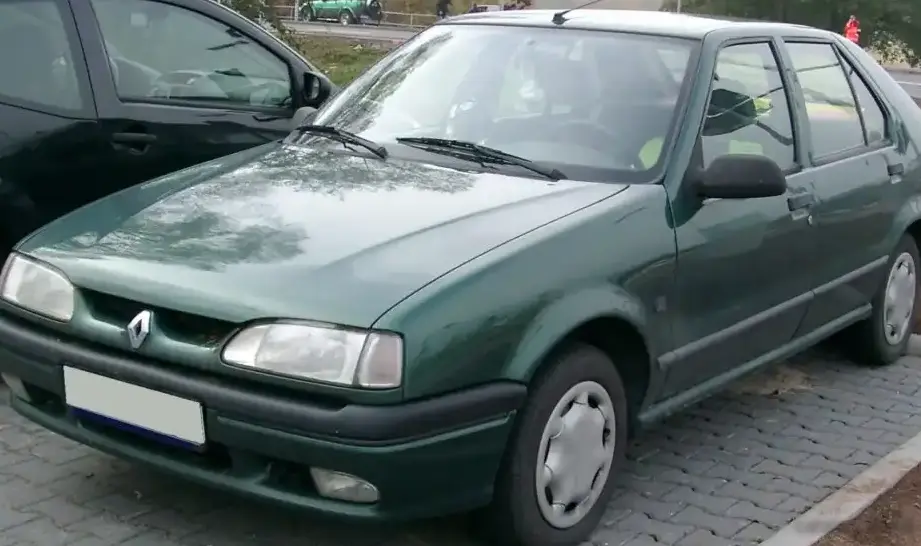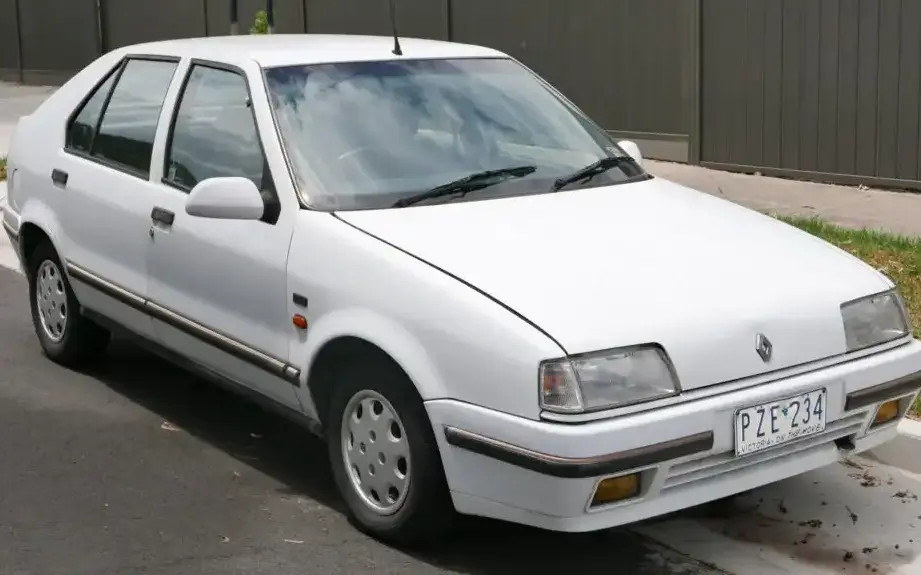
The Renault 19 I (B/C53), specifically the 1.7 (B/C53C) variant producing 90 horsepower, was a mainstay of the French automaker’s lineup from 1988 to 1992. Positioned as an affordable and practical compact hatchback, it represented Renault’s attempt to capture a larger share of the increasingly competitive European small family car market. This model occupied a middle ground within the 19 range, offering a balance between economy and usability, slotting below the more powerful 1.4 and above the base models. The B/C53 generation was a significant redesign from the earlier Renault 9, offering improved styling, interior space, and mechanical refinement.
Technical Specifications
| Brand | Renault |
| Model | 19 |
| Generation | 19 I (B/C53) |
| Type (Engine) | 1.7 (B/C53C) (90 Hp) |
| Start of production | 1988 |
| End of production | 1992 |
| Powertrain Architecture | Internal Combustion engine |
| Body type | Hatchback |
| Seats | 5 |
| Doors | 3-5 |
| Fuel Type | Petrol (Gasoline) |
| Power | 90 Hp |
| Engine Model/Code | F2N |
| Engine aspiration | Naturally aspirated engine |
| Engine oil capacity | 5.3 l (5.6 US qt | 4.66 UK qt) |
| Coolant capacity | 5.2 l (5.49 US qt | 4.58 UK qt) |
| Fuel tank capacity | 55 l (14.53 US gal | 12.1 UK gal) |
Powertrain & Engine Architecture
The heart of the Renault 19 1.7 was the F2N engine, a 1.7-liter, naturally aspirated inline-four cylinder gasoline engine. This engine featured a single overhead camshaft (SOHC) valvetrain operating two valves per cylinder. Fuel delivery was managed by a Bosch Mono-Jetronic fuel injection system, a relatively simple system for the time, prioritizing reliability and cost-effectiveness over ultimate performance. The Mono-Jetronic system, while not as sophisticated as multi-point injection, provided a noticeable improvement over carbureted engines in terms of fuel efficiency and emissions. The engine produced 90 horsepower at approximately 5,500 rpm and 138 Nm (102 lb-ft) of torque at 3,000 rpm. The engine block was cast iron, contributing to its durability, while the cylinder head was aluminum. The transmission paired with this engine was typically a four-speed automatic, although a five-speed manual was also available. The automatic transmission, while offering convenience, was known for being somewhat slow to respond and impacting fuel economy compared to the manual.
Driving Characteristics
The 1.7L automatic Renault 19 offered a comfortable, if not particularly sporty, driving experience. Acceleration was adequate for everyday driving, with a 0-60 mph time estimated around 12-13 seconds. The four-speed automatic transmission featured relatively widely spaced gear ratios, prioritizing fuel economy over rapid acceleration. Downshifts were often accompanied by a noticeable delay, and the transmission lacked the responsiveness of more modern automatic gearboxes. Compared to the five-speed manual version, the automatic suffered a slight performance penalty, but offered greater ease of use, particularly in urban environments. The suspension, consisting of MacPherson struts in the front and a torsion beam axle in the rear, provided a compliant ride, absorbing bumps and imperfections in the road surface effectively. However, the torsion beam rear suspension could exhibit some degree of understeer when pushed hard through corners.
Equipment & Trim Levels
The Renault 19 1.7 automatic typically came equipped with a reasonable level of standard features for its price point. These included power steering, central locking, and a basic stereo system. Interior upholstery was typically cloth, with a relatively simple dashboard layout. Optional extras included electric windows, a sunroof, and upgraded stereo systems. Trim levels varied depending on the market, but generally, the 1.7 automatic sat in the mid-range of the lineup. Higher trim levels, often denoted by names like “GSi” or “RT,” added features such as alloy wheels, upgraded interior trim, and additional exterior styling enhancements. The interior space was considered generous for a car of its size, offering comfortable seating for five adults, although rear legroom could be somewhat limited.
Chassis & Braking
The Renault 19 1.7 utilized a relatively conventional chassis design. The front suspension featured MacPherson struts with an anti-roll bar, providing good handling and stability. The rear suspension employed a torsion beam axle, a cost-effective and space-saving solution. Braking was typically accomplished with disc brakes on the front wheels and drum brakes on the rear wheels. The braking system was adequate for normal driving conditions, but lacked the stopping power of more advanced braking systems found on higher-performance vehicles. The steering was rack-and-pinion, providing precise and responsive steering feel. The car’s relatively light weight, around 2,300 lbs, contributed to its nimble handling characteristics.
Market Reception & Comparison
The Renault 19 1.7 automatic was generally well-received by automotive critics as a practical and affordable family car. It was praised for its comfortable ride, spacious interior, and reasonable fuel economy. However, the automatic transmission was often criticized for its sluggish performance and lack of responsiveness. Compared to rivals such as the Volkswagen Golf, Opel Astra, and Ford Escort, the Renault 19 offered a competitive package, particularly in terms of price. The 1.7L engine provided a good balance between performance and fuel efficiency, although it wasn’t as powerful as some of the larger-displacement engines offered in competing models. Fuel economy was typically around 28-32 mpg in mixed driving conditions. Reliability was generally good, although the Mono-Jetronic fuel injection system could occasionally require maintenance.
Legacy
The Renault 19, and specifically the 1.7 automatic variant, has become a popular choice among classic car enthusiasts and collectors. The F2N engine is known for its durability and relative simplicity, making it relatively easy to maintain and repair. Parts availability is generally good, although some components may be becoming increasingly scarce. Today, well-maintained examples of the Renault 19 1.7 automatic can be found for relatively low prices, making them an affordable entry point into the world of classic European motoring. The car represents a significant era in Renault’s history, showcasing the company’s commitment to producing practical, affordable, and reliable vehicles for the mass market. While not a performance icon, the 1.7 automatic Renault 19 remains a fondly remembered and appreciated vehicle by those who owned and drove it during its production run.