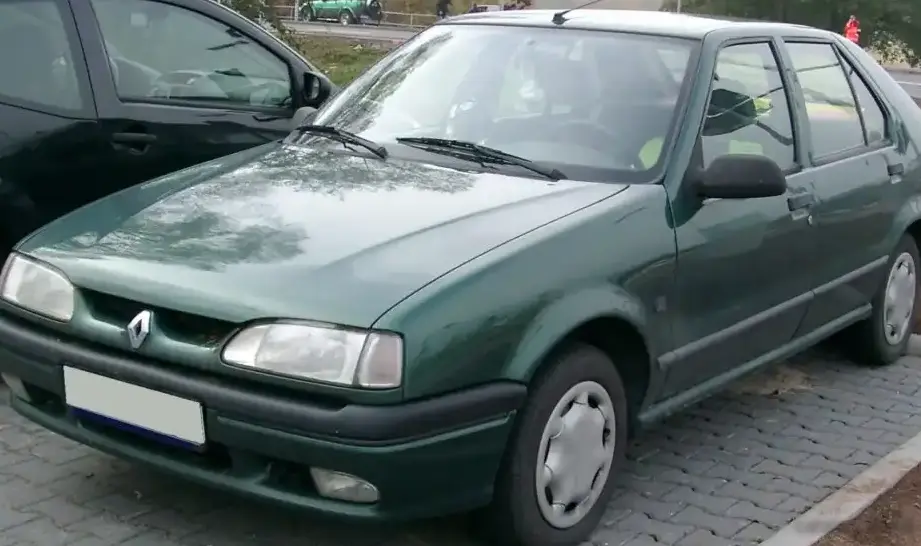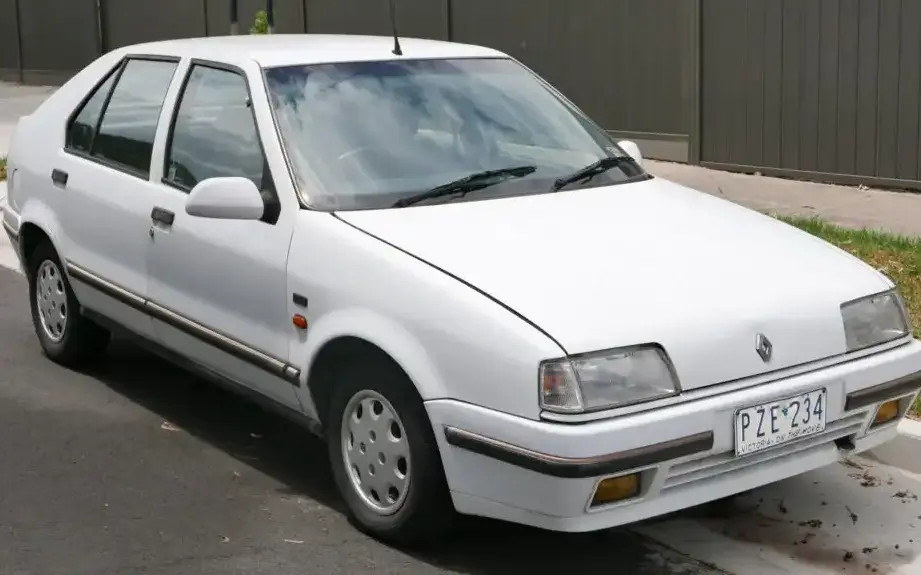
The Renault 19 I (B/C53) 1.8 16V, designated internally as the B/C53D, was a performance-oriented variant of the popular Renault 19 hatchback produced between 1989 and 1992. Positioned as a more engaging alternative to the base models, it offered a significant power upgrade thanks to its 16-valve engine. This model played a key role in Renault’s strategy to appeal to drivers seeking a sporty and practical compact car in the European market. It represented a step up in performance and refinement compared to the standard 1.4L and 1.7L versions, while remaining more accessible than the later, more focused Renaultsport models.
Technical Specifications
| Brand | Renault |
| Model | 19 |
| Generation | 19 I (B/C53) |
| Type (Engine) | 1.8 16V (B/C53D) (135 Hp) |
| Start of production | 1989 |
| End of production | 1992 |
| Powertrain Architecture | Internal Combustion engine |
| Body type | Hatchback |
| Seats | 5 |
| Doors | 3-5 |
| Fuel Type | Petrol (Gasoline) |
| Power | 135 Hp |
| Engine Model/Code | F7P |
| Engine aspiration | Naturally aspirated engine |
| Engine oil capacity | 6.5 l (6.87 US qt | 5.72 UK qt) |
| Coolant capacity | 7 l (7.4 US qt | 6.16 UK qt) |
| Fuel tank capacity | 55 l (14.53 US gal | 12.1 UK gal) |
Powertrain & Engine Architecture
The heart of the Renault 19 1.8 16V is the F7P engine, an 1.8-liter (1794cc) inline-four cylinder powerplant. This engine is notable for its dual overhead camshafts (DOHC) and four valves per cylinder – hence the “16V” designation. This configuration allowed for improved breathing and higher revs compared to the simpler two-valve designs found in lower-spec 19 models. The F7P utilized Bosch Motronic fuel injection, a sophisticated system for its time, which precisely controlled fuel delivery based on engine speed, load, and other parameters. The engine featured a cast iron block and an aluminum cylinder head, a common construction for durability and weight reduction. The compression ratio was typically around 9.1:1. While not a particularly high compression ratio, the 16-valve head and optimized intake/exhaust ports allowed for a respectable power output of 135 horsepower. The engine was typically paired with a five-speed manual transmission, though a four-speed automatic was also available, albeit less common and impacting performance.
Driving Characteristics
The Renault 19 1.8 16V offered a noticeably more spirited driving experience than its lower-powered siblings. The 135 hp engine provided brisk acceleration, allowing for confident overtaking and merging onto highways. The five-speed manual transmission was well-matched to the engine’s powerband, offering precise shifts and allowing the driver to keep the engine in its optimal rev range. The automatic transmission, while providing convenience, did diminish acceleration and responsiveness. The suspension, while relatively simple – typically consisting of MacPherson struts in the front and a torsion beam rear axle – was tuned to provide a good balance between comfort and handling. The steering was light and precise, making the car easy to maneuver in urban environments. Compared to the 1.4L and 1.7L models, the 1.8 16V felt significantly more capable and engaging, offering a more rewarding driving experience. However, it wasn’t a direct competitor to more focused hot hatches like the Peugeot 205 GTI or the Volkswagen Golf GTI, lacking their ultimate performance and sharper handling.
Equipment & Trim Levels
The Renault 19 1.8 16V was generally offered in a higher trim level than the base models. Standard equipment typically included power steering, central locking, electric front windows, and a more comprehensive instrument cluster. Interior upholstery was usually a patterned cloth, with options for upgraded materials. Optional extras included a sunroof, alloy wheels, and a more advanced audio system. The dashboard layout was typical of early 1990s Renaults, with a functional and straightforward design. The 16V models often featured unique badging and styling cues to differentiate them from the lower-spec versions. The availability of specific features varied depending on the market and the year of production.
Chassis & Braking
The Renault 19 1.8 16V utilized a relatively conventional chassis design. The front suspension consisted of MacPherson struts with an anti-roll bar, while the rear suspension employed a torsion beam axle. Brakes were typically disc brakes on the front wheels and drum brakes on the rear wheels, although some later models and higher trim levels featured rear disc brakes. The braking system was adequate for the car’s performance, but lacked the stopping power of more modern systems. The steering was a rack-and-pinion system, providing precise and responsive steering feel. The chassis was designed to provide a comfortable ride while still offering reasonable handling characteristics.
Market Reception & Comparison
The Renault 19 1.8 16V was generally well-received by automotive critics. It was praised for its lively engine, comfortable ride, and practical hatchback body style. However, some critics noted that the interior was somewhat basic and that the handling wasn’t as sharp as some of its competitors. Compared to the 1.4L and 1.7L models, the 1.8 16V offered significantly better performance, but at a higher price point. Fuel economy was reasonable for a 1.8-liter engine of that era, typically around 30-35 mpg. Reliability was generally good, although the Bosch Motronic fuel injection system could occasionally require maintenance. The 1.8 16V represented a good value for drivers seeking a sporty and practical compact car.
Legacy
The Renault 19 1.8 16V remains a popular choice among classic car enthusiasts. The F7P engine is known for its durability and relatively simple maintenance requirements. Parts availability is generally good, although some specific components may be becoming increasingly difficult to find. The car’s simple construction and relatively low complexity make it a good candidate for home restoration projects. In the used car market, well-maintained examples of the 1.8 16V command a premium over the lower-spec models. The Renault 19 1.8 16V is remembered as a capable and enjoyable compact car that offered a good balance of performance, practicality, and affordability.