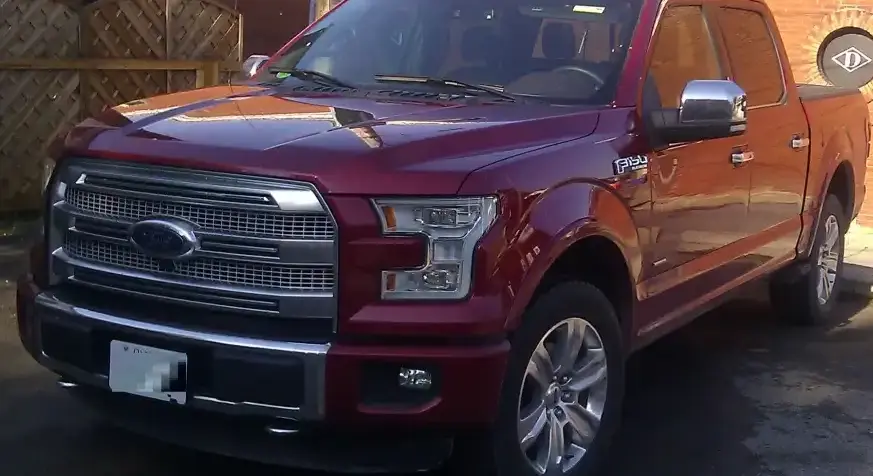
The Ford F-150 SuperCrew 5.0L V8 Automatic, produced from 2015 to 2017, represents the thirteenth generation of the iconic Ford F-Series pickup truck. This configuration occupied a significant position in the F-150 lineup, offering a balance between capability, comfort, and performance for buyers seeking a versatile full-size truck. It was part of the broader shift towards aluminum-bodied F-150s, aiming for weight reduction and improved fuel efficiency without sacrificing the ruggedness Ford trucks are known for. The SuperCrew designation indicates a four-door cab configuration, prioritizing rear passenger space, making it a popular choice for families and work crews.
Technical Specifications
| Brand | Ford |
| Model | F-Series F-100/F-150 |
| Generation | F-Series F-150 XIII SuperCrew |
| Type (Engine) | 5.0 V8 (385 Hp) Automatic |
| Start of production | 2015 |
| End of production | 2017 |
| Powertrain Architecture | Internal Combustion engine |
| Body type | Pick-up |
| Seats | 5-6 |
| Doors | 4 |
| Fuel consumption (urban) | 15.7 l/100 km (15 US mpg, 18 UK mpg, 6.4 km/l) |
| Fuel consumption (extra urban) | 10.7 l/100 km (22 US mpg, 26.4 UK mpg, 9.3 km/l) |
| Fuel consumption (combined) | 13.1 l/100 km (18 US mpg, 21.6 UK mpg, 7.6 km/l) |
| Fuel Type | Petrol (Gasoline) |
| Weight-to-power ratio | 5.4 kg/Hp, 184.9 Hp/tonne |
| Weight-to-torque ratio | 4 kg/Nm, 251.7 Nm/tonne |
| Power | 385 Hp @ 5750 rpm |
| Power per litre | 77.8 Hp/l |
| Torque | 524 Nm @ 3850 rpm (386.48 lb.-ft. @ 3850 rpm) |
| Engine layout | Front, Longitudinal |
| Engine displacement | 4949 cm3 (302.01 cu. in.) |
| Number of cylinders | 8 |
| Engine configuration | V-engine |
| Cylinder Bore | 92.2 mm (3.63 in.) |
| Piston Stroke | 92.7 mm (3.65 in.) |
| Compression ratio | 10.5:1 |
| Number of valves per cylinder | 2 |
| Fuel injection system | Multi-port manifold injection |
| Engine aspiration | Naturally aspirated engine |
| Engine oil capacity | 7.3 l (7.71 US qt | 6.42 UK qt) |
| Coolant capacity | 15 l (15.85 US qt | 13.2 UK qt) |
| Kerb Weight | 2082-2097 kg (4590.02 – 4623.09 lbs.) |
| Trunk (boot) space – minimum | 1495 l (52.8 cu. ft.) |
| Trunk (boot) space – maximum | 2200 l (77.69 cu. ft.) |
| Fuel tank capacity | 87 l (22.98 US gal | 19.14 UK gal) |
| Length | 5890-6190 mm (231.89 – 243.7 in.) |
| Width | 2029 mm (79.88 in.) |
| Width with mirrors folded | 2121 mm (83.5 in.) |
| Width including mirrors | 2459 mm (96.81 in.) |
| Height | 1920-1923 mm (75.59 – 75.71 in.) |
| Wheelbase | 3683-3983 mm (145 – 156.81 in.) |
| Front track | 1717 mm (67.6 in.) |
| Rear (Back) track | 1717 mm (67.6 in.) |
| Front overhang | 960 mm (37.8 in.) |
| Rear overhang | 1247 mm (49.09 in.) |
| Ride height (ground clearance) | 213-216 mm (8.39 – 8.5 in.) |
| Approach angle | 23.8-24.1° |
| Departure angle | 23.8-24.5° |
| Ramp-over (brakeover) angle | 17.2-18.3° |
| Drivetrain Architecture | The Internal combustion engine (ICE) drives the rear wheels of the vehicle. |
| Drive wheel | Rear wheel drive |
| Number of gears and type of gearbox | 6 gears, automatic transmission |
| Front suspension | Double wishbone |
| Rear suspension | Leaf spring |
| Front brakes | Ventilated discs |
| Rear brakes | Ventilated discs |
| Assisting systems | ABS (Anti-lock braking system) |
| Steering type | Steering rack and pinion |
| Power steering | Electric Steering |
| Tires size | 245/70 R17 |
| Wheel rims size | 17 |
Powertrain & Engine Architecture
At the heart of the F-150 SuperCrew was the 5.0-liter “Coyote” V8 engine. This engine, part of Ford’s Modular engine family, featured a dual overhead camshaft (DOHC) design with four valves per cylinder. The Coyote engine utilized multi-port fuel injection, delivering precise fuel delivery for optimal combustion. The 5.0L engine produced 385 horsepower at 5750 rpm and 387 lb-ft of torque at 3850 rpm. Paired with this engine was a six-speed automatic transmission (6R80E), chosen for its smooth shifting and ability to handle the engine’s output. The transmission was calibrated to provide a balance between fuel efficiency and responsiveness, with gear ratios optimized for both towing and everyday driving.
Driving Characteristics
The 5.0L V8 and 6-speed automatic combination delivered a noticeably different driving experience compared to the turbocharged EcoBoost engines or the 3.5L naturally aspirated V6 offered in the F-150 lineup. While not as fuel-efficient as the EcoBoost, the V8 provided a more traditional, linear power delivery. Acceleration was brisk, and the engine offered ample torque for hauling and towing. The automatic transmission shifted smoothly, although some reviewers noted it could occasionally hunt for gears during highway cruising. The weight distribution, typical of a body-on-frame truck, contributed to a firm ride, but the SuperCrew’s longer wheelbase and improved suspension tuning helped to mitigate some of the harshness.
Equipment & Trim Levels
The 5.0L V8 engine was typically offered on mid-range to higher trim levels of the F-150 SuperCrew, such as the XLT, Lariat, and King Ranch. Standard features on these trims included air conditioning, power windows and locks, a rearview camera, and a basic infotainment system. Higher trims added features like leather upholstery, heated and ventilated front seats, a premium sound system, and advanced safety technologies. Optional extras included a moonroof, navigation system, and various towing packages. The interior design emphasized functionality and durability, with comfortable seating and a user-friendly layout.
Chassis & Braking
The F-150’s chassis utilized a fully boxed frame constructed from high-strength steel, contributing to its robust build quality. The front suspension featured an independent double-wishbone design, while the rear suspension employed a leaf spring setup. This combination provided a good balance between ride comfort and load-carrying capacity. Braking duties were handled by ventilated disc brakes on all four wheels, coupled with an Anti-lock Braking System (ABS) for enhanced safety. The steering system was a rack-and-pinion setup with electric power steering, providing responsive and precise handling.
Market Reception & Comparison
The F-150 SuperCrew 5.0L V8 Automatic was generally well-received by automotive critics and consumers. It was praised for its powerful engine, comfortable ride, and spacious interior. Compared to the EcoBoost engines, the V8 offered a more familiar engine sound and a simpler mechanical layout, which appealed to some buyers. However, the V8’s fuel economy was lower than that of the EcoBoost, and its initial purchase price was typically higher. Against competitors like the Chevrolet Silverado and Ram 1500, the F-150 offered a compelling combination of features, performance, and value.
Legacy
The 5.0L Coyote V8 engine has proven to be a reliable and durable powertrain. While some early models experienced minor issues with oil consumption, these were generally addressed through software updates and revised engine components. Today, the F-150 SuperCrew 5.0L V8 Automatic remains a popular choice in the used car market, offering a capable and comfortable full-size truck at a reasonable price. Its robust construction and readily available parts ensure that it will continue to provide years of reliable service.