
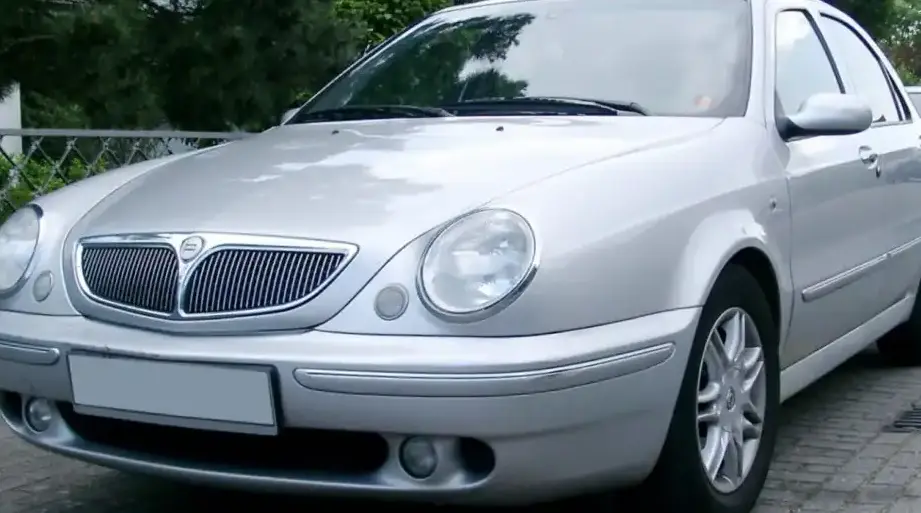
The Lancia Lybra 2.0 20V Comfortronic, produced between 1999 and 2000, represents a sophisticated offering within the Lybra (839) range. Positioned as a mid-to-upper trim level, it combined a potent 2.0-liter, 20-valve engine with Lancia’s Comfortronic automatic transmission. The Lybra itself was Lancia’s replacement for the Delta and Prisma, aiming to provide a more comfortable and refined experience in the mid-size segment, primarily targeting the European market. It shared its platform (Type Four/1HX0/A3) with other vehicles from the Fiat Group, including the Alfa Romeo 156 and the Fiat Marea, but distinguished itself through its unique styling and focus on interior comfort.
Technical Specifications
| Brand | Lancia |
| Model | Lybra |
| Generation | Lybra (839) |
| Type (Engine) | 2.0 20V (154 Hp) Comfortronic |
| Start of production | 1999 |
| End of production | 2000 |
| Powertrain Architecture | Internal Combustion engine |
| Body type | Sedan |
| Seats | 5 |
| Doors | 4 |
| Fuel consumption (urban) | 14.1 l/100 km (16.7 US mpg, 20 UK mpg, 7.1 km/l) |
| Fuel consumption (extra urban) | 8.3 l/100 km (28.3 US mpg, 34 UK mpg, 12 km/l) |
| Fuel consumption (combined) | 10.4 l/100 km (22.6 US mpg, 27.2 UK mpg, 9.6 km/l) |
| CO2 emissions | 248 g/km |
| Fuel Type | Petrol (Gasoline) |
| Acceleration 0 – 100 km/h | 11.7 sec |
| Acceleration 0 – 62 mph | 11.7 sec |
| Acceleration 0 – 60 mph | 11.1 sec |
| Maximum speed | 205 km/h (127.38 mph) |
| Emission standard | Euro 2 |
| Weight-to-power ratio | 8.5 kg/Hp, 118 Hp/tonne |
| Weight-to-torque ratio | 7 kg/Nm, 142.5 Nm/tonne |
| Power | 154 Hp @ 6500 rpm |
| Power per litre | 77.1 Hp/l |
| Torque | 186 Nm @ 3750 rpm (137.19 lb.-ft. @ 3750 rpm) |
| Engine layout | Front, Transverse |
| Engine Model/Code | 182B7000 |
| Engine displacement | 1998 cm3 (121.93 cu. in.) |
| Number of cylinders | 5 |
| Engine configuration | Inline |
| Cylinder Bore | 82 mm (3.23 in.) |
| Piston Stroke | 75.65 mm (2.98 in.) |
| Compression ratio | 10.7:1 |
| Number of valves per cylinder | 4 |
| Fuel injection system | Multi-port manifold injection |
| Engine aspiration | Naturally aspirated |
| Valvetrain | DOHC |
| Engine oil capacity | 5 l (5.28 US qt | 4.4 UK qt) |
| Coolant capacity | 8.6 l (9.09 US qt | 7.57 UK qt) |
| Kerb Weight | 1305 kg (2877.03 lbs.) |
| Max. weight | 1900 kg (4188.78 lbs.) |
| Max load | 595 kg (1311.75 lbs.) |
| Trunk (boot) space (minimum) | 420 l (14.83 cu. ft.) |
| Fuel tank capacity | 60 l (15.85 US gal | 13.2 UK gal) |
| Permitted trailer load (with brakes) | 1400 kg (3086.47 lbs.) |
| Permitted trailer load (without brakes) | 400 kg (881.85 lbs.) |
| Permitted towbar download | 75 kg (165.35 lbs.) |
| Length | 4466 mm (175.83 in.) |
| Width | 1743 mm (68.62 in.) |
| Height | 1462 mm (57.56 in.) |
| Wheelbase | 2593 mm (102.09 in.) |
| Front track | 1517 mm (59.72 in.) |
| Rear track | 1476 mm (58.11 in.) |
| Front overhang | 926 mm (36.46 in.) |
| Rear overhang | 947 mm (37.28 in.) |
| Minimum turning circle | 10.9 m (35.76 ft.) |
| Drivetrain | Front wheel drive |
| Number of gears | 4 |
| Gearbox type | Automatic transmission Comfortronic |
| Front suspension | Independent type McPherson, Transverse stabilizer |
| Rear suspension | Wishbone, Transverse stabilizer, Trailing arm |
| Front brakes | Ventilated discs, 284×22 mm |
| Rear brakes | Disc, 251×10 mm |
| Assisting systems | ABS (Anti-lock braking system) |
| Steering type | Steering rack and pinion |
| Power steering | Hydraulic |
| Tires size | 195/60 R15 |
| Wheel rims size | 6J x 15 |
Powertrain & Engine Architecture
The heart of the Lybra 2.0 20V Comfortronic is the 182B7000 engine, a 1998cc inline-five cylinder gasoline engine. This engine was a key feature of several Fiat Group vehicles, known for its relatively smooth operation and decent power output. The 20-valve configuration (four valves per cylinder) and multi-port fuel injection contributed to its performance. The engine utilized a double overhead camshaft (DOHC) valvetrain, optimizing airflow for improved efficiency and power. The Comfortronic transmission was a four-speed automatic, designed to provide smooth gear changes and ease of driving. It wasn’t known for being particularly sporty, but it prioritized comfort and convenience. The engine’s transverse mounting and front-wheel-drive configuration were typical for European sedans of this era.
Driving Characteristics
The 154 horsepower and 186 Nm (137 lb-ft) of torque delivered by the 2.0-liter engine, coupled with the four-speed automatic, resulted in a comfortable but not particularly exhilarating driving experience. Acceleration to 60 mph took around 11.1 seconds, and the top speed was approximately 127 mph. Compared to the manual transmission versions of the same engine, the automatic suffered a slight performance penalty. The Comfortronic transmission’s gear ratios were geared towards fuel efficiency and smooth cruising rather than aggressive acceleration. Against higher-performance Lybra variants, such as those equipped with the V6 engine, the 2.0L automatic was noticeably slower. However, it offered a more relaxed and refined driving experience, making it suitable for daily commuting and long journeys.
Equipment & Trim Levels
The Comfortronic trim level generally included features such as air conditioning, power windows, central locking, and an upgraded audio system. Interior upholstery typically consisted of cloth or a combination of cloth and velour. Optional extras could include leather upholstery, a sunroof, and alloy wheels. The Lybra aimed for a premium feel, with a well-designed dashboard and comfortable seats. Safety features included ABS brakes and, depending on the year and market, airbags.
Chassis & Braking
The Lybra 2.0 20V Comfortronic featured independent suspension at the front (McPherson struts) and a semi-independent wishbone and trailing arm setup at the rear. This suspension configuration provided a comfortable ride, absorbing bumps and imperfections in the road effectively. The braking system consisted of ventilated discs at the front and solid discs at the rear. ABS was standard, enhancing braking performance and stability. Stabilizer bars were fitted to both the front and rear axles to reduce body roll during cornering.
Market Reception & Comparison
The Lancia Lybra 2.0 20V Comfortronic was generally well-received by automotive critics for its comfortable ride, refined interior, and decent performance. However, some criticized the Comfortronic transmission for being somewhat sluggish and lacking the responsiveness of a manual gearbox. Fuel economy was average for its class, and reliability was generally considered good, although the Lybra wasn’t without its share of common issues, such as electrical gremlins. Compared to rivals like the Ford Mondeo and Volkswagen Passat, the Lybra offered a more distinctive style and a greater emphasis on comfort.
Legacy
The Lancia Lybra, while not a massive sales success, remains a fondly remembered car among enthusiasts. The 2.0-liter engine, when properly maintained, proved to be relatively durable. The Comfortronic transmission, however, can be prone to issues as it ages, and finding replacement parts can be challenging. Today, the Lybra 2.0 20V Comfortronic is a relatively affordable classic car, appealing to those seeking a comfortable and stylish Italian sedan. Its unique character and relative rarity make it a desirable option for collectors and enthusiasts alike.
