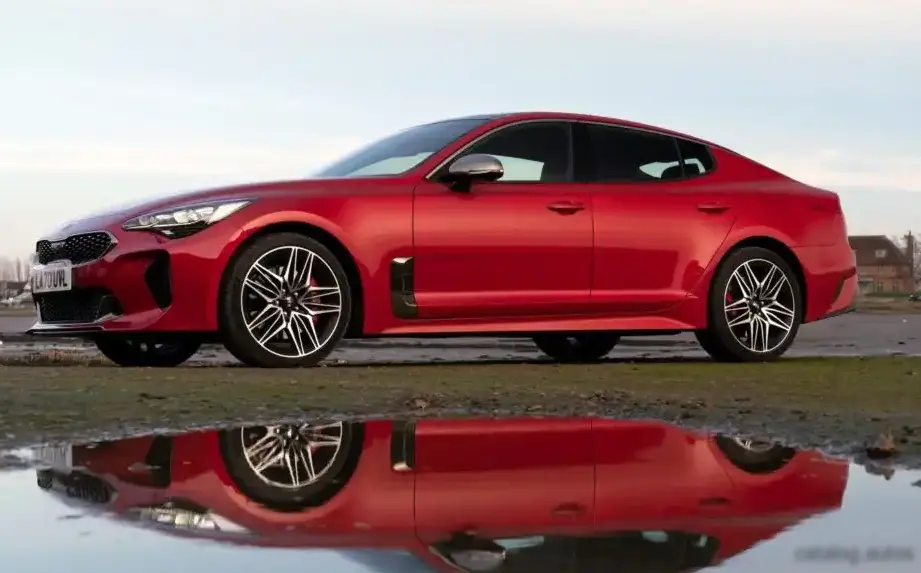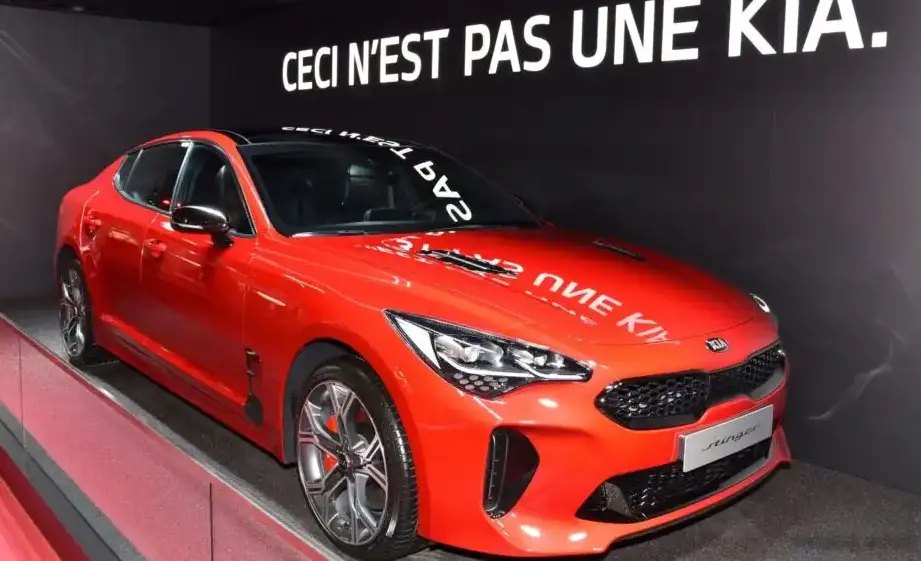
The Kia Stinger 2.0 GDI Automatic, produced from 2019 through August 2020, represents a compelling entry point into the Stinger liftback lineup. Positioned as the more accessible variant compared to the higher-performance 3.3L twin-turbocharged model, the 2.0 GDI offered a balance of sporty styling, respectable performance, and improved fuel efficiency. It played a crucial role in establishing the Stinger as a legitimate competitor in the gran turismo segment, particularly in markets where a more economical option was desired. The Stinger, as a whole, was Kia’s ambitious attempt to redefine its brand image, moving beyond value-focused offerings towards a more premium and driver-centric experience. This 2.0L variant was primarily sold in North America, Europe, and select Asian markets.
Technical Specifications
| Brand | Kia |
| Model | Stinger |
| Generation | Stinger |
| Type (Engine) | 2.0 GDI (245 Hp) Automatic |
| Start of production | 2019 |
| End of production | August, 2020 |
| Powertrain Architecture | Internal Combustion engine |
| Body type | Liftback |
| Seats | 5 |
| Doors | 5 |
| Fuel consumption (urban) | 10.5-10.7 l/100 km (22.4 – 22 US mpg) |
| Fuel consumption (extra urban) | 6.4-6.6 l/100 km (36.8 – 35.6 US mpg) |
| Fuel consumption (combined) | 7.9-8.7 l/100 km (29.8 – 27 US mpg) |
| CO2 emissions | 181-186 g/km |
| Fuel Type | Petrol (Gasoline) |
| Acceleration 0 – 100 km/h | 6.3 sec |
| Acceleration 0 – 62 mph | 6.3 sec |
| Acceleration 0 – 60 mph | 6 sec |
| Maximum speed | 233 km/h (144.78 mph) |
| Emission standard | Euro 6d-Temp |
| Weight-to-power ratio | 6.8 kg/Hp, 148 Hp/tonne |
| Weight-to-torque ratio | 4.7 kg/Nm, 213.3 Nm/tonne |
| Power | 245 Hp @ 6200 rpm |
| Torque | 353 Nm @ 1400-4000 rpm (260.36 lb.-ft. @ 1400-4000 rpm) |
| Engine layout | Front, Longitudinal |
| Engine Model/Code | G4KL |
| Engine displacement | 1998 cm3 (121.93 cu. in.) |
| Number of cylinders | 4 |
| Engine configuration | Inline |
| Cylinder Bore | 86 mm (3.39 in.) |
| Piston Stroke | 86 mm (3.39 in.) |
| Compression ratio | 10:1 |
| Number of valves per cylinder | 4 |
| Fuel injection system | Direct injection |
| Engine aspiration | Turbocharger, Intercooler |
| Valvetrain | DCVVT |
| Engine oil capacity | 5.7 l (6.02 US qt | 5.02 UK qt) |
| Coolant | 8.8 l (9.3 US qt | 7.74 UK qt) |
| Kerb Weight | 1655-1770 kg (3648.65 – 3902.18 lbs.) |
| Max. weight | 2185 kg (4817.1 lbs.) |
| Max load | 415-530 kg (914.92 – 1168.45 lbs.) |
| Trunk (boot) space – minimum | 406 l (14.34 cu. ft.) |
| Trunk (boot) space – maximum | 1114 l (39.34 cu. ft.) |
| Fuel tank capacity | 60 l (15.85 US gal | 13.2 UK gal) |
| Max. roof load | 90 kg (198.42 lbs.) |
| Permitted trailer load with brakes (12%) | 1100 kg (2425.08 lbs.) |
| Permitted trailer load without brakes | 750 kg (1653.47 lbs.) |
| Permitted towbar download | 75 kg (165.35 lbs.) |
| Length | 4830 mm (190.16 in.) |
| Width | 1870 mm (73.62 in.) |
| Height | 1400 mm (55.12 in.) |
| Wheelbase | 2905 mm (114.37 in.) |
| Front track | 1596 mm (62.83 in.) |
| Rear (Back) track | 1619 mm (63.74 in.) |
| Front overhang | 830 mm (32.68 in.) |
| Rear overhang | 1095 mm (43.11 in.) |
| Ride height (ground clearance) | 130 mm (5.12 in.) |
| Minimum turning circle (turning diameter) | 11.2 m (36.75 ft.) |
| Drivetrain Architecture | Rear wheel drive |
| Number of gears and type of gearbox | 8 gears, automatic transmission |
| Front suspension | Independent, type McPherson with coil spring and anti-roll bar |
| Rear suspension | Independent multi-link spring suspension with stabilizer |
| Front brakes | Ventilated discs, 345 mm |
| Rear brakes | Ventilated discs, 330 mm |
| Assisting systems | ABS (Anti-lock braking system) |
| Steering type | Steering rack and pinion |
| Power steering | Electric Steering |
| Tires size | 225/45 R18 95Y; 225/40 R19 93Y; 255/35 R19 96Y |
| Wheel rims size | 8.0J x 18; 8J x 19; 8.5J x 19 |
INTRODUCTION
The Kia Stinger 2.0 GDI Automatic, launched in 2019, served as the entry-level powertrain option for the first-generation Stinger (AD). Built on the 1HX0/A3 platform, shared with the Genesis G70, the Stinger aimed to disrupt the mid-size sport sedan market. The 2.0 GDI variant was designed to appeal to buyers seeking a stylish and engaging driving experience without the higher price tag and increased running costs associated with the 3.3L twin-turbo model. It offered a compelling alternative to established European competitors like the Audi A5 Sportback and BMW 4 Series Gran Coupe.
Powertrain & Engine Architecture
At the heart of the Stinger 2.0 GDI lies the Hyundai-Kia “Theta II” 2.0-liter turbocharged inline-four cylinder engine, designated the G4KL. This engine utilizes direct injection (GDI) and a twin-scroll turbocharger to deliver 245 horsepower at 6,200 rpm and 260 lb-ft of torque between 1,400 and 4,000 rpm. The engine features a cast aluminum cylinder block and head, and employs DCVVT (Dual Continuous Variable Valve Timing) on both intake and exhaust camshafts for optimized efficiency and performance. The engine is longitudinally mounted, contributing to the car’s rear-wheel-drive bias. The standard transmission is an eight-speed automatic, sourced from ZF. This transmission is known for its smooth shifts and quick response, and features a wide gear ratio spread to maximize both acceleration and fuel economy. The 8-speed automatic was chosen for its ability to handle the engine’s torque output and provide a refined driving experience.
Driving Characteristics
The Stinger 2.0 GDI Automatic delivers a surprisingly engaging driving experience. While not as brutally quick as the 3.3L variant, the 2.0L engine provides ample power for everyday driving and spirited backroad excursions. The eight-speed automatic transmission is well-tuned, offering smooth and timely shifts. The rear-wheel-drive configuration contributes to a balanced chassis and predictable handling. The gear ratios are optimized for both acceleration and highway cruising. Compared to the 3.3L, the 2.0L feels less urgent off the line, but the difference becomes less noticeable at higher speeds. The 2.0L’s lighter weight also contributes to a slightly more nimble feel in corners. However, the 2.0L does require more downshifting to maintain momentum when overtaking or climbing hills.
Equipment & Trim Levels
The Stinger 2.0 GDI Automatic typically came standard with features such as leather upholstery, a 7-inch touchscreen infotainment system with Apple CarPlay and Android Auto compatibility, a rearview camera, automatic emergency braking, lane keeping assist, and a suite of other driver-assistance technologies. Higher trim levels added features like a larger touchscreen display (8-inch or 10.25-inch), a premium sound system (Harman Kardon), a power-adjustable driver’s seat, and a panoramic sunroof. Optional extras included Nappa leather upholstery, adaptive cruise control, and a head-up display. Interior color schemes typically included black, gray, and red options.
Chassis & Braking
The Stinger 2.0 GDI utilizes a McPherson strut front suspension and a multi-link rear suspension. The suspension tuning is geared towards providing a comfortable ride while maintaining good handling characteristics. Stabilizer bars are fitted to both the front and rear axles to reduce body roll. Braking duties are handled by ventilated disc brakes on all four wheels, with the front discs measuring 345mm and the rear discs measuring 330mm. The braking system is assisted by ABS (Anti-lock Braking System) and Electronic Stability Control. The suspension components were tuned to accommodate the slightly lower weight of the 2.0L engine compared to the 3.3L, resulting in a slightly softer ride.
Market Reception & Comparison
Critics generally praised the Stinger 2.0 GDI for its stylish design, comfortable interior, and engaging driving dynamics. However, some reviewers noted that the 2.0L engine, while adequate, lacked the outright performance of the 3.3L twin-turbo. Fuel economy was generally considered to be good for a vehicle of its size and performance. Compared to the 3.3L Stinger, the 2.0L offered a more affordable entry point, with lower insurance costs and slightly better fuel efficiency. However, the 3.3L provided a significantly more exhilarating driving experience. Against its European rivals, the Stinger 2.0 GDI offered a compelling value proposition, with a generous level of standard equipment and a longer warranty.
Legacy
The Kia Stinger 2.0 GDI Automatic, while a relatively short-lived model, has established a loyal following among enthusiasts. The Theta II 2.0L engine has proven to be generally reliable, although regular maintenance is crucial. Common issues include potential carbon buildup on the intake valves (addressed by periodic cleaning) and occasional turbocharger issues. On the used car market, the Stinger 2.0 GDI represents a good value for buyers seeking a stylish and sporty liftback with a reasonable price tag. Its combination of performance, features, and affordability has cemented its place as a desirable alternative to more established European competitors.