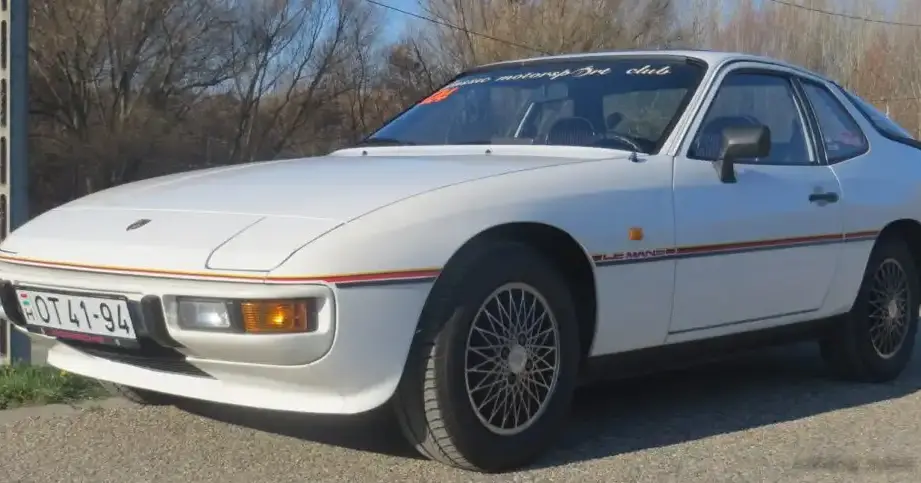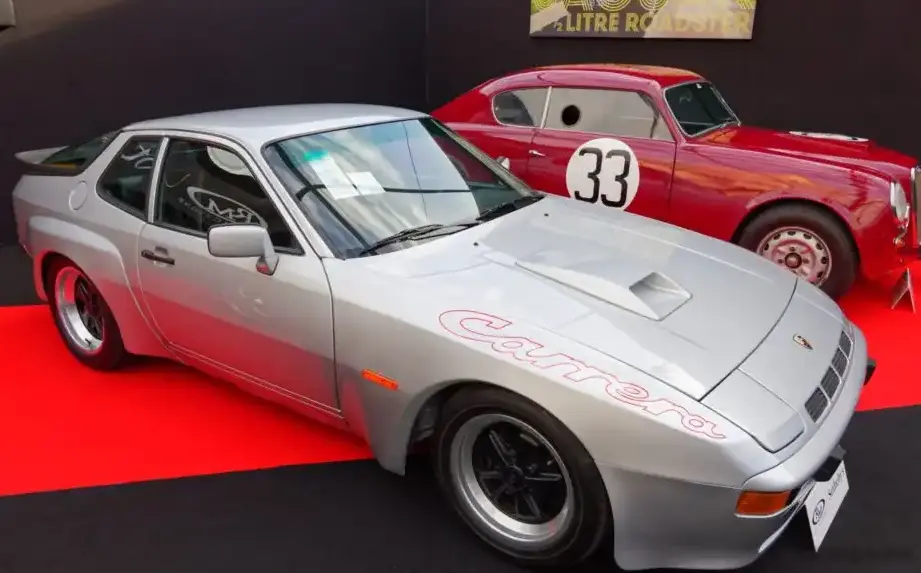
The Porsche 924 2.0 Carrera GT, produced from 1980 to 1981, represented a significant performance upgrade within the 924 model line. Positioned as the top-tier naturally aspirated variant before the introduction of the 924 Turbo, the Carrera GT aimed to deliver a more engaging driving experience than the base 924 and 924S models. It was built on the 924 platform (internal code 924), a front-engine, rear-wheel-drive coupe intended to be Porsche’s entry-level model, broadening the brand’s appeal. The Carrera GT distinguished itself with a higher-output engine, upgraded suspension components, and a more focused driving experience, appealing to enthusiasts seeking a purer Porsche experience.
Technical Specifications
| Brand | Porsche |
| Model | 924 |
| Generation | 924 |
| Type | 2.0 Carrera GT (209 Hp) |
| Start of production | 1980 |
| End of production | 1981 |
| Powertrain Architecture | Internal Combustion engine |
| Body type | Coupe |
| Seats | 4 |
| Doors | 2 |
| Fuel Type | Petrol (Gasoline) |
| Maximum speed | 240 km/h (149.13 mph) |
| Weight-to-power ratio | 5.6 kg/Hp, 177.1 Hp/tonne |
| Power | 209 Hp @ 6000 rpm |
| Power per litre | 105.3 Hp/l |
| Engine layout | Rear, Longitudinal |
| Engine Model/Code | M31.50 |
| Engine displacement | 1984 cm3 (121.07 cu. in.) |
| Number of cylinders | 4 |
| Engine configuration | Boxer |
| Cylinder Bore | 86.5 mm (3.41 in.) |
| Piston Stroke | 84.4 mm (3.32 in.) |
| Fuel injection system | Multi-port manifold injection |
| Engine aspiration | Naturally Aspirated |
| Engine oil capacity | 5 l (5.28 US qt | 4.4 UK qt) |
| Coolant | 7 l (7.4 US qt | 6.16 UK qt) |
| Kerb Weight | 1180 kg (2601.45 lbs.) |
| Max. weight | 1460 kg (3218.75 lbs.) |
| Max load | 280 kg (617.29 lbs.) |
| Max. roof load | 35 kg (77.16 lbs.) |
| Length | 4280 mm (168.5 in.) |
| Width | 1735 mm (68.31 in.) |
| Height | 1275 mm (50.2 in.) |
| Wheelbase | 2400 mm (94.49 in.) |
| Front track | 1477 mm (58.15 in.) |
| Rear track | 1451 mm (57.13 in.) |
| Front overhang | 870 mm (34.25 in.) |
| Rear overhang | 1010 mm (39.76 in.) |
| Drivetrain Architecture | Rear wheel drive |
| Number of gears and type of gearbox | 5 gears, manual transmission |
| Front suspension | Independent, type McPherson with coil spring and anti-roll bar, Wishbone |
| Rear suspension | Trailing arm, Torsion |
| Tires size | 215/60 R15 |
| Wheel rims size | 7J x 15 |
Powertrain & Engine Architecture
The heart of the 924 2.0 Carrera GT is the M31.50 engine, a 1984cc, naturally aspirated, water-cooled flat-four cylinder boxer engine. This engine differed significantly from the standard 924’s powerplant, featuring a higher compression ratio (9.7:1 versus 8.5:1) and larger intake ports. The Carrera GT utilized Bosch K-Jetronic mechanical fuel injection, a system known for its precision and reliability. The valvetrain employed two valves per cylinder, operated by a single overhead camshaft. Unlike the later 944 models, the 924 Carrera GT did not benefit from dual overhead cams. The engine produced 209 horsepower at 6000 rpm and 184 lb-ft of torque. The engine’s rear-mounted, longitudinal configuration contributed to the car’s balanced handling characteristics. The Carrera GT was exclusively offered with a five-speed manual transmission, providing drivers with full control over the engine’s power delivery.
Driving Characteristics
The 924 2.0 Carrera GT offered a noticeably more spirited driving experience compared to the standard 924. The increased horsepower and torque, combined with the responsive five-speed manual gearbox, allowed for quicker acceleration and more confident overtaking. While not a high-revving engine like some of Porsche’s six-cylinder offerings, the Carrera GT’s engine delivered a broad torque curve, making it tractable and enjoyable to drive in a variety of conditions. The rear-wheel-drive layout and well-tuned suspension contributed to neutral handling, although understeer could be induced at the limit. Compared to the later 924 Turbo, the Carrera GT lacked the explosive power of the turbocharged engine, but it offered a more predictable and engaging driving experience for many enthusiasts. The gear ratios were well-matched to the engine’s characteristics, providing strong acceleration in each gear.
Equipment & Trim Levels
The Carrera GT was relatively well-equipped for its time, though it wasn’t overtly luxurious. Standard features included power-assisted steering, four-wheel disc brakes, and a comfortable interior with cloth upholstery. The dashboard featured a comprehensive array of gauges, including a tachometer, speedometer, oil temperature gauge, and oil pressure gauge. Optional extras included leather upholstery, air conditioning, and a sunroof. The interior trim was generally understated, reflecting Porsche’s focus on functionality and driving experience. The steering wheel was typically a three-spoke design, and the seats offered good support for spirited driving. The Carrera GT did not offer the extensive customization options available on higher-end Porsche models.
Chassis & Braking
The 924 Carrera GT utilized a monocoque chassis construction, providing a rigid and lightweight platform. The suspension featured independent McPherson struts at the front and a trailing arm torsion beam setup at the rear. The Carrera GT benefited from upgraded suspension components compared to the base 924, including stiffer springs and dampers, which improved handling and reduced body roll. Braking duties were handled by four-wheel disc brakes, providing ample stopping power. The braking system was not power-boosted, requiring a firm pedal effort. The car rode on 15-inch alloy wheels, typically fitted with 215/60R15 tires.
Market Reception & Comparison
The 924 2.0 Carrera GT was generally well-received by automotive critics, who praised its improved performance and engaging driving dynamics. It was seen as a significant step up from the standard 924, offering a more rewarding experience for enthusiasts. However, some critics noted that it still lacked the outright performance and prestige of Porsche’s six-cylinder models. Compared to the 924S, the Carrera GT offered a modest power increase but represented a more focused and sporty driving experience. Fuel economy was reasonable for a sports car of its era, averaging around 22-25 mpg. Reliability was generally good, although the K-Jetronic fuel injection system could require occasional maintenance.
Legacy
The Porsche 924 2.0 Carrera GT holds a unique place in Porsche history as a transitional model. It bridged the gap between the entry-level 924 and the more performance-oriented 944. Today, the Carrera GT is a sought-after classic Porsche, appreciated by collectors and enthusiasts for its engaging driving experience and relative rarity. The M31.50 engine is known for its durability, and well-maintained examples can provide years of reliable service. However, finding parts for the K-Jetronic fuel injection system can sometimes be challenging. The Carrera GT’s value has been steadily increasing in recent years, reflecting its growing popularity among Porsche enthusiasts. It represents a compelling alternative to the more expensive 911 models, offering a unique blend of performance, handling, and classic Porsche styling.