
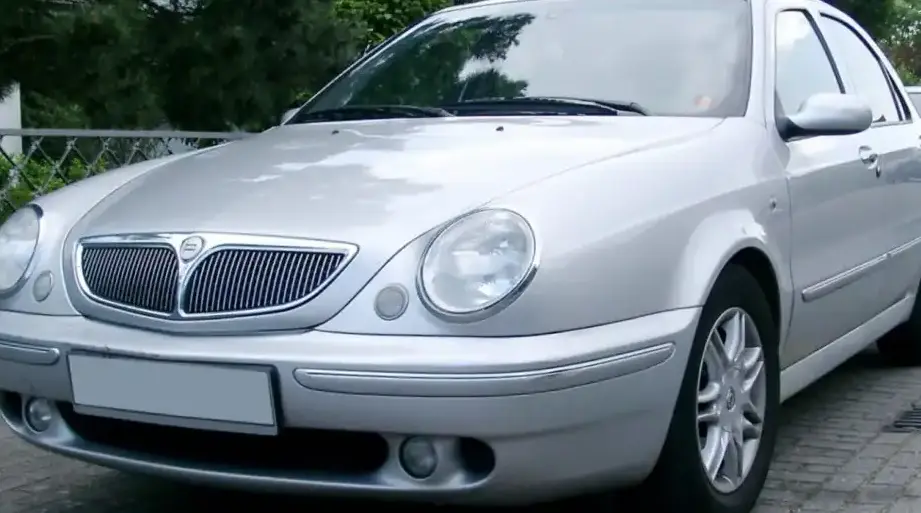
The Lancia Lybra 2.4 JTD, produced between October 1999 and September 2000, represented a sophisticated offering in the upper-midsize segment. Part of the 839 series Lybra generation (which spanned from 1999-2005), this variant was positioned as a premium diesel option, appealing to buyers seeking a blend of comfort, performance, and fuel efficiency. It occupied a space between the more basic gasoline engines and the flagship V6 models within the Lybra lineup. The Lybra itself was Lancia’s replacement for the Dedra, aiming to elevate the brand’s image with a more modern and stylish design.
Technical Specifications
| Brand | Lancia |
| Model | Lybra |
| Generation | Lybra (839) |
| Type (Engine) | 2.4 JTD (135 Hp) |
| Start of production | October, 1999 |
| End of production | September, 2000 |
| Powertrain Architecture | Internal Combustion engine |
| Body type | Sedan |
| Seats | 5 |
| Doors | 4 |
| Fuel consumption (urban) | 9.2 l/100 km (25.6 US mpg) |
| Fuel consumption (extra urban) | 5.5 l/100 km (42.8 US mpg) |
| Fuel consumption (combined) | 6.9 l/100 km (34.1 US mpg) |
| Fuel Type | Diesel |
| Acceleration 0 – 100 km/h | 9.9 sec |
| Acceleration 0 – 62 mph | 9.9 sec |
| Acceleration 0 – 60 mph | 9.4 sec |
| Maximum speed | 200 km/h (124.27 mph) |
| Weight-to-power ratio | 10.1 kg/Hp |
| Weight-to-torque ratio | 4.5 kg/Nm |
| Power | 135 Hp @ 4000 rpm |
| Torque | 304 Nm @ 2000 rpm (224.22 lb.-ft. @ 2000 rpm) |
| Engine layout | Front, Transverse |
| Engine Model/Code | 839A5.000 |
| Engine displacement | 2387 cm3 (145.66 cu. in.) |
| Number of cylinders | 5 |
| Engine configuration | Inline |
| Cylinder Bore | 82 mm (3.23 in.) |
| Piston Stroke | 90.4 mm (3.56 in.) |
| Compression ratio | 18.45:1 |
| Number of valves per cylinder | 2 |
| Fuel injection system | Diesel Commonrail |
| Engine aspiration | Turbocharger |
| Valvetrain | OHC |
| Engine oil capacity | 5.5 l (5.81 US qt | 4.84 UK qt) |
| Coolant capacity | 8.5 l (8.98 US qt | 7.48 UK qt) |
| Kerb Weight | 1370 kg (3020.33 lbs.) |
| Max. weight | 1890 kg (4166.74 lbs.) |
| Max load | 520 kg (1146.4 lbs.) |
| Trunk (boot) space – minimum | 420 l (14.83 cu. ft.) |
| Trunk (boot) space – maximum | 1300 l (45.91 cu. ft.) |
| Fuel tank capacity | 60 l (15.85 US gal | 13.2 UK gal) |
| Length | 4466 mm (175.83 in.) |
| Width | 1743 mm (68.62 in.) |
| Height | 1462 mm (57.56 in.) |
| Wheelbase | 2593 mm (102.09 in.) |
| Front track | 1497 mm (58.94 in.) |
| Rear track | 1459 mm (57.44 in.) |
| Drivetrain Architecture | Front wheel drive |
| Number of gears | 5 |
| Gearbox type | Manual transmission |
| Front suspension | Spring Strut |
| Rear suspension | Coil spring |
| Front brakes | Disc |
| Rear brakes | Disc |
| Assisting systems | ABS (Anti-lock braking system) |
| Steering type | Steering rack and pinion |
| Power steering | Hydraulic Steering |
| Tires size | 195/65R15 V |
Powertrain & Engine Architecture
The heart of the Lybra 2.4 JTD is the 839A5.000 engine, a 2.4-liter inline-five cylinder diesel. This engine was a product of Fiat’s advancements in diesel technology, utilizing a common rail direct injection system. This system allowed for precise control of fuel delivery, resulting in improved combustion efficiency, reduced noise, and lower emissions compared to older diesel designs. The engine produced 135 horsepower at 4000 rpm and a substantial 304 Nm (224 lb-ft) of torque at just 2000 rpm. The five-cylinder configuration, while less common than four or six-cylinder layouts, contributed to a smoother power delivery and a distinctive engine note. The engine featured an overhead camshaft (OHC) valvetrain with two valves per cylinder. The 5-speed manual transmission was the standard offering for this variant, providing a balance between fuel economy and driver engagement.
Driving Characteristics
The 2.4 JTD engine provided a noticeable step up in performance compared to the lower-displacement gasoline engines available in the Lybra range. The abundant torque made it a capable cruiser, offering effortless acceleration for highway merging and overtaking. While not a sports car, the Lybra 2.4 JTD delivered a relaxed and refined driving experience. The manual transmission allowed for greater driver control, but the gear ratios were tuned for fuel efficiency rather than outright performance. Compared to the higher-output V6 models, the 2.4 JTD offered a more economical alternative without sacrificing a significant amount of usability. The front-wheel-drive configuration provided predictable handling, although it wasn’t as engaging as a rear-wheel-drive setup.
Equipment & Trim Levels
The Lybra 2.4 JTD typically came well-equipped, reflecting its position as a premium offering. Standard features included power windows, central locking, air conditioning, and an anti-lock braking system (ABS). Interior upholstery was typically cloth, although leather options were available. The dashboard featured a straightforward layout with easy-to-read gauges. Optional extras included a sunroof, alloy wheels, and a more advanced audio system. The Lybra aimed to provide a comfortable and well-appointed interior, with a focus on practicality and usability.
Chassis & Braking
The Lybra 2.4 JTD utilized a conventional suspension setup, with MacPherson struts at the front and a coil spring arrangement at the rear. This provided a comfortable ride quality, absorbing bumps and imperfections in the road surface effectively. The braking system consisted of disc brakes on all four wheels, providing adequate stopping power for the vehicle’s weight and performance. The hydraulic power steering offered light and precise steering feel, making it easy to maneuver in urban environments. The chassis was designed to prioritize comfort and stability over sporty handling.
Market Reception & Comparison
The Lancia Lybra 2.4 JTD was generally well-received by automotive critics, who praised its comfortable ride, refined engine, and spacious interior. The diesel engine was noted for its fuel efficiency and strong torque output. However, some critics pointed to the Lybra’s somewhat bland styling and lack of a truly sporty driving experience. Compared to rivals like the Ford Mondeo and Volkswagen Passat, the Lybra offered a more distinctive character and a focus on Italian design flair. The 2.4 JTD variant offered a compelling alternative to the gasoline engines, providing a better balance of performance and fuel economy.
Legacy
The Lancia Lybra 2.4 JTD, while not a high-volume seller, has developed a following among enthusiasts who appreciate its unique character and robust diesel engine. The 839A5.000 engine is known for its durability and reliability, provided it is properly maintained. In the used car market, these Lybras are often sought after by those looking for a comfortable and economical long-distance cruiser. Parts availability can be a challenge, as the Lybra is no longer in production, but a dedicated community of owners and specialists helps to keep these cars on the road. The Lybra 2.4 JTD represents a final flourish of Lancia’s engineering prowess and design sensibility before the brand’s decline.
