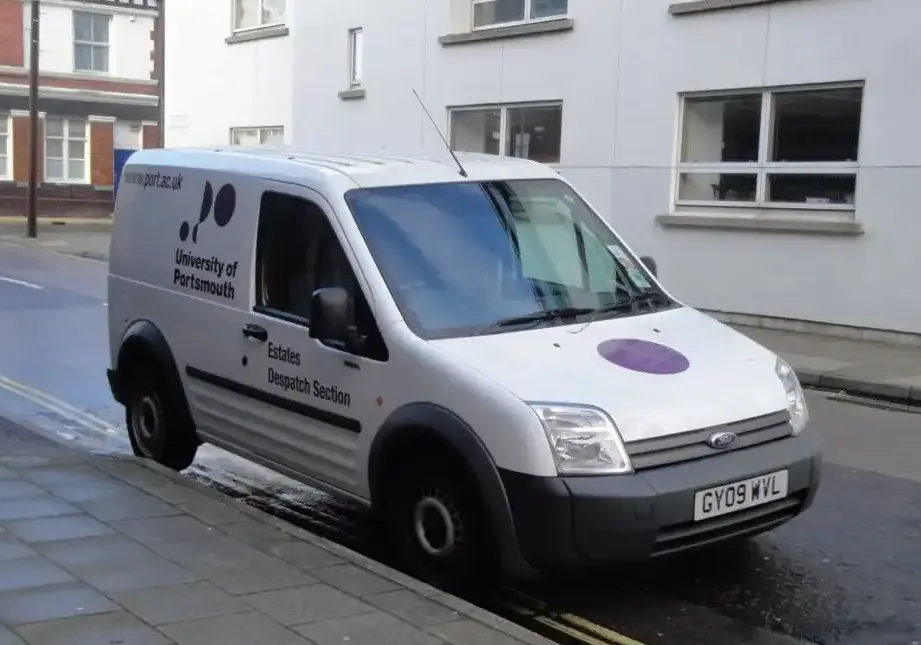
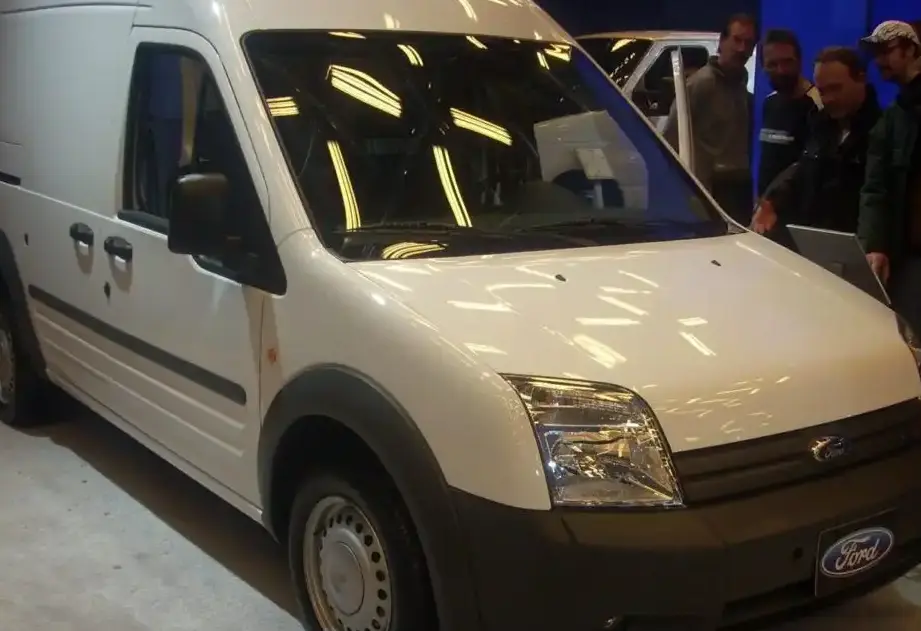
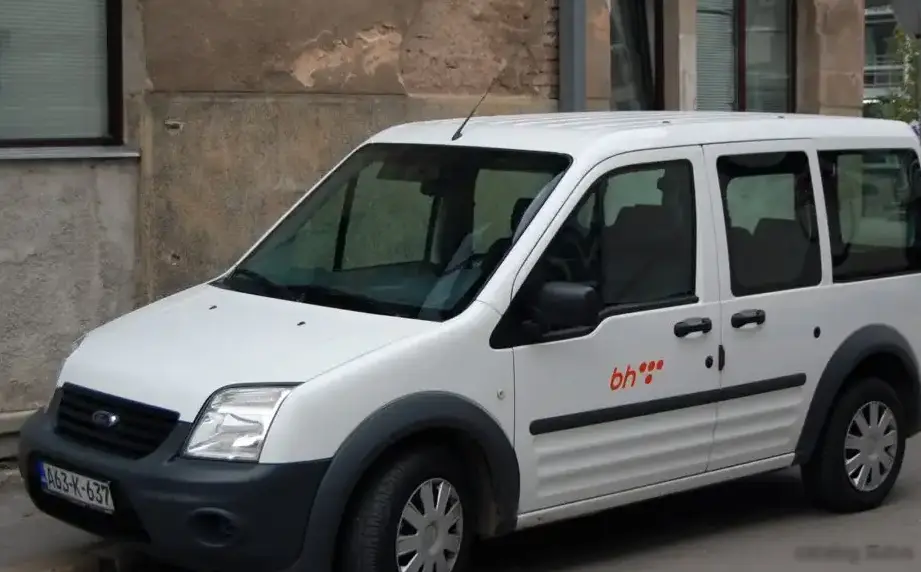
The Ford Transit Connect II Double Cab-in-Van L1 1.6 TDCi (95 hp) Start-Stop, produced between 2013 and 2016, represents a key variant within the second generation of Ford’s popular compact commercial vehicle. Positioned as an entry-level offering in many markets, particularly in Europe where the Transit Connect found significant success, this model combined a fuel-efficient diesel engine with a practical, versatile body style. It served as a popular choice for small businesses, tradespeople, and families needing a flexible vehicle capable of both cargo and passenger transport. The L1 designation refers to the short wheelbase version, making it particularly maneuverable in urban environments. This variant played a crucial role in establishing the Transit Connect as a leading contender in the small van segment.
Technical Specifications
| Brand | Ford |
| Model | Transit Connect |
| Generation | Transit Connect II Double Cab-in-Van L1 |
| Type (Engine) | 1.6 TDCi (95 Hp) Start-Stop |
| Start of production | 2013 |
| End of production | 2016 |
| Powertrain Architecture | Internal Combustion engine |
| Body type | Minivan |
| Seats | 5 |
| Doors | 5 |
| Fuel consumption (urban) | 4.8-5 l/100 km (49-47 US mpg) |
| Fuel consumption (extra urban) | 4.2-4.3 l/100 km (56-54.7 US mpg) |
| Fuel consumption (combined) | 4.4-4.6 l/100 km (53.5-51.1 US mpg) |
| CO2 emissions | 115-119 g/km |
| Fuel Type | Diesel |
| Emission standard | Euro 5 |
| Weight-to-power ratio | 15.8 kg/Hp |
| Weight-to-torque ratio | 6.5 kg/Nm |
| Power | 95 Hp @ 3600 rpm |
| Torque | 230 Nm @ 1500-2000 rpm (169.64 lb.-ft.) |
| Engine layout | Front, Transverse |
| Engine Model/Code | Duratorq / TZGA, TZGB |
| Engine displacement | 1560 cm3 (95.2 cu. in.) |
| Number of cylinders | 4 |
| Engine configuration | Inline |
| Cylinder Bore | 75 mm (2.95 in.) |
| Piston Stroke | 88.3 mm (3.48 in.) |
| Compression ratio | 16:1 |
| Number of valves per cylinder | 2 |
| Fuel injection system | Diesel Commonrail |
| Engine aspiration | Turbocharger, Intercooler |
| Valvetrain | SOHC |
| Engine oil capacity | 6.2 l (6.55 US qt | 5.46 UK qt) |
| Coolant capacity | 7.3 l (7.71 US qt | 6.42 UK qt) |
| Kerb Weight | 1505-1519 kg (3317.96 – 3348.82 lbs.) |
| Max. weight | 2230 kg (4916.31 lbs.) |
| Max load | 711-725 kg (1567.49 – 1598.35 lbs.) |
| Trunk (boot) space (min) | 1200 l (42.38 cu. ft.) |
| Trunk (boot) space (max) | 2200 l (77.69 cu. ft.) |
| Fuel tank capacity | 60 l (15.85 US gal | 13.2 UK gal) |
| Permitted trailer load (braked) | 1300 kg (2866.01 lbs.) |
| Permitted trailer load (unbraked) | 750 kg (1653.47 lbs.) |
| Permitted towbar download | 75 kg (165.35 lbs.) |
| Length | 4418 mm (173.94 in.) |
| Width | 1835 mm (72.24 in.) |
| Width including mirrors | 2137 mm (84.13 in.) |
| Height | 1836 mm (72.28 in.) |
| Wheelbase | 2662 mm (104.8 in.) |
| Front track | 1568 mm (61.73 in.) |
| Rear track | 1584 mm (62.36 in.) |
| Front overhang | 878 mm (34.57 in.) |
| Rear overhang | 878 mm (34.57 in.) |
| Ride height (ground clearance) | 154 mm (6.06 in.) |
| Minimum turning circle | 11.7 m (38.39 ft.) |
| Drivetrain | Front wheel drive |
| Number of gears | 5 |
| Gearbox type | Manual transmission |
| Front suspension | Independent, McPherson with coil spring and anti-roll bar |
| Rear suspension | Coil spring, Torsion |
| Front brakes | Ventilated discs, 320×25 mm |
| Rear brakes | Disc, 280×11 mm |
| Assisting systems | ABS (Anti-lock braking system) |
| Steering type | Steering rack and pinion |
| Power steering | Electric |
| Tires size | 205/60 R16 |
| Wheel rims size | 6.5J x 16 |
INTRODUCTION
The Ford Transit Connect II, launched in 2013, represented a significant evolution of Ford’s compact van offering. Built on the global C1 platform (shared with the Ford Focus), the second generation Transit Connect prioritized practicality, fuel efficiency, and a car-like driving experience. The Double Cab-in-Van L1 1.6 TDCi (95 hp) Start-Stop variant was specifically designed to appeal to customers needing a blend of cargo space and passenger capacity. The “Start-Stop” technology, becoming increasingly common at the time, further enhanced fuel economy in urban driving conditions. This model was primarily sold in Europe and other international markets, with limited availability in the United States.
Powertrain & Engine Architecture
At the heart of this Transit Connect variant lies the 1.6-liter Duratorq TDCi diesel engine, identified by the engine codes TZGA or TZGB. This engine is a four-cylinder, inline configuration, utilizing a single overhead camshaft (SOHC) valvetrain with two valves per cylinder. The engine benefits from a turbocharger with an intercooler, boosting power and torque while maintaining reasonable fuel consumption. Fuel is delivered via a common rail direct injection system, allowing for precise fuel metering and optimized combustion. The 95 horsepower output is achieved at 3600 rpm, while peak torque of 230 Nm (169.64 lb.-ft.) is available between 1500 and 2000 rpm. This engine was paired with a five-speed manual transmission, chosen for its simplicity and efficiency. The transmission’s gear ratios were tuned to prioritize fuel economy and drivability in typical commercial vehicle applications.
Driving Characteristics
The 95 hp 1.6 TDCi engine, coupled with the five-speed manual transmission, provided adequate, though not exhilarating, performance. Acceleration was modest, and overtaking required careful planning. However, the engine’s strong low-end torque made it well-suited for carrying loads and navigating urban traffic. The gear ratios were spaced to maximize fuel efficiency, with fifth gear acting as an overdrive for highway cruising. Compared to higher-output versions of the Transit Connect, such as those equipped with the 1.6-liter TDCi producing 115 hp or the 1.0-liter EcoBoost petrol engine, this variant felt noticeably slower. However, it offered superior fuel economy and lower running costs. The manual transmission provided a more engaging driving experience than the optional automatic, offering greater control and responsiveness.
Equipment & Trim Levels
The Double Cab-in-Van L1 1.6 TDCi (95 hp) Start-Stop typically came with a relatively basic level of equipment, reflecting its position as an entry-level model. Standard features generally included power steering, ABS brakes, a driver’s airbag, and basic steel wheels. The double cab configuration provided seating for five occupants, with a rear bench seat that could be folded or removed to maximize cargo space. Interior trim was functional and durable, with hard-wearing plastics and cloth upholstery. Optional extras included air conditioning, a radio/CD player, electric windows, and upgraded interior trim. Higher trim levels offered additional features such as alloy wheels, parking sensors, and a trip computer.
Chassis & Braking
The Transit Connect II utilized an independent McPherson strut front suspension with a coil spring and anti-roll bar, providing a comfortable ride and predictable handling. The rear suspension employed a semi-independent torsion beam setup, which was cost-effective and space-efficient. Braking duties were handled by ventilated discs at the front and solid discs at the rear. ABS (Anti-lock Braking System) was standard, enhancing safety during emergency braking. The steering system was a rack and pinion type with electric power assistance, providing light and precise steering feel.
Market Reception & Comparison
The Transit Connect II Double Cab-in-Van L1 1.6 TDCi (95 hp) Start-Stop was generally well-received by critics for its practicality, fuel efficiency, and competitive pricing. However, some reviewers noted the engine’s lack of outright power, particularly when fully loaded. Compared to other small vans in its class, such as the Volkswagen Caddy and the Citroën Berlingo, the Transit Connect offered a compelling combination of features and value. The 95 hp engine provided comparable fuel economy to the equivalent diesel engines offered by its competitors, while the Transit Connect’s spacious interior and versatile double cab configuration were key selling points. Reliability was generally good, although some owners reported minor issues with the diesel particulate filter (DPF).
Legacy
The 1.6 TDCi (95 hp) engine, while not the most powerful option available in the Transit Connect II range, proved to be a reliable and durable powertrain. The combination of the engine and manual transmission offered a good balance of fuel economy and practicality, making it a popular choice for businesses and families alike. In the used car market, these models are generally affordable and represent good value for money. However, potential buyers should be aware of the potential for DPF issues and ensure that the vehicle has been properly maintained. The Transit Connect II, in all its variants, cemented Ford’s position as a leading manufacturer of compact commercial vehicles, and the 1.6 TDCi (95 hp) model played a significant role in that success.