
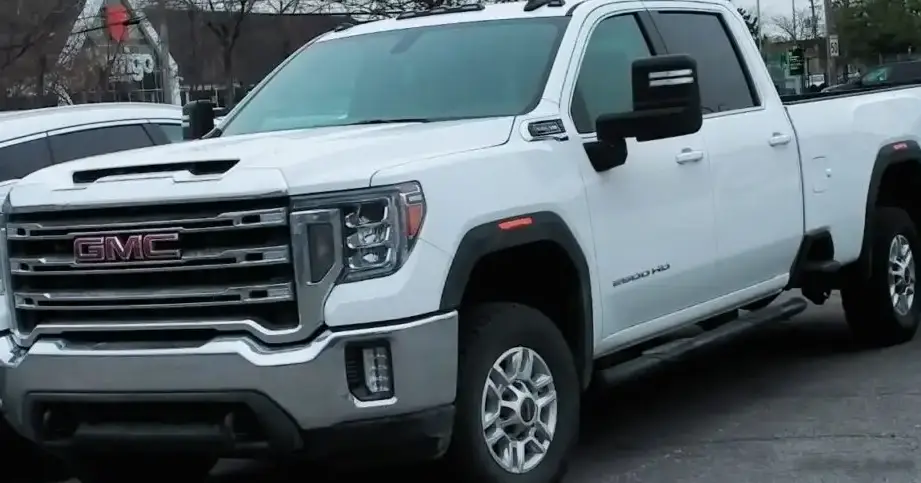
The GMC Sierra 1500 V (GMTT1XX) Crew Cab Standard Box, equipped with the 2.7-liter turbocharged engine producing 310 horsepower and paired with a four-wheel-drive automatic transmission, was a key offering in GMC’s full-size pickup truck lineup from 2018 to 2021. This variant represented a compelling blend of capability, technology, and efficiency, positioned as a strong contender in the increasingly competitive light-duty truck segment. It served as an entry point into the Sierra 1500 range for buyers seeking a capable truck without the higher price tags associated with larger engines and more luxurious trims.
Technical Specifications
| Brand | GMC |
| Model | Sierra 1500 |
| Generation | Sierra 1500 V (GMTT1XX) Crew Cab Standard Box |
| Type (Engine) | 2.7 Turbo (310 Hp) 4WD Automatic |
| Start of production | 2018 |
| End of production | 2021 |
| Powertrain Architecture | Internal Combustion engine |
| Body type | Pick-up |
| Seats | 5 |
| Doors | 4 |
| Fuel consumption (urban) | 13.1 l/100 km (18 US mpg, 21.6 UK mpg, 7.6 km/l) |
| Fuel consumption (extra urban) | 11.2 l/100 km (21 US mpg, 25.2 UK mpg, 8.9 km/l) |
| Fuel Type | Petrol (Gasoline) |
| Weight-to-power ratio | 7.3 kg/Hp, 137.5 Hp/tonne |
| Weight-to-torque ratio | 4.8 kg/Nm, 209.8 Nm/tonne |
| Power | 310 Hp @ 5600 rpm |
| Power per litre | 113.7 Hp/l |
| Torque | 473 Nm @ 1500-4000 rpm (348.87 lb.-ft. @ 1500-4000 rpm) |
| Engine layout | Front, Longitudinal |
| Engine Model/Code | L3B |
| Engine displacement | 2727 cm3 (166.41 cu. in.) |
| Number of cylinders | 4 |
| Engine configuration | Inline |
| Cylinder Bore | 92.25 mm (3.63 in.) |
| Piston Stroke | 102 mm (4.02 in.) |
| Compression ratio | 10:1 |
| Number of valves per cylinder | 4 |
| Fuel injection system | Direct injection |
| Engine aspiration | Turbocharger, Intercooler |
| Valvetrain | DOHC, VVT DI |
| Engine oil capacity | 5.7 l (6.02 US qt | 5.02 UK qt) |
| Coolant | 11.8 l (12.47 US qt | 10.38 UK qt) |
| Kerb Weight | 2254 kg (4969.22 lbs.) |
| Max. weight | 3221 kg (7101.09 lbs.) |
| Max load | 967 kg (2131.87 lbs.) |
| Fuel tank capacity | 91 l (24.04 US gal | 20.02 UK gal) |
| Permitted trailer load with brakes (12%) | 4037 kg (8900.06 lbs.) |
| Length | 6128 mm (241.26 in.) |
| Width including mirrors | 2063 mm (81.22 in.) |
| Height | 1915 mm (75.39 in.) |
| Wheelbase | 3987 mm (156.97 in.) |
| Drivetrain Architecture | The Internal combustion engine (ICE) drives the rear wheels permanently, and the front wheels are driven through an electrically or mechanically operated clutch if necessary. |
| Drive wheel | All wheel drive (4×4) |
| Number of gears and type of gearbox | 8 gears, automatic transmission |
| Front suspension | Independent coil spring |
| Rear suspension | Rigid axle suspension, Leaf spring |
| Front brakes | Ventilated discs, 330×30 mm |
| Rear brakes | Ventilated discs, 345×20 mm |
| Assisting systems | ABS (Anti-lock braking system) |
| Steering type | Steering rack and pinion |
| Power steering | Electric Steering |
| Tires size | 255/70 R17; 265/70 R17; 265/65 R18 |
| Wheel rims size | 8.0J x 17; 8.5J x 18 |
INTRODUCTION
The GMC Sierra 1500 V, specifically the Crew Cab Standard Box configuration with the 2.7-liter turbo engine and four-wheel drive, debuted with the GMTT1XX platform in 2018. This generation marked a significant step forward for the Sierra, introducing a more refined interior, advanced technology features, and a broader range of powertrain options. The 2.7-liter turbo was positioned as the base engine, offering a balance of power and fuel efficiency for everyday use. The “V” designation within the model naming convention denoted the updated interior and exterior styling compared to previous generations.
Powertrain & Engine Architecture
The heart of this Sierra variant is the GM L3B 2.7-liter inline-four cylinder engine. This engine utilizes direct injection and a twin-scroll turbocharger to deliver 310 horsepower and 473 lb-ft of torque. The engine features a 10:1 compression ratio and double overhead camshafts (DOHC) with variable valve timing (VVT) on both intake and exhaust valves. A key feature of the L3B is its Active Fuel Management (cylinder deactivation) system, which shuts down two cylinders under light load conditions to improve fuel economy. The engine is longitudinally mounted in the chassis. The 8-speed automatic transmission (8L45) was specifically chosen for its smooth shifting and wide gear ratio spread, optimizing both acceleration and fuel efficiency. This transmission features electronically controlled shifts and a tow/haul mode for improved performance when towing.
Driving Characteristics
The 2.7-liter turbo engine, while not as powerful as the available 5.3L or 6.2L V8 options, provided ample power for most daily driving scenarios. The turbocharger delivers a noticeable boost in torque, particularly at lower RPMs, making it well-suited for hauling and towing lighter loads. The 8-speed automatic transmission contributes to a smooth and responsive driving experience. Compared to the V8 models, the 2.7T offered a more refined and quieter ride, with less engine noise in the cabin. However, it lacked the immediate throttle response and overall acceleration of the larger engines. The gear ratios were tuned for a balance between fuel economy and usability, with a relatively tall final drive ratio.
Equipment & Trim Levels
The 2.7-liter turbo engine was typically offered in the SLE and Elevation trim levels. Standard features included a 7-inch touchscreen infotainment system with Apple CarPlay and Android Auto compatibility, a rearview camera, and keyless entry. Higher trim levels added features such as leather upholstery, heated and ventilated front seats, a larger touchscreen display, and a premium audio system. Optional extras included a sunroof, navigation system, and advanced safety features like lane departure warning and automatic emergency braking.
Chassis & Braking
The Sierra 1500 V utilized a fully boxed frame for enhanced rigidity and durability. The front suspension featured independent coil springs, while the rear suspension employed a traditional leaf spring setup. This configuration provided a comfortable ride and good load-carrying capacity. Braking duties were handled by ventilated disc brakes on all four wheels, with ABS standard. The rear brakes were slightly smaller in diameter than the front brakes. The steering system was an electric power-assisted rack-and-pinion setup, providing precise and responsive steering feel.
Market Reception & Comparison
The 2.7-liter turbo Sierra 1500 received generally positive reviews from automotive critics. It was praised for its fuel efficiency, smooth ride, and ample torque. However, some reviewers noted that it lacked the power and refinement of the V8 models. Compared to the 5.3L V8, the 2.7T offered better fuel economy but less overall performance. The 2.7T was often seen as a good value proposition for buyers who didn’t need the maximum towing capacity or horsepower offered by the larger engines. Reliability reports have been generally favorable, with the L3B engine proving to be a relatively robust and dependable powerplant.
Legacy
The 2.7-liter turbocharged engine has become a mainstay in the GMC Sierra 1500 lineup, continuing to evolve with improvements in power and efficiency. The GMTT1XX generation Sierra 1500, and specifically the 2.7T variant, helped to establish GMC as a premium truck brand, offering a compelling alternative to the more mainstream Chevrolet Silverado. On the used car market, these models represent a good value for buyers seeking a capable and reliable full-size pickup truck with modern features. The L3B engine’s relatively simple design and proven track record contribute to its long-term reliability and affordability.

