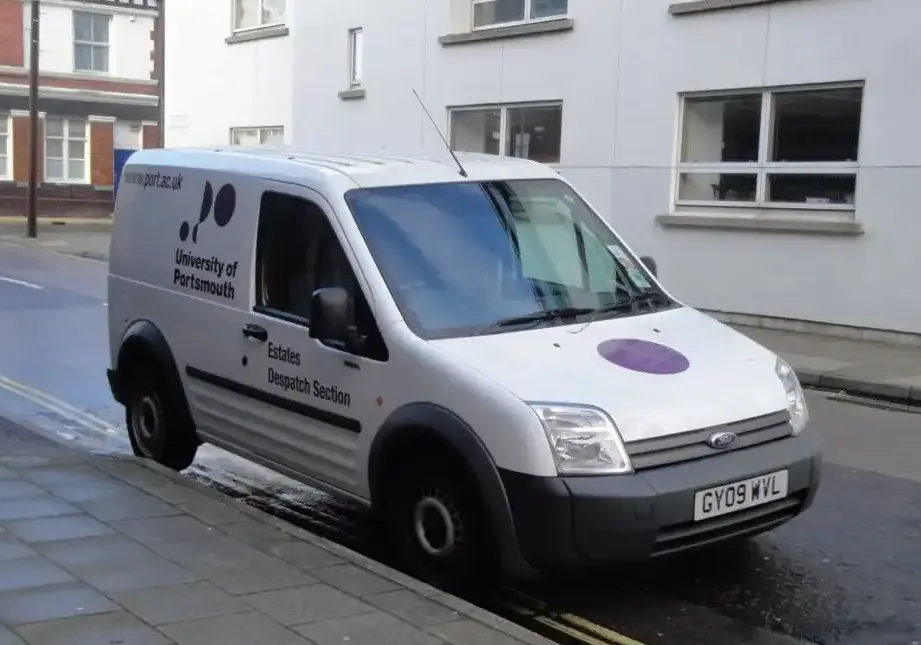
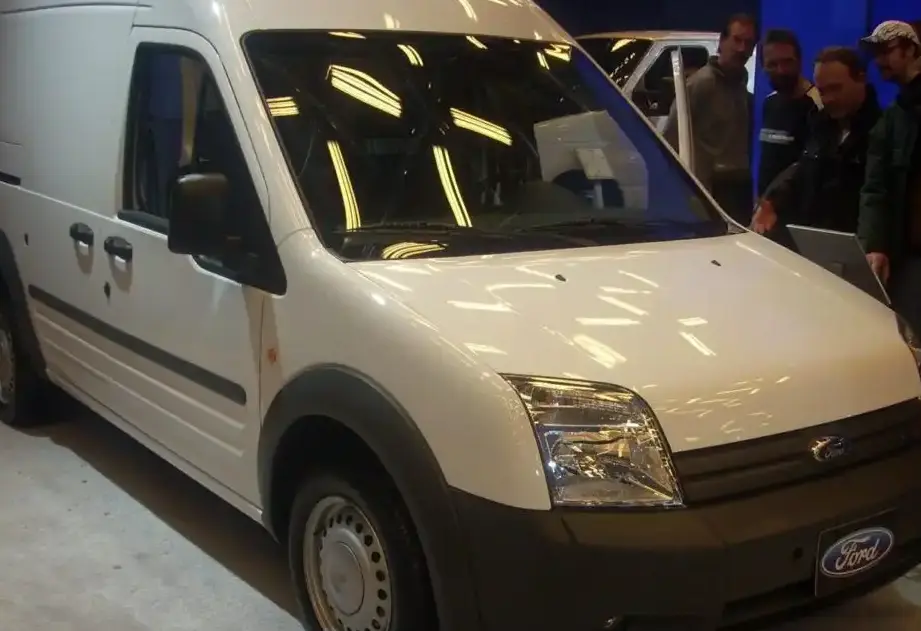
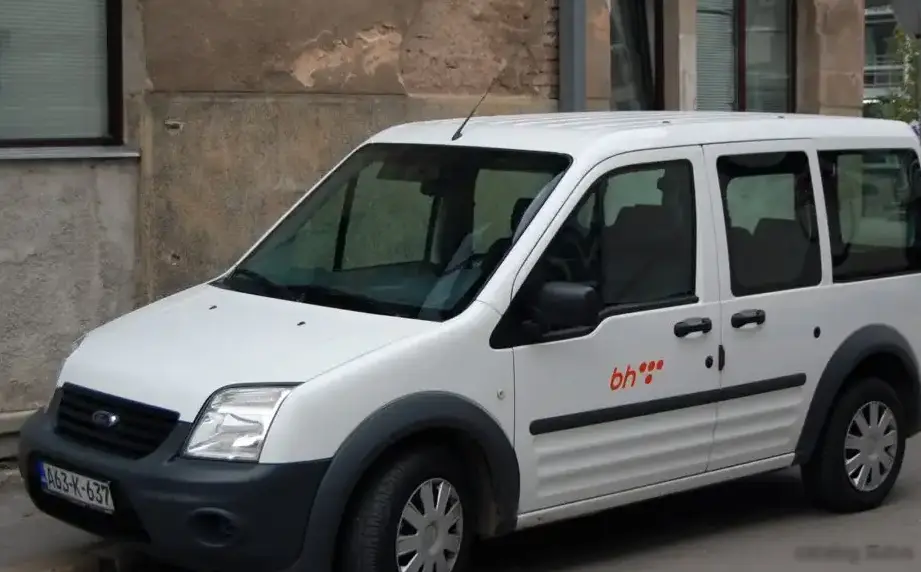
The Ford Transit Connect II Double Cab-in-Van L2 1.5 TDCi, produced from 2015 to 2018, represents a significant iteration of Ford’s popular compact commercial vehicle line. This specific variant, equipped with the 1.5-liter Duratorq turbo-diesel engine producing 100 horsepower, was positioned as a practical and fuel-efficient option within the broader Transit Connect range. It catered to businesses and families needing a versatile vehicle capable of both cargo and passenger transport. The L2 designation indicates the long wheelbase version, offering increased cargo capacity compared to the standard length model. This generation of Transit Connect, built on the Ford global C/B platform, was primarily aimed at the European market, but also saw sales in North America, where it filled a niche between larger vans and passenger cars.
Technical Specifications
| Brand | Ford |
| Model | Transit Connect |
| Generation | Transit Connect II Double Cab-in-Van L2 |
| Type (Engine) | 1.5 TDCi (100 Hp) |
| Start of production | 2015 |
| End of production | 2018 |
| Powertrain Architecture | Internal Combustion engine |
| Body type | Minivan |
| Seats | 5 |
| Doors | 5 |
| Fuel consumption (economy) – urban (NEDC) | 4.9-5.4 l/100 km (48 – 43.6 US mpg, 57.6 – 52.3 UK mpg, 20.4 – 18.5 km/l) |
| Fuel consumption (economy) – extra urban (NEDC) | 4.4 l/100 km (53.5 US mpg, 64.2 UK mpg, 22.7 km/l) |
| Fuel consumption (economy) – combined (NEDC) | 4.6-4.8 l/100 km (51.1 – 49 US mpg, 61.4 – 58.9 UK mpg, 21.7 – 20.8 km/l) |
| CO2 emissions (NEDC) | 119-124 g/km |
| Fuel Type | Diesel |
| Emission standard | Euro 6 |
| Weight-to-power ratio | 15.5 kg/Hp, 64.5 Hp/tonne |
| Weight-to-torque ratio | 6.2 kg/Nm, 161.3 Nm/tonne |
| Power | 100 Hp |
| Power per litre | 66.7 Hp/l |
| Torque | 250 Nm @ 2000-2500 rpm (184.39 lb.-ft. @ 2000-2500 rpm) |
| Engine layout | Front, Transverse |
| Engine Model/Code | Duratorq / XVGA, XVGB |
| Engine displacement | 1499 cm3 (91.47 cu. in.) |
| Number of cylinders | 4 |
| Engine configuration | Inline |
| Cylinder Bore | 73.5 mm (2.89 in.) |
| Piston Stroke | 88.3 mm (3.48 in.) |
| Number of valves per cylinder | 2 |
| Fuel injection system | Diesel Commonrail |
| Engine aspiration | Turbocharger, Intercooler |
| Valvetrain | SOHC |
| Engine oil capacity | 6.2 l (6.55 US qt | 5.46 UK qt) |
| Coolant | 6 l (6.34 US qt | 5.28 UK qt) |
| Kerb Weight | 1550-1552 kg (3417.17 – 3421.57 lbs.) |
| Max. weight | 2270 kg (5004.49 lbs.) |
| Max load | 718-720 kg (1582.92 – 1587.33 lbs.) |
| Trunk (boot) space – minimum | 1600 l (56.5 cu. ft.) |
| Trunk (boot) space – maximum | 2800 l (98.88 cu. ft.) |
| Fuel tank capacity | 60 l (15.85 US gal | 13.2 UK gal) |
| Permitted trailer load with brakes (12%) | 1300 kg (2866.01 lbs.) |
| Permitted trailer load without brakes | 750 kg (1653.47 lbs.) |
| Permitted towbar download | 75 kg (165.35 lbs.) |
| Length | 4818 mm (189.69 in.) |
| Width | 1835 mm (72.24 in.) |
| Width including mirrors | 2137 mm (84.13 in.) |
| Height | 1828-1839 mm (71.97 – 72.4 in.) |
| Wheelbase | 3062 mm (120.55 in.) |
| Front track | 1568 mm (61.73 in.) |
| Rear (Back) track | 1584-1585 mm (62.36 – 62.4 in.) |
| Front overhang | 878 mm (34.57 in.) |
| Rear overhang | 878 mm (34.57 in.) |
| Ride height (ground clearance) | 165 mm (6.5 in.) |
| Minimum turning circle (turning diameter) | 12.5 m (41.01 ft.) |
| Drivetrain Architecture | The Internal combustion engine (ICE) drives the front wheels of the vehicle. |
| Drive wheel | Front wheel drive |
| Number of gears and type of gearbox | 5 gears, manual transmission |
| Front suspension | Independent, type McPherson with coil spring and anti-roll bar |
| Rear suspension | Coil spring, Torsion |
| Front brakes | Ventilated discs, 320×25 mm |
| Rear brakes | Disc, 280×11 mm |
| Assisting systems | ABS (Anti-lock braking system) |
| Steering type | Steering rack and pinion |
| Power steering | Electric Steering |
| Tires size | 205/60 R16 |
| Wheel rims size | 6.5J x 16 |
Powertrain & Engine Architecture
The heart of this Transit Connect variant is the 1.5-liter Duratorq TDCi engine, part of Ford’s Duratorq family of diesel engines. Engine codes XVGA and XVGB were commonly used for this specific configuration. This engine utilizes a common-rail direct injection system, delivering fuel at extremely high pressure for improved combustion efficiency and reduced emissions. The engine features a single overhead camshaft (SOHC) valvetrain operating two valves per cylinder. A turbocharger with an intercooler is employed to boost power output and improve torque across a wider RPM range. The 1.5L engine is a relatively compact unit, contributing to the vehicle’s overall efficiency. The engine is transversely mounted in the front of the vehicle. The 5-speed manual transmission was the standard offering, designed for durability and fuel economy. The gear ratios were optimized for everyday driving, prioritizing low-end torque for hauling and city driving.
Driving Characteristics
The 100 horsepower and 250 Nm (184 lb-ft) of torque provided by the 1.5 TDCi engine, coupled with the 5-speed manual transmission, resulted in a practical, if not particularly sporty, driving experience. Acceleration was adequate for everyday use, but loading the vehicle with passengers and cargo noticeably impacted performance. The engine’s peak torque, available from 2000-2500 rpm, provided sufficient pulling power for highway merging and overtaking. Compared to higher-output versions of the Transit Connect, such as those with the 1.6-liter EcoBoost petrol engine, this diesel variant prioritized fuel efficiency over outright speed. The manual transmission offered precise gear changes, allowing drivers to maintain optimal engine speed for the driving conditions. The relatively long gearing contributed to good fuel economy on the open road.
Equipment & Trim Levels
The Double Cab-in-Van L2 1.5 TDCi typically came with a reasonable level of standard equipment. Features included power windows, central locking, an adjustable steering column, and a basic audio system. The interior was functional and durable, with hard-wearing plastics and cloth upholstery. The double cab configuration offered seating for five passengers, with a flexible cargo area behind the rear seats. Optional extras included air conditioning, alloy wheels, parking sensors, and a more advanced infotainment system with navigation. Trim levels varied depending on the market, but generally offered incremental upgrades in terms of comfort and convenience features.
Chassis & Braking
The Transit Connect II utilized an independent McPherson strut front suspension and a semi-independent torsion beam rear suspension. This setup provided a good balance between ride comfort and handling. The front suspension incorporated a stabilizer bar to reduce body roll during cornering. Braking duties were handled by ventilated discs at the front and solid discs at the rear. Anti-lock Braking System (ABS) was standard, enhancing safety during emergency braking situations. The steering was rack and pinion with electric power assistance, providing light and precise steering feel.
Market Reception & Comparison
The Ford Transit Connect II 1.5 TDCi was generally well-received by critics for its practicality, fuel efficiency, and competitive pricing. It was often praised as a versatile vehicle suitable for a wide range of applications. Compared to the petrol-powered versions, the diesel variant offered significantly better fuel economy, making it a popular choice for businesses with high mileage requirements. However, some critics noted that the engine could be somewhat noisy and lacked the refinement of some competitors. Against rivals like the Volkswagen Caddy and Citroën Berlingo, the Transit Connect offered a compelling combination of value and functionality.
Legacy
The 1.5 TDCi engine, while not known for being exceptionally high-performance, proved to be relatively reliable in the Transit Connect II. With proper maintenance, these engines can accumulate high mileage. Common issues include turbocharger wear and potential problems with the diesel particulate filter (DPF), particularly on vehicles used primarily for short trips. On the used car market, these Transit Connects represent a good value proposition for buyers seeking a practical and economical commercial vehicle. Their durability and relatively low running costs continue to make them a popular choice for small businesses and families alike.