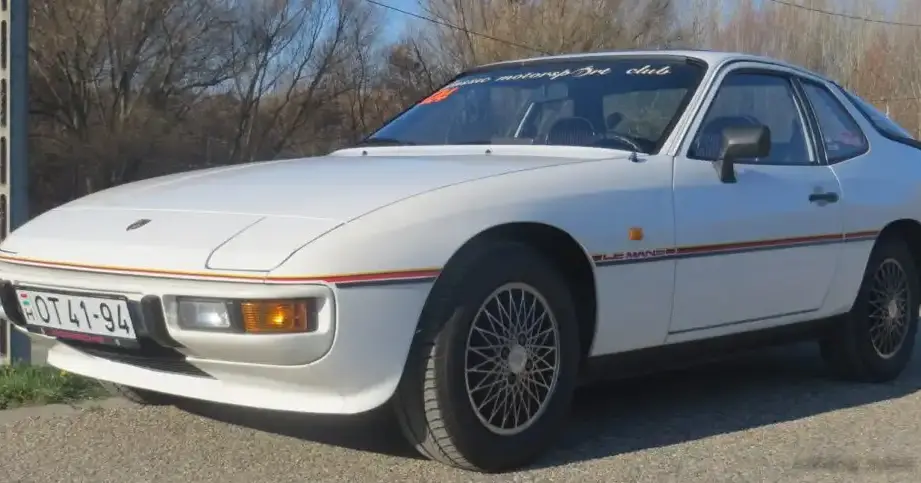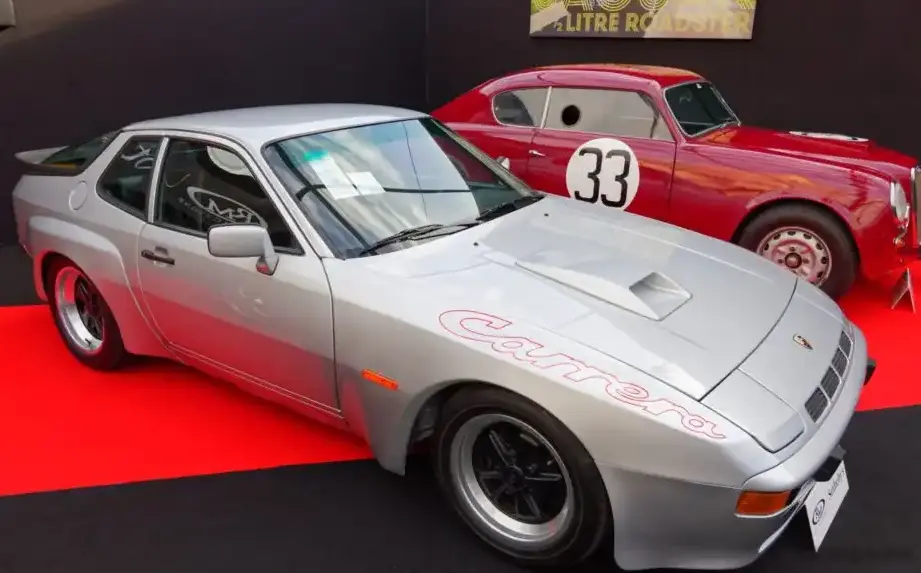
The Porsche 924 2.0 Turbo, produced between 1980 and 1984, represented a significant performance upgrade within the 924 model line. Positioned as the flagship variant, it aimed to deliver a more engaging driving experience than the base and naturally aspirated 2.0-liter models. Built on the Porsche 924 platform (internally designated as the 924/II), the Turbo sought to bridge the gap between the more affordable 924 and the higher-priced 911, offering a unique blend of performance and practicality. This model was primarily aimed at the European market, where smaller, nimble sports cars were highly valued, but also found a niche following in North America.
Technical Specifications
| Brand | Porsche |
| Model | 924 |
| Generation | 924 |
| Type (Engine) | 2.0 Turbo (177 Hp) |
| Start of production | 1980 |
| End of production | 1984 |
| Powertrain Architecture | Internal Combustion engine |
| Body type | Coupe |
| Seats | 4 |
| Doors | 2 |
| Fuel consumption (economy) – extra urban | 6.7 l/100 km (35.1 US mpg, 42.2 UK mpg, 14.9 km/l) |
| Fuel consumption (economy) – combined | 8.9 l/100 km (26.4 US mpg, 31.7 UK mpg, 11.2 km/l) |
| Fuel Type | Petrol (Gasoline) |
| Acceleration 0 – 100 km/h | 7.7 sec |
| Acceleration 0 – 62 mph | 7.7 sec |
| Acceleration 0 – 60 mph | 7.3 sec |
| Maximum speed | 230 km/h (142.92 mph) |
| Weight-to-power ratio | 6.7 kg/Hp, 150 Hp/tonne |
| Weight-to-torque ratio | 4.7 kg/Nm, 211.9 Nm/tonne |
| Power | 177 Hp @ 5500 rpm |
| Power per litre | 89.2 Hp/l |
| Torque | 250 Nm @ 3500 rpm (184.39 lb.-ft. @ 3500 rpm) |
| Maximum engine speed | 6500 rpm |
| Engine layout | Front, Longitudinal |
| Engine Model/Code | M31.03 |
| Engine displacement | 1984 cm3 (121.07 cu. in.) |
| Number of cylinders | 4 |
| Engine configuration | Boxer |
| Cylinder Bore | 86.5 mm (3.41 in.) |
| Piston Stroke | 84.4 mm (3.32 in.) |
| Compression ratio | 8.5:1 |
| Fuel injection system | Multi-port manifold injection |
| Engine aspiration | Turbocharger |
| Engine oil capacity | 5.5 l (5.81 US qt | 4.84 UK qt) |
| Coolant | 7 l (7.4 US qt | 6.16 UK qt) |
| Kerb Weight | 1180 kg (2601.45 lbs.) |
| Max. weight | 1500 kg (3306.93 lbs.) |
| Max load | 320 kg (705.48 lbs.) |
| Fuel tank capacity | 84 l (22.19 US gal | 18.48 UK gal) |
| Max. roof load | 35 kg (77.16 lbs.) |
| Permitted trailer load with brakes (12%) | 1200 kg (2645.55 lbs.) |
| Permitted trailer load without brakes | 500 kg (1102.31 lbs.) |
| Length | 4212 mm (165.83 in.) |
| Width | 1685 mm (66.34 in.) |
| Height | 1270 mm (50 in.) |
| Wheelbase | 2400 mm (94.49 in.) |
| Front track | 1418 mm (55.83 in.) |
| Rear (Back) track | 1392 mm (54.8 in.) |
| Ride height (ground clearance) | 120 mm (4.72 in.) |
| Approach angle | 20° |
| Departure angle | 16.4° |
| Drivetrain Architecture | The Internal combustion engine (ICE) drives the rear wheels of the vehicle. |
| Drive wheel | Rear wheel drive |
| Number of gears and type of gearbox | 5 gears, manual transmission |
| Front suspension | Independent, type McPherson with coil spring and anti-roll bar, Wishbone |
| Rear suspension | Trailing arm, Torsion |
| Front brakes | Ventilated discs, 282.5 mm |
| Rear brakes | Ventilated discs, 289 mm |
| Steering type | Steering rack and pinion |
| Tires size | 185/70 R15 |
| Wheel rims size | 6J x 16 |
Powertrain & Engine Architecture
The heart of the 924 2.0 Turbo is the M31.03 engine, a 1984cc, naturally aspirated, water-cooled four-cylinder boxer engine. The addition of a turbocharger and intercooler significantly boosted power output to 177 horsepower at 5500 rpm and 184 lb-ft of torque at 3500 rpm. This engine utilized Bosch K-Jetronic fuel injection, a mechanical system known for its reliability and precise fuel delivery. The boxer configuration, with horizontally opposed cylinders, contributed to a lower center of gravity, enhancing handling. The engine was mounted longitudinally in the front of the vehicle, driving the rear wheels. The 924 Turbo exclusively came with a five-speed manual transmission, designed to handle the increased power and torque. This transmission featured a robust design, optimized for sporty driving.
Driving Characteristics
The 924 2.0 Turbo offered a noticeable performance improvement over the standard 924. Acceleration to 60 mph was achieved in approximately 7.3 seconds, and it could reach a top speed of 143 mph. The turbocharger provided a distinct power surge, delivering strong acceleration in the mid-range. However, turbo lag was present, requiring drivers to anticipate and manage throttle input. The rear-wheel-drive layout and well-tuned suspension provided balanced handling, making it a capable sports car. Compared to the naturally aspirated 924, the Turbo demanded more driver involvement and offered a more rewarding driving experience. The five-speed manual transmission allowed for precise gear selection, maximizing the engine’s power band.
Equipment & Trim Levels
The 924 2.0 Turbo was generally well-equipped for its time. Standard features included power-assisted steering, ventilated disc brakes on all four wheels, and a leather-wrapped steering wheel. The interior featured sport seats, providing good support during spirited driving. Optional extras included air conditioning, a sunroof, and upgraded audio systems. The exterior was distinguished by flared wheel arches, a front spoiler, and a rear spoiler, giving it a more aggressive appearance. Interior trim was typically dark, with black or gray upholstery being the most common choices.
Chassis & Braking
The 924 2.0 Turbo utilized a McPherson strut front suspension with coil springs and an anti-roll bar, and a trailing arm rear suspension with torsion bars. This setup provided a good balance between ride comfort and handling performance. The braking system consisted of ventilated disc brakes on all four wheels, offering excellent stopping power. The steering was a rack-and-pinion system, providing precise and responsive steering feel. The car rode on 16-inch wheels with 185/70 R15 tires, providing adequate grip for its performance level.
Market Reception & Comparison
The Porsche 924 2.0 Turbo was generally well-received by automotive critics. It was praised for its performance, handling, and distinctive styling. However, some critics noted the presence of turbo lag and the relatively basic interior compared to other Porsche models. Compared to the naturally aspirated 924, the Turbo offered a significant performance upgrade, but it also came with a higher price tag. It was positioned as a more affordable alternative to the 911, appealing to buyers who wanted a Porsche sports car without the higher cost. Fuel economy was reasonable for a sports car of its era, averaging around 26 mpg in combined driving.
Legacy
The Porsche 924 2.0 Turbo remains a popular choice among Porsche enthusiasts today. Its relatively affordable price, combined with its distinctive styling and engaging driving experience, makes it an attractive option in the used car market. The M31.03 engine is generally considered to be reliable, although regular maintenance is essential. Common issues include turbocharger wear and potential oil leaks. The 924 Turbo has become a classic Porsche model, appreciated for its unique character and its role in bridging the gap between the 924 and the 911.