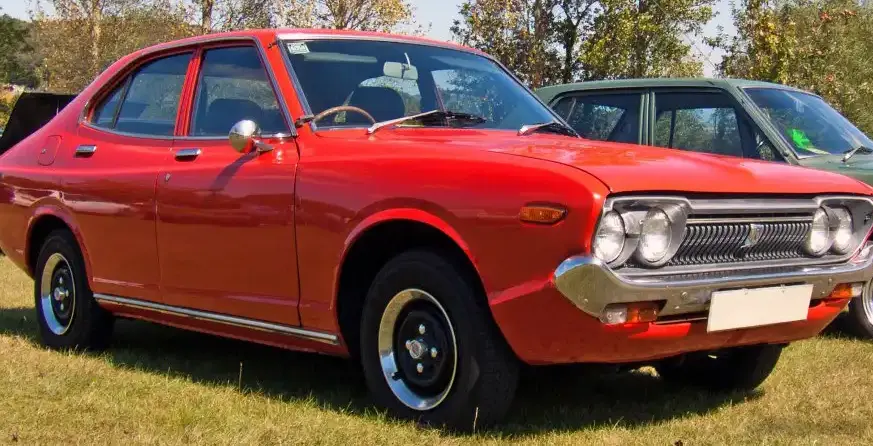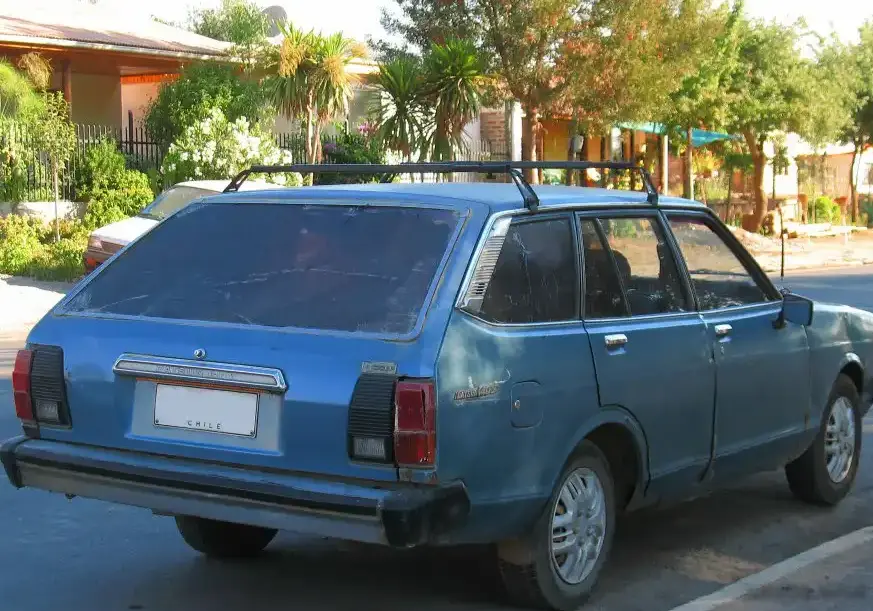
The Nissan Datsun D21 2.7DT, produced from 1989 to 1996, represents a significant offering in the compact pickup truck segment. This variant, powered by a 2.7-liter turbocharged diesel engine, was primarily marketed in regions where diesel fuel was readily available and fuel efficiency was a key consideration. The D21 series, sold under both the Nissan and Datsun brands depending on the market, aimed to provide a robust and practical work vehicle, and the 2.7DT trim offered a balance between capability and economy. It sat within the D21 lineup as a mid-range option, positioned above the naturally aspirated gasoline engines and below the more powerful, though less common, gasoline variants.
Technical Specifications
| Brand | Nissan |
| Model | Datsun |
| Generation | Datsun (D21) |
| Type (Engine) | 2.7DT (100 Hp) |
| Start of production | 1989 |
| End of production | 1996 |
| Powertrain Architecture | Internal Combustion engine |
| Body type | Pick-up |
| Seats | 5 |
| Doors | 4 |
| Fuel Type | Diesel |
| Weight-to-power ratio | 17.7 kg/Hp, 56.5 Hp/tonne |
| Weight-to-torque ratio | 8 kg/Nm, 124.9 Nm/tonne |
| Power | 100 Hp @ 4000 rpm |
| Power per litre | 37.6 Hp/l |
| Torque | 221 Nm @ 2200 rpm (163 lb.-ft. @ 2200 rpm) |
| Engine layout | Front, Longitudinal |
| Engine displacement | 2663 cm3 (162.51 cu. in.) |
| Number of cylinders | 4 |
| Engine configuration | Inline |
| Cylinder Bore | 96 mm (3.78 in.) |
| Piston Stroke | 92 mm (3.62 in.) |
| Compression ratio | 21.9:1 |
| Number of valves per cylinder | 2 |
| Fuel injection system | Precombustion chamber injection |
| Engine aspiration | Turbocharger |
| Kerb Weight | 1770 kg (3902.18 lbs.) |
| Fuel tank capacity | 60 l (15.85 US gal | 13.2 UK gal) |
| Length | 4690 mm (184.65 in.) |
| Width | 1690 mm (66.54 in.) |
| Height | 1725 mm (67.91 in.) |
| Wheelbase | 2950 mm (116.14 in.) |
| Front track | 1425 mm (56.1 in.) |
| Rear (Back) track | 1385 mm (54.53 in.) |
| Drive wheel | All wheel drive (4×4) |
| Number of gears and type of gearbox | 5 gears, manual transmission |
| Front brakes | Ventilated discs |
| Rear brakes | Drum |
Powertrain & Engine Architecture
The heart of the D21 2.7DT is the Nissan SD27T engine, a 2.7-liter inline-four cylinder diesel. This engine utilizes a precombustion chamber injection system, a common design for diesel engines of the era. This system involves a small precombustion chamber connected to the main cylinder, where fuel is initially ignited by the compression, then transferred to the main chamber for complete combustion. The SD27T is turbocharged, which significantly improves power output compared to naturally aspirated diesel engines. The turbocharger provides increased air intake, allowing for more fuel to be burned and thus generating more power. The engine’s 21.9:1 compression ratio is typical for a diesel engine, contributing to its efficiency and torque. The five-speed manual transmission was the standard offering for this variant, providing a good balance between fuel economy and usability. The transmission was chosen to handle the engine’s torque output and provide adequate gearing for both on-road and off-road driving.
Driving Characteristics
The D21 2.7DT offered a distinctly different driving experience compared to its gasoline-powered counterparts. While it lacked the outright acceleration of the gasoline engines, it excelled in low-end torque. This made it well-suited for hauling loads and navigating challenging terrain. The turbocharger provided a noticeable boost in power once spooled up, typically around 2200 rpm, offering a usable powerband for everyday driving. The five-speed manual transmission allowed drivers to keep the engine in its optimal power range. Compared to the higher-output gasoline versions, the 2.7DT prioritized fuel efficiency and durability over outright performance. The manual transmission, while providing more control, required more driver involvement than an automatic, and the shift quality was typical for trucks of this era – functional but not particularly refined.
Equipment & Trim Levels
The D21 2.7DT typically came with a relatively basic level of equipment, reflecting its work-oriented nature. Standard features generally included a vinyl or cloth interior, a basic instrument cluster, and manual windows and locks. Air conditioning was often an optional extra, as were power steering and upgraded audio systems. The interior design was functional and durable, prioritizing practicality over luxury. Trim levels varied depending on the market, but generally, the 2.7DT sat in the middle of the range. Higher trim levels might have included features like chrome exterior trim, upgraded upholstery, and additional convenience features.
Chassis & Braking
The D21 chassis was a body-on-frame construction, providing a robust and durable platform. The front suspension utilized independent double wishbones with coil springs, while the rear suspension employed leaf springs. This setup provided a comfortable ride, especially when unladen, and was capable of handling significant payloads. The braking system featured ventilated discs on the front wheels and drum brakes on the rear. While adequate for most driving conditions, the drum brakes on the rear limited overall braking performance compared to all-disc setups. The 4×4 drivetrain, standard on the 2.7DT, provided enhanced traction in off-road conditions and inclement weather.
Market Reception & Comparison
The D21 2.7DT was generally well-received in markets where diesel pickups were popular. Critics praised its fuel efficiency, durability, and torque output. However, some noted its relatively slow acceleration and basic interior. Compared to the gasoline-powered D21 models, the 2.7DT offered significantly better fuel economy, making it a popular choice for those who drove long distances or frequently hauled heavy loads. Compared to other diesel pickups of the time, such as the Toyota Hilux, the D21 offered a competitive combination of price, performance, and reliability. The manual transmission was favored by many for its control and durability, though some drivers preferred the convenience of an automatic transmission.
Legacy
The Nissan Datsun D21 2.7DT has developed a reputation for reliability and longevity. The SD27T engine, while not particularly powerful by modern standards, is known for its durability and ability to withstand heavy use. Today, well-maintained examples are sought after by enthusiasts and those looking for a dependable and affordable work truck. Parts availability can be a challenge in some regions, but the D21’s simple mechanical design makes it relatively easy to repair. The 2.7DT variant, in particular, is valued for its fuel efficiency and torque, making it a practical choice for those who need a capable and economical pickup truck. Its enduring popularity is a testament to its robust design and practical features.