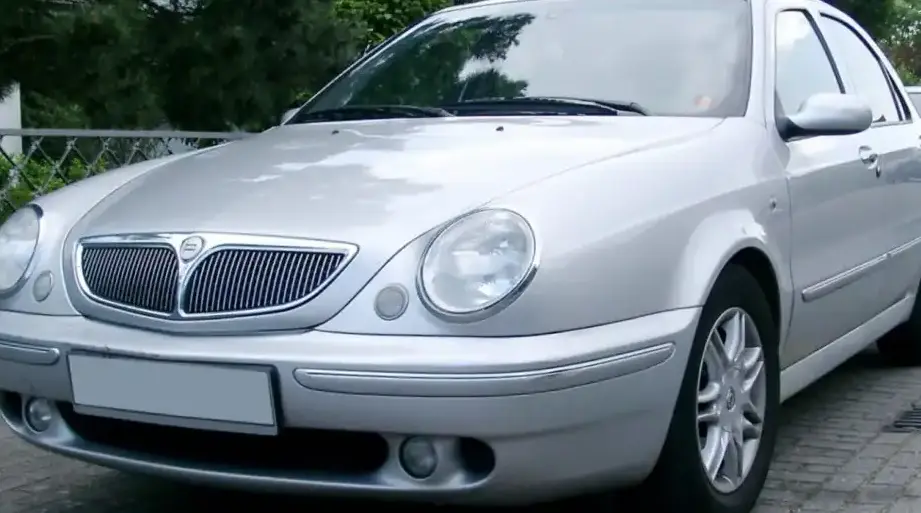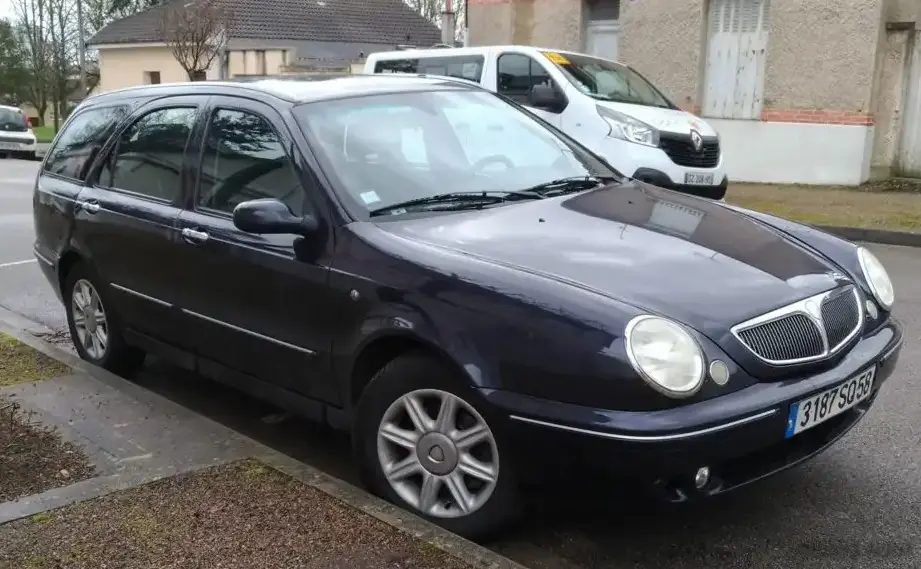
The Lancia Lybra SW 1.8 16V, produced from 1999 to 2004, represents a somewhat overlooked variant within the broader Lybra SW (Series 839) range. Positioned as a mid-range offering, it aimed to balance practicality, comfort, and reasonable performance for European buyers. The Lybra SW, as a whole, was Lancia’s entry into the increasingly popular station wagon segment, building upon the success of the preceding Delta and Prisma models. This particular 1.8-liter, 16-valve engine paired with a five-speed manual transmission offered a compelling alternative to the more powerful, but also more expensive, V6 models and the fuel-efficient diesel options.
Technical Specifications
| Brand | Lancia |
| Model | Lybra |
| Generation | Lybra SW (839) |
| Type (Engine) | 1.8 16V (131 Hp) |
| Start of production | July, 1999 |
| End of production | December, 2004 |
| Powertrain Architecture | Internal Combustion engine |
| Body type | Station wagon (estate) |
| Seats | 5 |
| Doors | 5 |
| Fuel consumption (urban) | 12.4 l/100 km (19 US mpg, 22.8 UK mpg) |
| Fuel consumption (extra urban) | 6.4 l/100 km (36.8 US mpg, 44.1 UK mpg) |
| Fuel consumption (combined) | 8.6 l/100 km (27.4 US mpg, 32.8 UK mpg) |
| Fuel Type | Petrol (Gasoline) |
| Acceleration 0 – 100 km/h | 10.7 sec |
| Acceleration 0 – 62 mph | 10.7 sec |
| Acceleration 0 – 60 mph | 10.2 sec |
| Maximum speed | 201 km/h (124.9 mph) |
| Weight-to-power ratio | 10.2 kg/Hp |
| Weight-to-torque ratio | 8.2 kg/Nm |
| Power | 131 Hp @ 6300 rpm |
| Power per litre | 75 Hp/l |
| Torque | 164 Nm @ 4000 rpm (120.96 lb.-ft. @ 4000 rpm) |
| Engine layout | Front, Transverse |
| Engine Model/Code | 839 A9.000 |
| Engine displacement | 1747 cm3 (106.61 cu. in.) |
| Number of cylinders | 4 |
| Engine configuration | Inline |
| Cylinder Bore | 82 mm (3.23 in.) |
| Piston Stroke | 82.7 mm (3.26 in.) |
| Compression ratio | 10.3:1 |
| Number of valves per cylinder | 4 |
| Fuel injection system | Multi-port manifold injection |
| Engine aspiration | Naturally aspirated engine |
| Valvetrain | DOHC |
| Engine oil capacity | 4.3 l (4.54 US qt | 3.78 UK qt) |
| Coolant capacity | 6.8 l (7.19 US qt | 5.98 UK qt) |
| Kerb Weight | 1340 kg (2954.19 lbs.) |
| Max. weight | 1865 kg (4111.62 lbs.) |
| Max load | 525 kg (1157.43 lbs.) |
| Trunk (boot) space – minimum | 420 l (14.83 cu. ft.) |
| Fuel tank capacity | 60 l (15.85 US gal | 13.2 UK gal) |
| Length | 4466 mm (175.83 in.) |
| Width | 1743 mm (68.62 in.) |
| Height | 1470 mm (57.87 in.) |
| Wheelbase | 2593 mm (102.09 in.) |
| Front track | 1497 mm (58.94 in.) |
| Rear track | 1459 mm (57.44 in.) |
| Drivetrain Architecture | Front wheel drive |
| Number of gears | 5 |
| Gearbox type | Manual transmission |
| Front suspension | Spring Strut |
| Rear suspension | Coil spring |
| Front brakes | Disc |
| Rear brakes | Disc |
| Assisting systems | ABS (Anti-lock braking system) |
| Steering type | Steering rack and pinion |
| Power steering | Hydraulic Steering |
| Tires size | 195/65R15 |
Powertrain & Engine Architecture
The heart of the Lybra SW 1.8 16V is the 839 A9.000 engine, a 1.8-liter inline-four cylinder powerplant. This engine, a common fixture in various Fiat Group vehicles of the era, features a double overhead camshaft (DOHC) valvetrain operating four valves per cylinder. This configuration contributes to improved breathing and higher-end power compared to older, simpler designs. Fuel delivery is managed by a multi-port fuel injection system, providing precise fuel metering for optimal combustion. The engine’s 131 horsepower output at 6300 rpm and 164 Nm (120.96 lb-ft) of torque at 4000 rpm are respectable figures for its displacement and intended market segment. The five-speed manual transmission offers a relatively conventional gear ratio spread, prioritizing fuel efficiency and smooth cruising over outright acceleration.
Driving Characteristics
The 1.8 16V Lybra SW delivers a comfortable and predictable driving experience. While not particularly sporty, it provides adequate power for everyday driving and highway cruising. Acceleration from 0-60 mph takes around 10.2 seconds, which is competitive with other similarly sized and powered station wagons of the time. The manual transmission allows for a greater degree of driver control compared to the available automatic option, and the gear ratios are well-suited to maintaining momentum on inclines. Compared to the more powerful 2.0 16V or V6 Lybra SW models, the 1.8 feels less strained during acceleration, but naturally lacks the same level of outright performance. The suspension setup prioritizes ride comfort, absorbing bumps and imperfections in the road surface effectively.
Equipment & Trim Levels
The 1.8 16V Lybra SW typically came equipped with a reasonable level of standard features. These included power windows, central locking, power steering, and an ABS anti-lock braking system. Interior upholstery was generally cloth, with options for upgraded materials available. Dashboard design was functional and ergonomically laid out, with a focus on ease of use. Optional extras included air conditioning, a sunroof, alloy wheels, and a more advanced audio system. The trim level often dictated the availability of these options, with higher-spec models offering a more comprehensive list of standard equipment.
Chassis & Braking
The Lybra SW utilizes a front-wheel-drive layout with independent suspension at the front (typically a MacPherson strut setup) and a semi-independent coil spring arrangement at the rear. The braking system consists of disc brakes on all four wheels, providing adequate stopping power for the vehicle’s weight and performance. The ABS system enhances braking performance and stability, particularly on slippery surfaces. Stabilizer bars are fitted to both the front and rear axles to reduce body roll during cornering.
Market Reception & Comparison
The Lancia Lybra SW 1.8 16V was generally well-received by automotive critics as a practical and comfortable family car. It offered a good balance of space, fuel economy, and affordability. However, it wasn’t considered a particularly exciting or dynamic vehicle. Compared to the V6 models, the 1.8 offered significantly better fuel economy, but at the expense of performance. The diesel variants provided even greater fuel efficiency, but lacked the refinement of the petrol engine. Reliability was generally considered average for a European car of its era, with some reports of electrical issues and minor mechanical problems.
Legacy
Today, the Lancia Lybra SW 1.8 16V is a relatively rare sight on the roads. While not a highly sought-after classic, it has gained a following among enthusiasts who appreciate its unique styling and practical nature. The 839 A9.000 engine is known to be reasonably durable, provided it has been properly maintained. Parts availability can be a challenge, as the Lybra is no longer in production. However, many components are shared with other Fiat Group vehicles, making sourcing replacements somewhat easier. The Lybra SW 1.8 16V represents a final flourish of Lancia’s independent spirit before the brand’s decline, offering a distinctive alternative to more mainstream station wagons of the early 2000s.