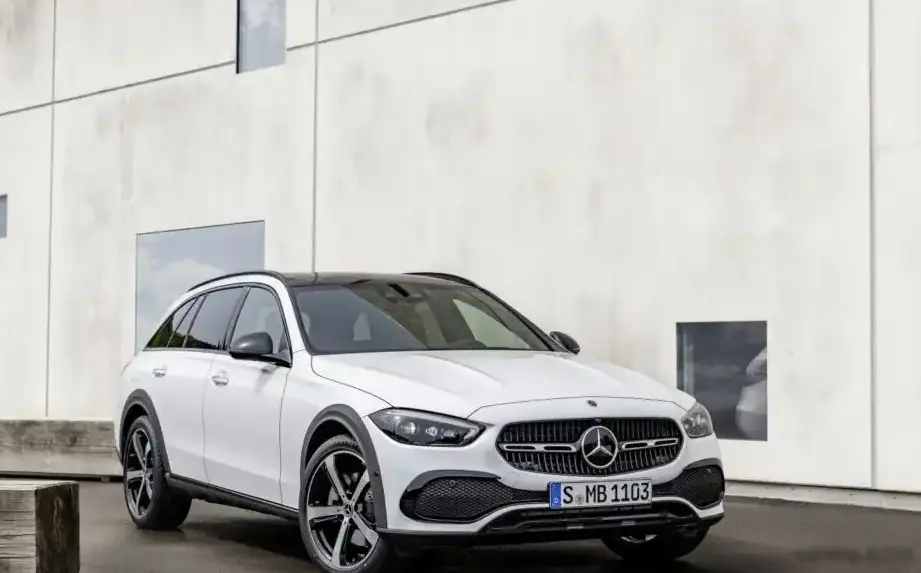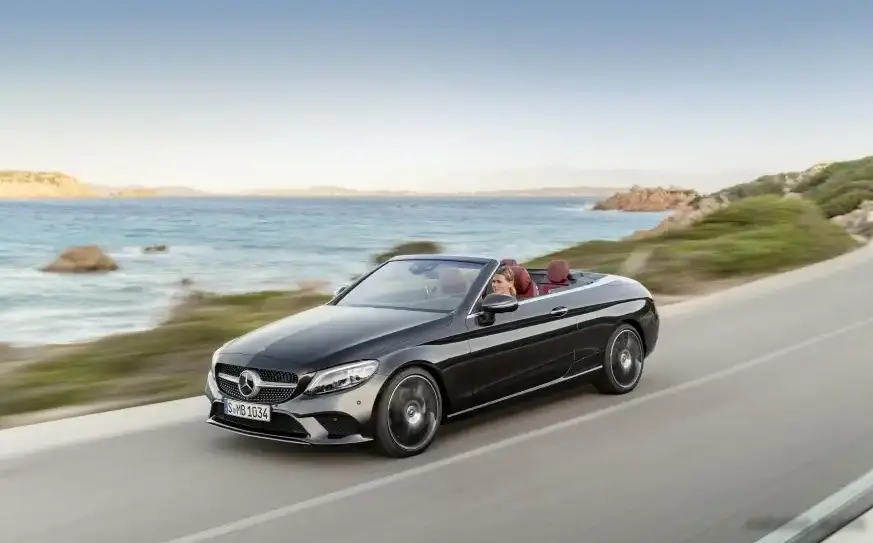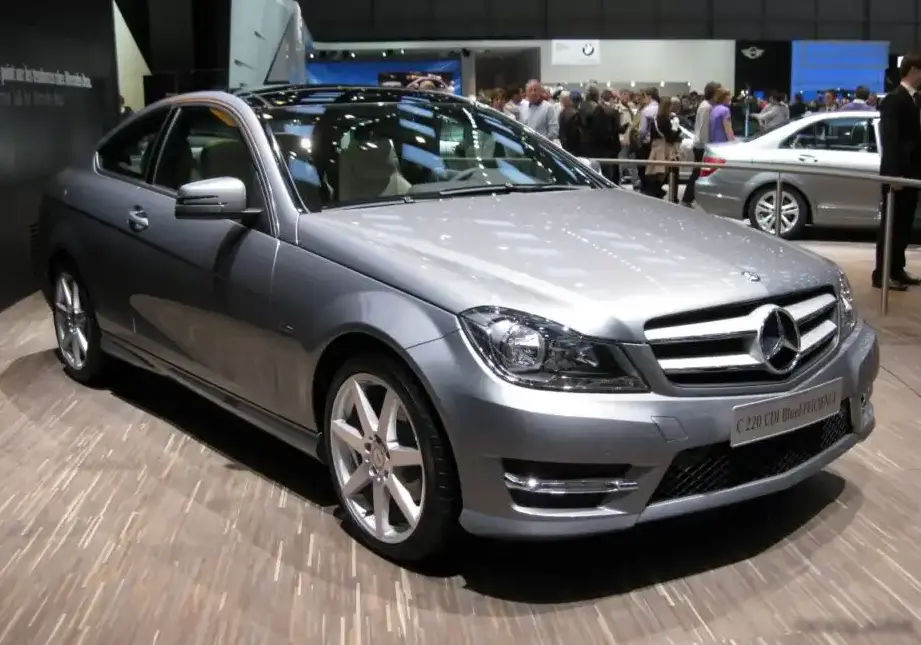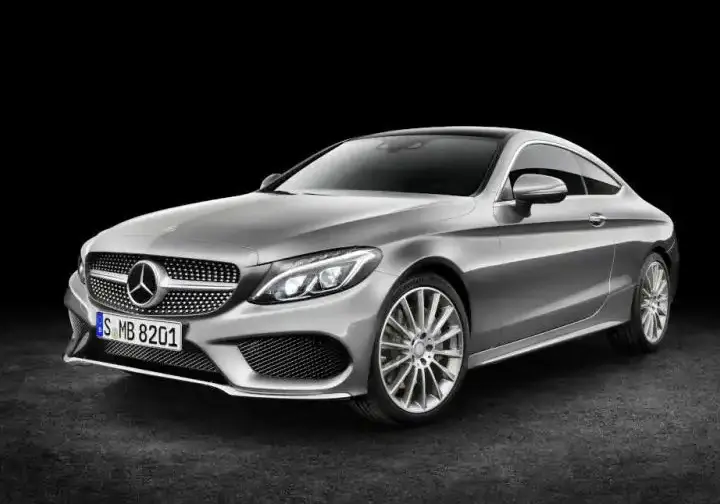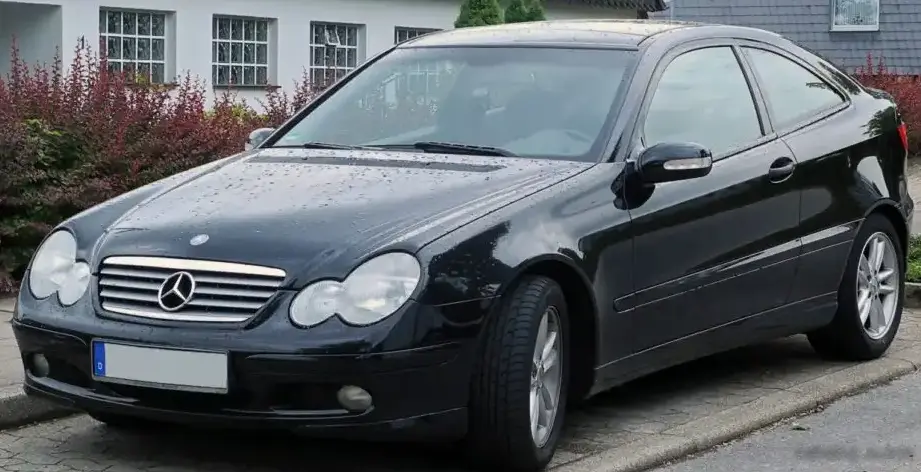
The Mercedes-Benz C-Class Sport Coupe (CL203) C 200 CGI, produced from August 2003 to March 2004, represented a compelling entry point into the coupe market for Mercedes-Benz. Positioned as a stylish and relatively affordable option within the CL203 range, it offered a blend of performance and practicality aimed at younger buyers or those seeking a more sporting alternative to the traditional C-Class sedan. This variant utilized a supercharged 1.8-liter inline-four engine, paired with a 6-speed manual transmission, distinguishing it from other engine options available in the lineup. It was a short-lived model, bridging the gap between earlier C-Class coupes and the subsequent introduction of more advanced technologies.
Technical Specifications
| Brand | Mercedes-Benz |
| Model | C-class |
| Generation | C-class Sport Coupe (CL203) |
| Type (Engine) | C 200 CGI (170 Hp) |
| Start of production | August, 2003 |
| End of production | March, 2004 |
| Powertrain Architecture | Internal Combustion engine |
| Body type | Coupe |
| Seats | 4 |
| Doors | 3 |
| Fuel consumption (economy) – urban (NEDC) | 11.1 l/100 km (21.2 US mpg, 25.4 UK mpg, 9 km/l) |
| Fuel consumption (economy) – extra urban (NEDC) | 5.9 l/100 km (39.9 US mpg, 47.9 UK mpg, 16.9 km/l) |
| Fuel consumption (economy) – combined (NEDC) | 7.8 l/100 km (30.2 US mpg, 36.2 UK mpg, 12.8 km/l) |
| CO2 emissions (NEDC) | 187 g/km |
| Fuel Type | Petrol (Gasoline) |
| Acceleration 0 – 100 km/h | 9 sec |
| Acceleration 0 – 62 mph | 9 sec |
| Acceleration 0 – 60 mph | 8.6 sec |
| Maximum speed | 235 km/h (146.02 mph) |
| Emission standard | Euro 4 |
| Weight-to-power ratio | 8.2 kg/Hp, 121.4 Hp/tonne |
| Weight-to-torque ratio | 5.6 kg/Nm, 178.6 Nm/tonne |
| Power | 170 Hp @ 5500 rpm |
| Power per litre | 94.7 Hp/l |
| Torque | 250 Nm @ 3500 rpm (184.39 lb.-ft. @ 3500 rpm) |
| Engine layout | Front, Longitudinal |
| Engine Model/Code | M 271.942 |
| Engine displacement | 1796 cm3 (109.6 cu. in.) |
| Number of cylinders | 4 |
| Engine configuration | Inline |
| Cylinder Bore | 82 mm (3.23 in.) |
| Piston Stroke | 85 mm (3.35 in.) |
| Compression ratio | 10.5:1 |
| Number of valves per cylinder | 4 |
| Fuel injection system | Direct injection |
| Engine aspiration | Supercharger, Intercooler |
| Valvetrain | DOHC |
| Engine oil capacity | 5.5 l (5.81 US qt | 4.84 UK qt) |
| Coolant | 8 l (8.45 US qt | 7.04 UK qt) |
| Kerb Weight | 1400 kg (3086.47 lbs.) |
| Max. weight | 1945 kg (4287.99 lbs.) |
| Max load | 545 kg (1201.52 lbs.) |
| Trunk (boot) space – minimum | 310 l (10.95 cu. ft.) |
| Trunk (boot) space – maximum | 1100 l (38.85 cu. ft.) |
| Fuel tank capacity | 62 l (16.38 US gal | 13.64 UK gal) |
| Max. roof load | 100 kg (220.46 lbs.) |
| Permitted trailer load with brakes (12%) | 1500 kg (3306.93 lbs.) |
| Permitted trailer load without brakes | 735 kg (1620.4 lbs.) |
| Length | 4343 mm (170.98 in.) |
| Width | 1728 mm (68.03 in.) |
| Width including mirrors | 1960 mm (77.17 in.) |
| Height | 1406 mm (55.35 in.) |
| Wheelbase | 2715 mm (106.89 in.) |
| Front track | 1493 mm (58.78 in.) |
| Rear (Back) track | 1464 mm (57.64 in.) |
| Front overhang | 788 mm (31.02 in.) |
| Rear overhang | 840 mm (33.07 in.) |
| Drag coefficient (Cd) | 0.29 |
| Minimum turning circle (turning diameter) | 10.76 m (35.3 ft.) |
| Drivetrain Architecture | The Internal combustion engine (ICE) drives the rear wheels of the vehicle. |
| Drive wheel | Rear wheel drive |
| Number of gears and type of gearbox | 6 gears, manual transmission |
| Front suspension | Independent type McPherson, Transverse stabilizer |
| Rear suspension | Independent multi-link suspension, Transverse stabilizer |
| Front brakes | Ventilated discs |
| Rear brakes | Disc |
| Assisting systems | ABS (Anti-lock braking system) |
| Steering type | Steering rack and pinion |
| Power steering | Hydraulic Steering |
| Tires size | 205/55 R 16 91 V |
| Wheel rims size | 7 J x 16 H 2 |
Powertrain & Engine Architecture
The heart of the C 200 CGI was the M 271.942 1.8-liter inline-four engine. This engine was a significant departure from previous Mercedes-Benz four-cylinder designs, featuring all-aluminum construction and a Lysholm-type twin-screw supercharger. The supercharger, coupled with direct fuel injection, provided a substantial boost in power and torque compared to naturally aspirated engines of similar displacement. The direct injection system, operating at pressures up to 3.5 bar, allowed for precise fuel metering and improved combustion efficiency. The engine utilized a double overhead camshaft (DOHC) valvetrain with four valves per cylinder, optimizing airflow for increased performance. The 6-speed manual transmission offered precise gear changes and contributed to the car’s sporty driving experience. This engine code was part of the M271 family, known for its relatively compact size and smooth operation.
Driving Characteristics
The C 200 CGI offered a noticeably more engaging driving experience than its naturally aspirated counterparts. The supercharger delivered instant torque, providing brisk acceleration in everyday driving situations. While not a high-performance machine, the 170 horsepower and 250 Nm of torque were sufficient for confident overtaking and enjoyable cruising. The 6-speed manual transmission allowed drivers to fully exploit the engine’s powerband. Compared to the C 200 Kompressor with an automatic transmission, the manual version felt more responsive and connected. It didn’t possess the outright speed of the C 320 or the fuel efficiency of the diesel models, but it struck a good balance between performance and economy. The rear-wheel-drive configuration contributed to a balanced chassis and predictable handling.
Equipment & Trim Levels
The C 200 CGI Sport Coupe typically came equipped with a range of standard features designed to enhance both comfort and style. These included sport seats, alloy wheels, air conditioning, a multi-function steering wheel, and an audio system. Optional extras included leather upholstery, a sunroof, and upgraded audio systems. The interior design was typical of Mercedes-Benz, with a focus on quality materials and a refined aesthetic. The Sport Coupe trim level generally featured a more aggressive styling package compared to the standard C-Class, with unique bumpers, side skirts, and a rear spoiler.
Chassis & Braking
The CL203 C-Class Sport Coupe featured an independent suspension system at all four wheels. The front suspension utilized a McPherson strut design, while the rear employed a multi-link setup. This configuration provided a comfortable ride while maintaining good handling characteristics. The C 200 CGI was equipped with ventilated disc brakes at the front and solid disc brakes at the rear. Anti-lock Braking System (ABS) was standard, enhancing braking performance and stability. The chassis was designed to provide a balance between rigidity and weight reduction, contributing to the car’s overall handling prowess.
Market Reception & Comparison
The C 200 CGI Sport Coupe was generally well-received by automotive critics, who praised its stylish design, responsive engine, and engaging driving dynamics. However, some reviewers noted that the interior space was somewhat limited, particularly in the rear seats. Compared to the C 220 CDI diesel, the C 200 CGI offered less fuel economy but more immediate power delivery. Against the C 320, it lacked the outright performance but was more affordable. The combination of a supercharged engine and a manual transmission was relatively rare in this segment, appealing to a niche market of driving enthusiasts.
Legacy
The M 271 engine family, including the 1.8-liter CGI variant, proved to be relatively reliable, although regular maintenance is crucial. Common issues include oil leaks and occasional problems with the supercharger clutch. Today, the CL203 C 200 CGI Sport Coupe is becoming increasingly sought after by enthusiasts and collectors. Its combination of style, performance, and relative rarity makes it a desirable classic. Well-maintained examples command a premium in the used car market. The engine’s direct injection and supercharging technology were precursors to more advanced engine designs used in later Mercedes-Benz models.